Untitled Article

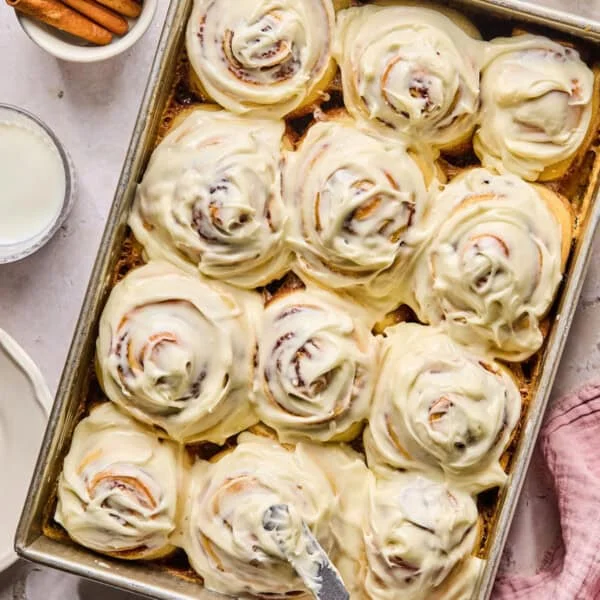

These pillowy soft cinnamon rolls bake up tall, fluffy, and perfectly gooey with a melt-in-your-mouth texture. Made with honey, yogurt, and a simple cream soak, they stay soft for days instead of drying out.
If you’ve struggled with dense or bready cinnamon rolls, this is the one that actually fixes it.
These are soft because the dough is built differently from most recipes. Instead of relying only on butter alone, this recipe uses:
The result is soft, pull-apart cinnamon rolls that stay fluffy even after they cool. Not just warm-out-of-the-oven soft.
Actually soft the next day.
If you’re planning a full brunch spread, I love pairing these with something savory like [everything bagel casserole] or [savory bread pudding] so it doesn’t feel overly sweet.
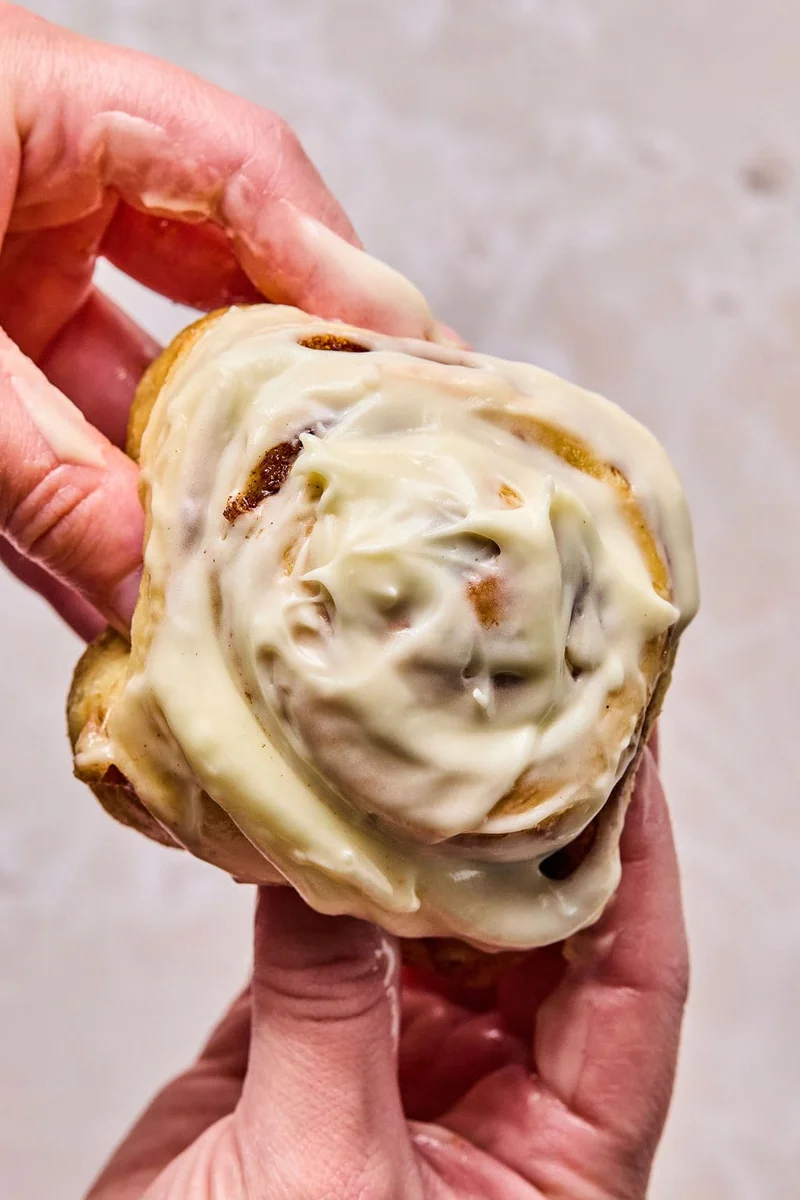
Pillowy cinnamon rolls come down to air structure.
Bready rolls have a few large air pockets.
Pillowy rolls have thousands of tiny ones.
That’s why the dough is only allowed to get puffy during the first rise, not fully doubled. You want the yeast to save its strength for the second rise after shaping, which creates those soft, layered spirals.
This is one of my favorite tricks. It makes a huge difference.
It’s the same trick I use for my [mini cinnamon rolls].
Adding butter at the right time is what keeps these soft _and_ tall.
Most recipes mix everything together at once. That gives you soft dough, but flatter rolls.
Here, the dough is kneaded first, then the butter is added slowly at the end. That builds structure first, then softens it.
You end up with cinnamon rolls that are fluffy, layered, and still melt-in-your-mouth tender.
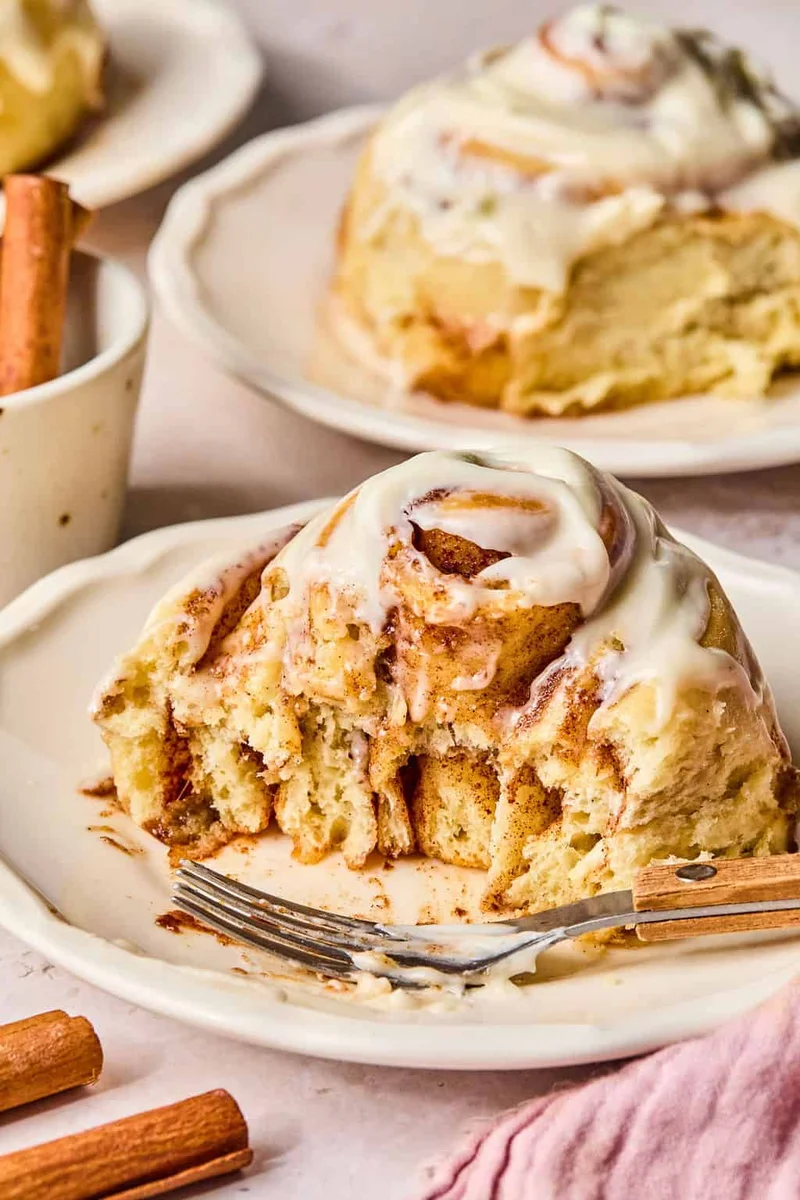
This dough should feel soft, smooth, and slightly tacky. It will stick just a little to the bottom of the bowl but not your hands.
After the first rise:
It should not fully double. Trust me on this.
If you’re newer to yeast, this is a great recipe to start with before trying my [cottage cheese dinner rolls].
If your kitchen runs cool or you want a more consistent rise, this is the easiest way to do it.
Turn your oven to the lowest setting and let it preheat for a few minutes, then turn it off. Crack the oven door open slightly and place the covered dough or rolls inside.
It creates a warm, gentle environment that helps the dough rise evenly without overheating.
I use this all the time, especially in the winter, and it makes a huge difference in how soft and fluffy the rolls turn out.
I use it for all of my sweet bread recipes including [pumpkin cinnamon rolls], [pecan sticky buns], and [protein cinnamon rolls].
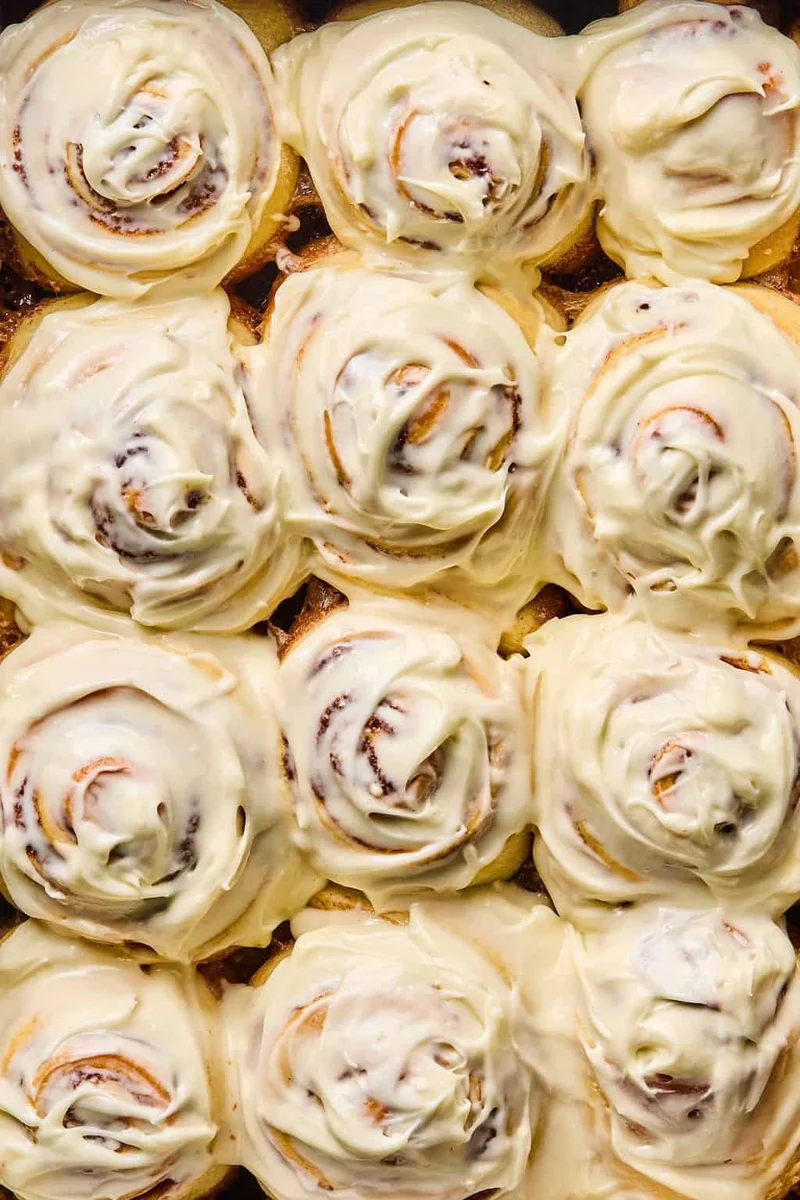
Right before baking, you’ll pour warm heavy cream around the rolls, not over the tops.
As they bake, the cream soaks into the dough and creates a soft, almost custardy texture in the center. This is what gives you that bakery-style gooeyness without making them soggy.
Rolling tightly is key.
Instead of slicing a big log, this method cuts strips and rolls each one individually. It keeps the centers from unraveling and gives you those tall, even spirals.
There are a few things that will quietly ruin cinnamon rolls, even if everything else is right. I’ve tested this so many times, and these are the ones that actually make a difference.
I would not use cold ingredients. Cold eggs and yogurt slow down yeast activity and make it harder for the dough to come together smoothly.
Room temp ingredients helps the dough mix evenly, rise properly, and bake up soft and fluffy.
I would not let the dough fully double on the first rise: It seems like the right thing to do, but it leads to bready rolls. You want the dough to be puffy and rise slightly, but not double.
The yeast still has energy for the second rise, which is what creates that soft, layered texture.
I would not add a bunch of extra flour: This dough is supposed to be soft and slightly tacky. Adding too much flour makes the rolls dense and dry.
If it’s sticking a little, that’s exactly what you want.
I would not over bake them: They should be lightly golden, not deeply browned. The centers should look just set.
Your best bet is to use an instant read thermometer and insert it into the center. It should read 190 degrees F.
I would not rush the second rise: This is where the texture actually happens. The rolls should look puffy and slightly expanded before they go in the oven.
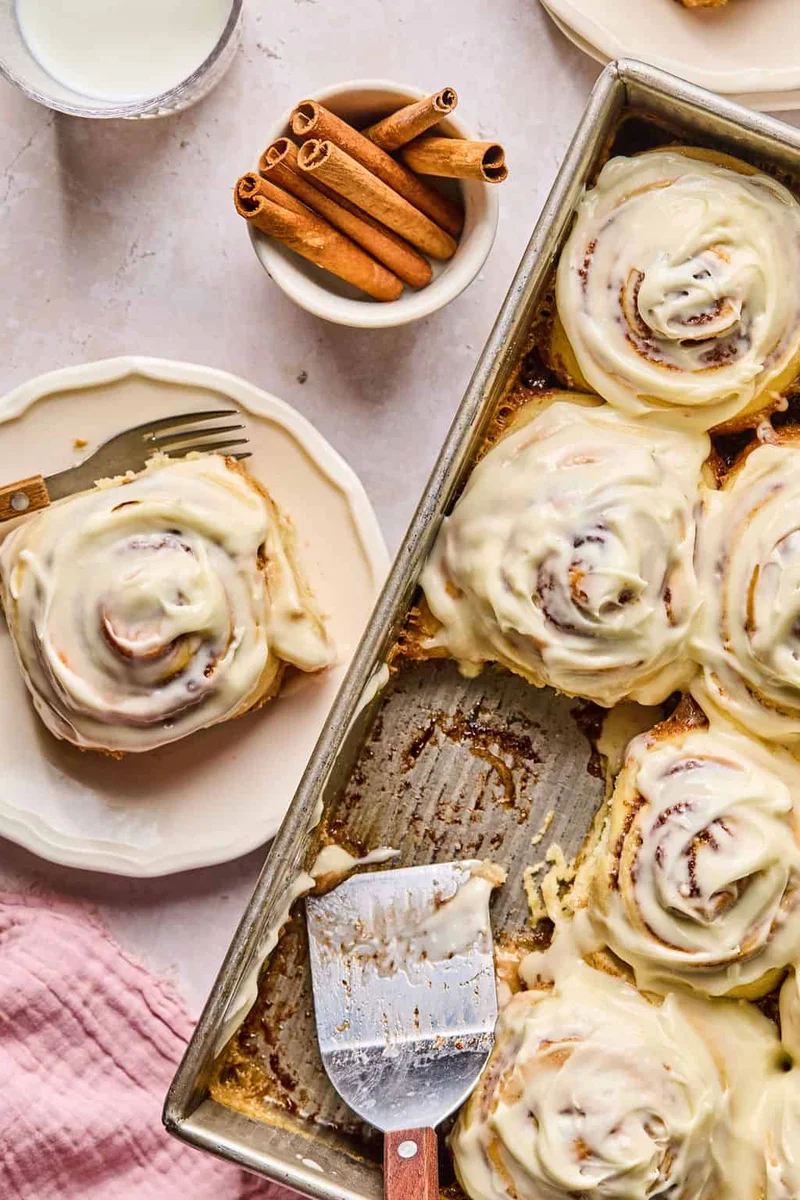
Two things matter most:
They’re done when the tops are lightly golden and the center looks just set, around 185–190°F inside.
Because of the honey and dairy in the dough, these stay soft for up to 2 days at room temperature. After that I’d store them in the fridge.
After one of my tests we warmed these up from the fridge 5 days later and they were still soft and gooey!
After shaping the rolls, cover the pan tightly and refrigerate overnight.
In the morning, let them sit at room temperature for 45–60 minutes, until puffy. Pour the cream around the rolls, then bake as directed.
Perfect for holidays, brunch, or when you just don’t want to deal with dough first thing!
If you love prepping ahead for busy mornings, you’d also like my [overnight blueberry waffle casserole] or my [high protein breakfast burritos]. Same idea, less stress in the morning.
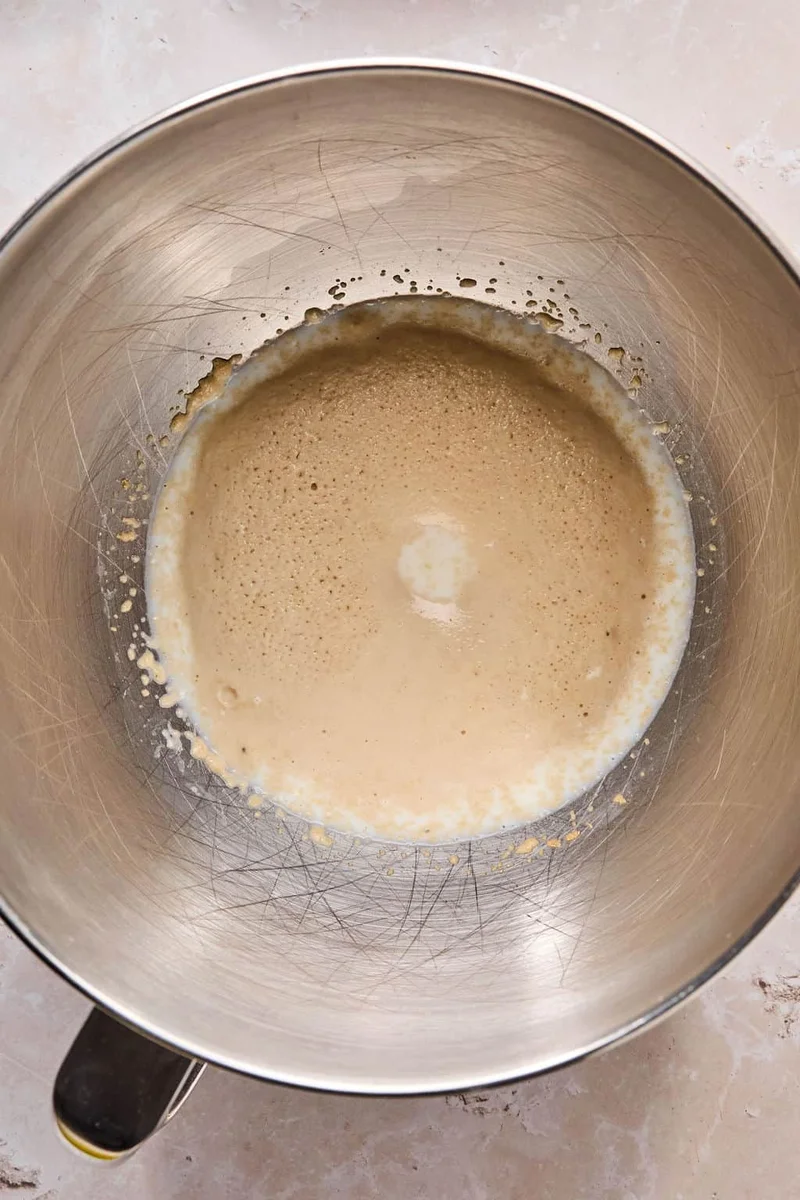
Step 1. Activate the yeast: Whisk warm milk, yeast, and sugar together and let sit until foamy.
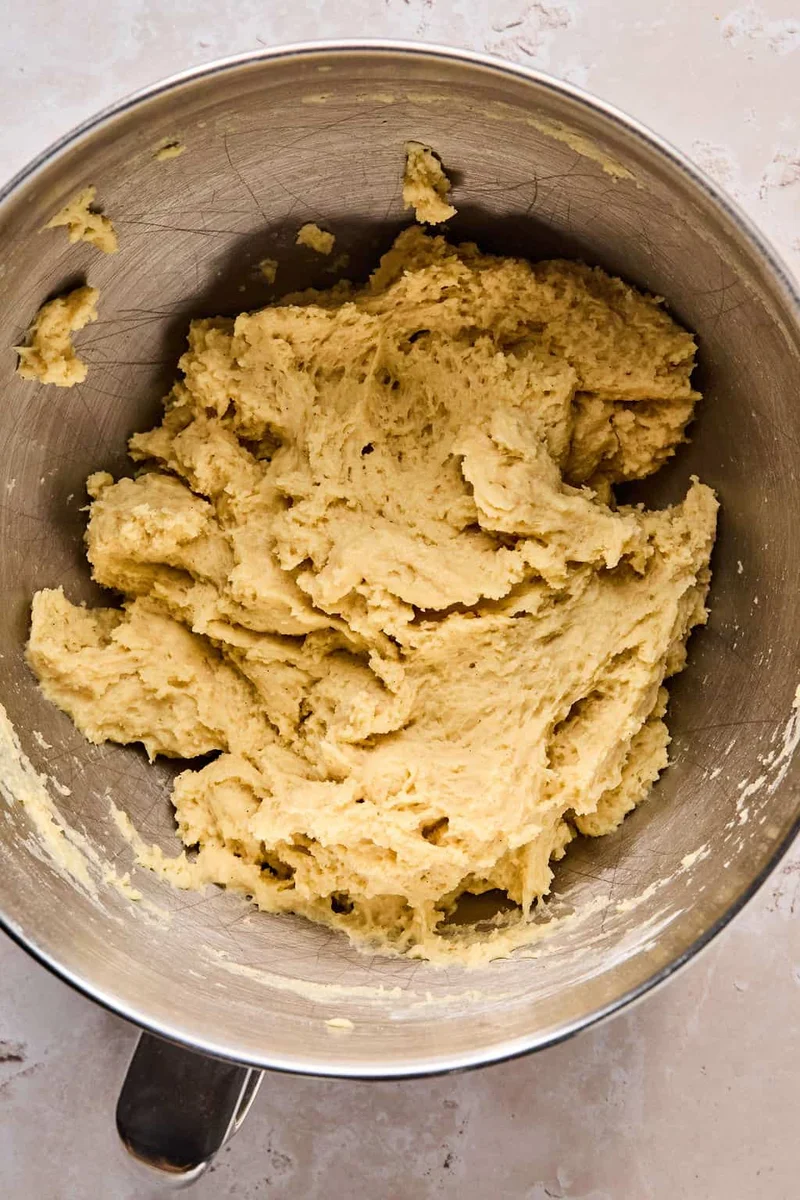
Step 2. Mix the dough: Add honey, sugar, yogurt, eggs, and vanilla. Mix, then add flour and salt until a shaggy dough forms.
Let rest 10 minutes.
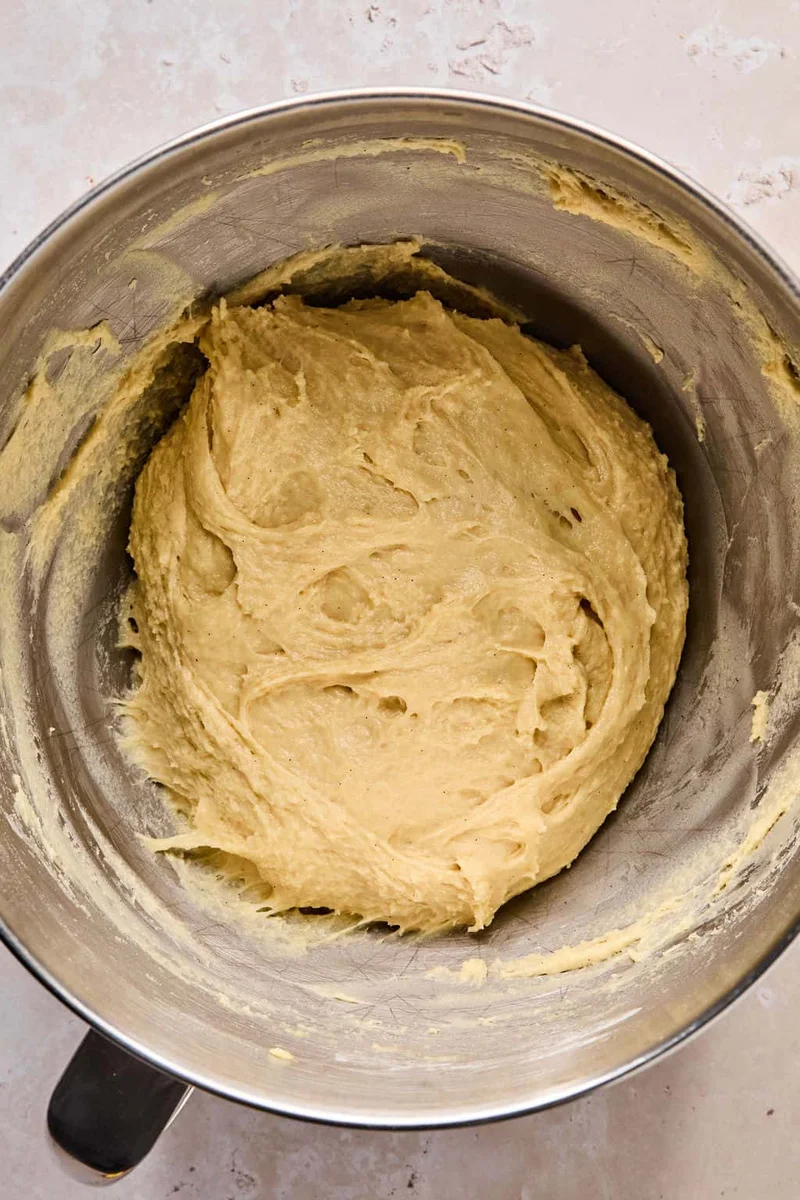
Step 3. Knead: Switch to the dough hook and knead until smooth and elastic.
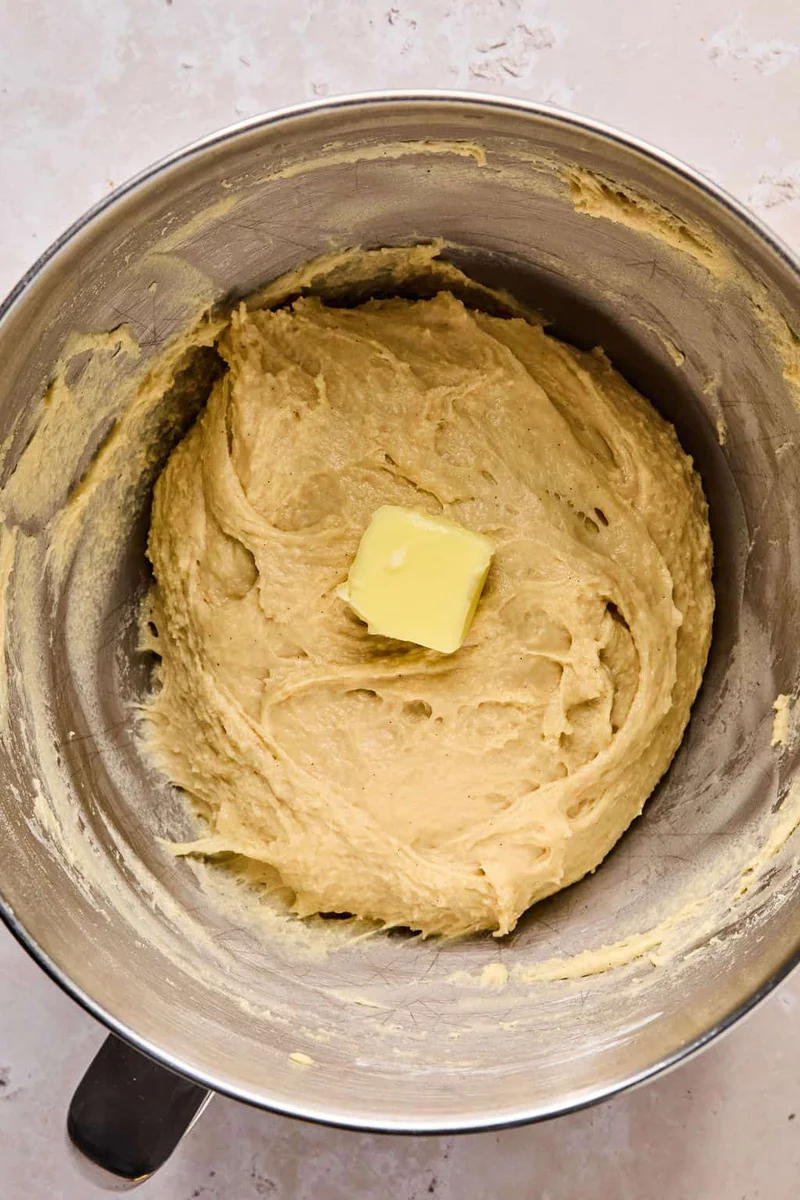
Step 4. Add butter: Add softened butter one tablespoon at a time until fully incorporated and the dough is soft and stretchy.
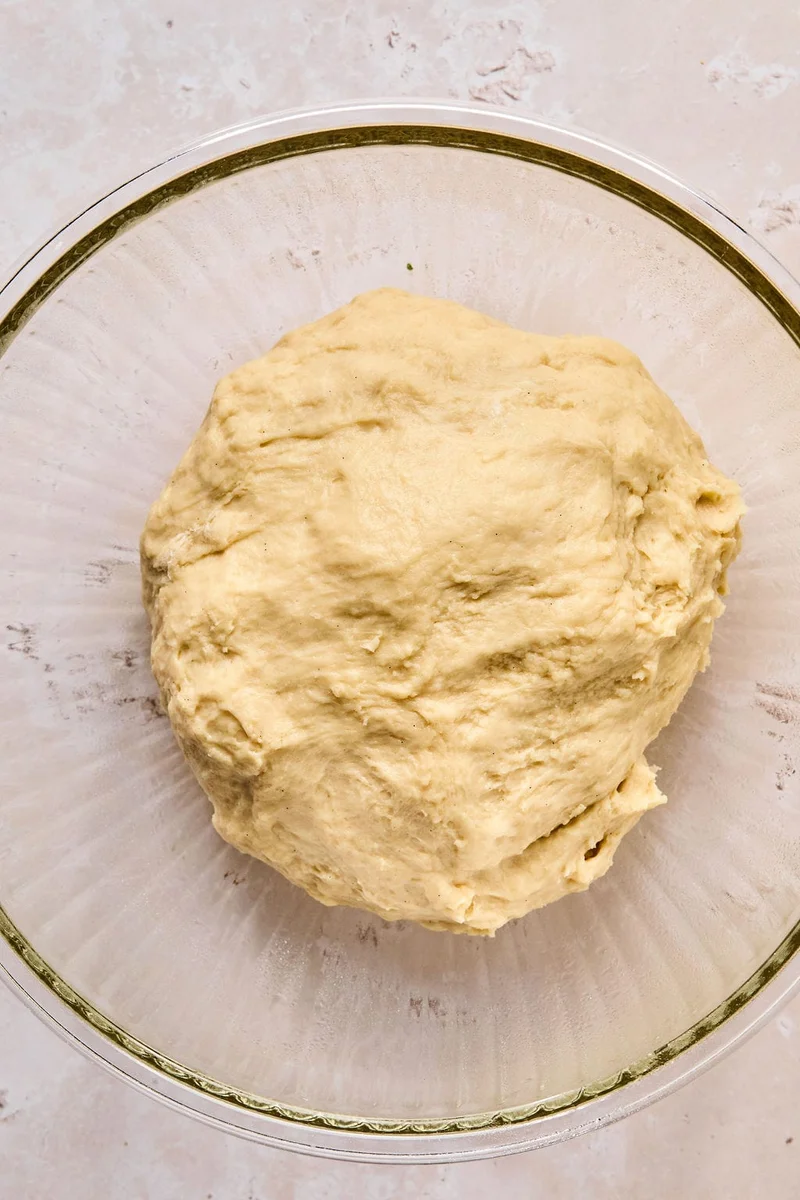
Before 1st rise.
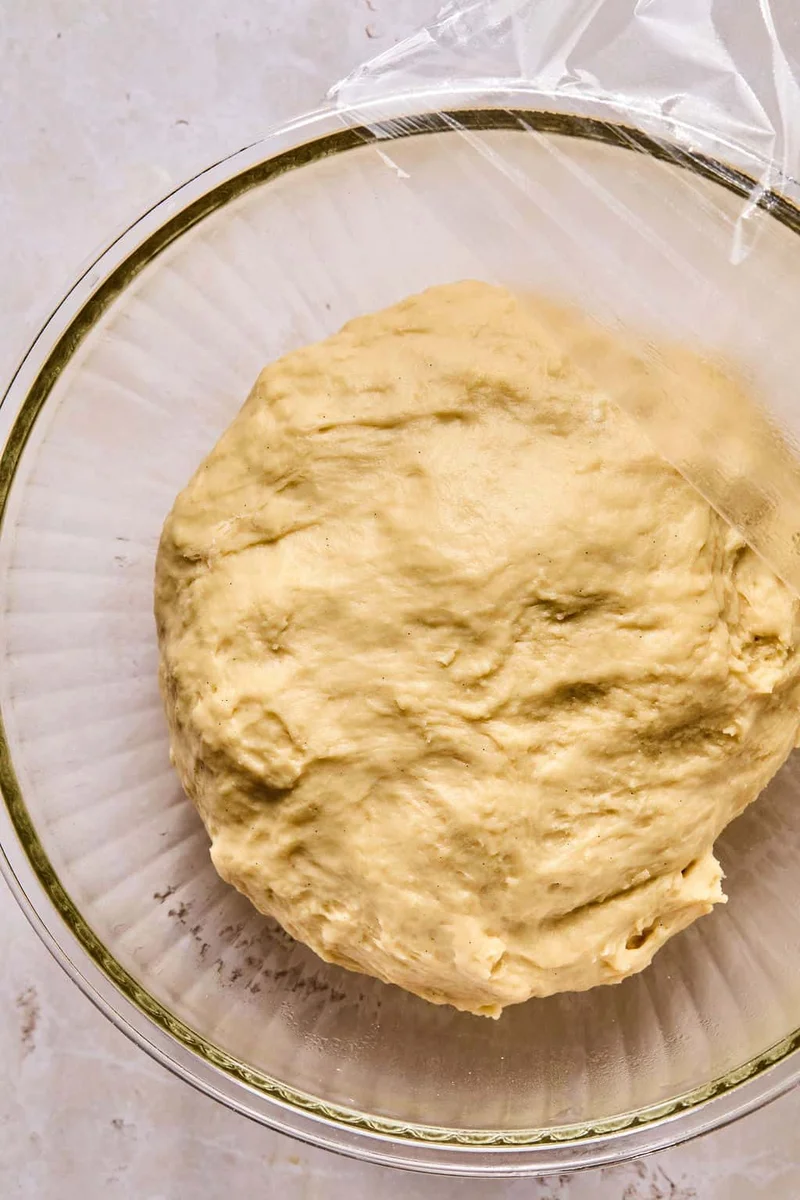
After 1st rise.
Step 5. First rise: Let rise until puffy but not doubled.
Step 6. Fill and shape: Roll into a large rectangle, spread the cinnamon filling, cut into strips, and roll into spirals.
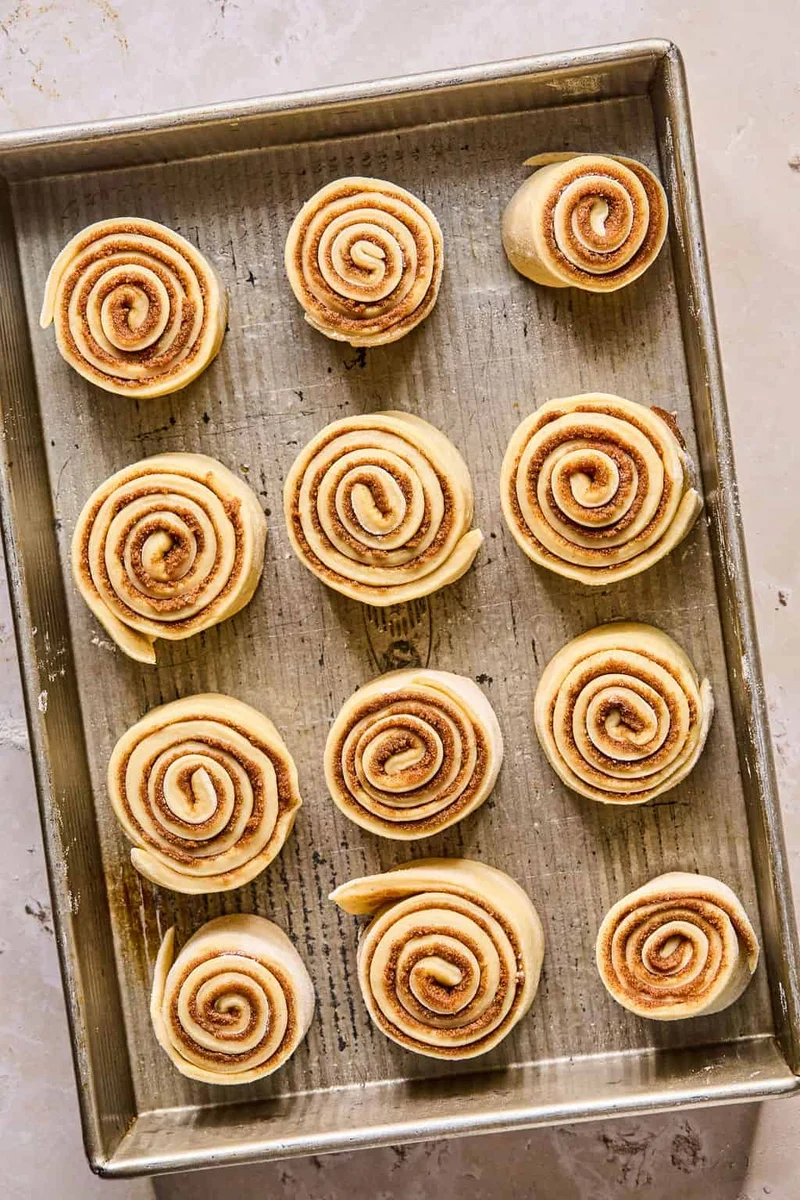
Before 2nd rise.
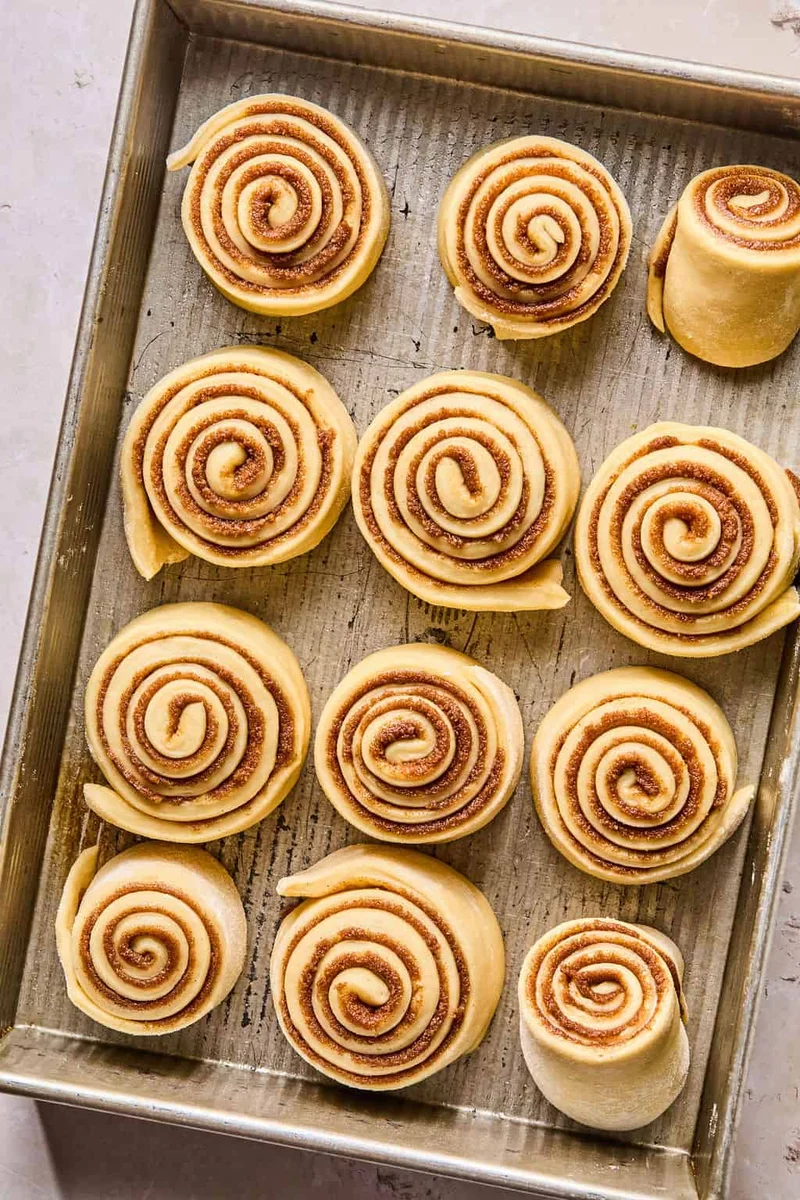
After 2nd rise.
Step 7. Second rise: Let the rolls rise until noticeably puffy and touching.
Step 8. Add cream and bake: Pour warm cream around the rolls and bake until lightly golden and just set in the center.
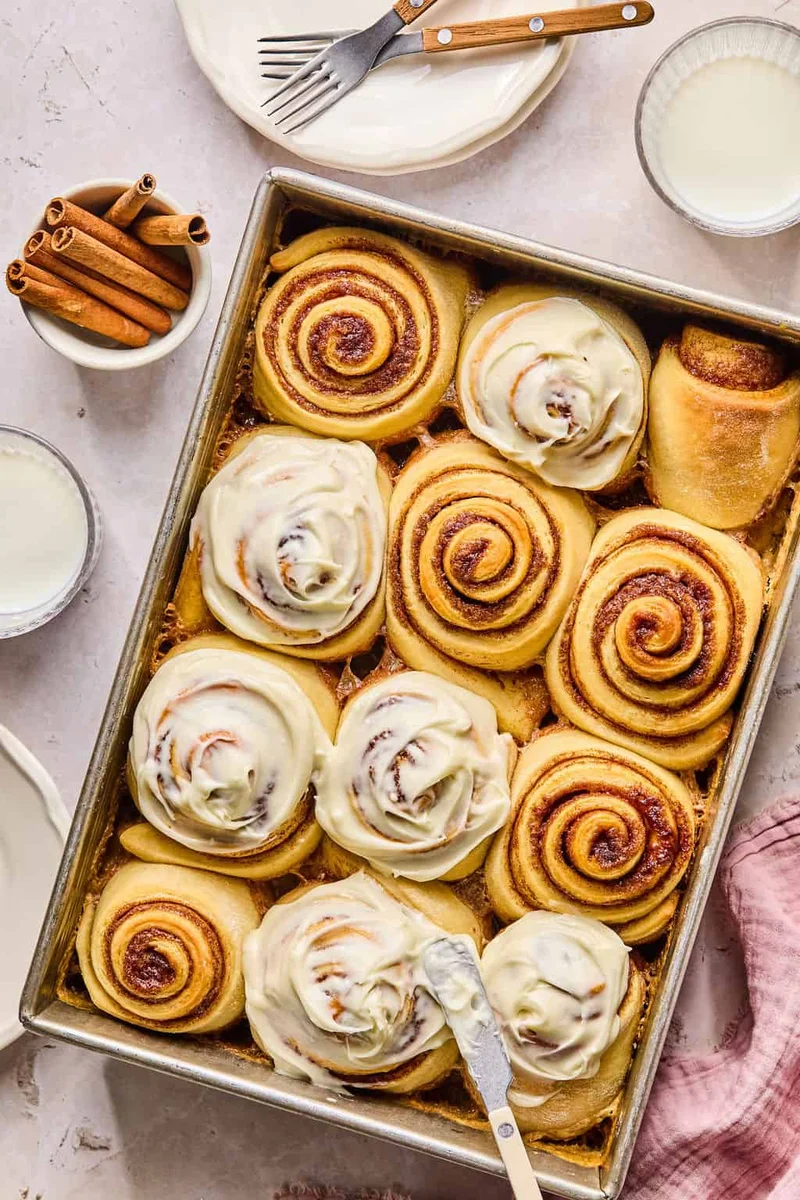
Step 9. Frost: Spread cream cheese frosting over the warm rolls and serve.
Soft cinnamon rolls come from a combination of hydration and structure. Ingredients like milk, yogurt, and honey help retain moisture, while proper kneading and proofing create a light, airy texture instead of a dense crumb.
Yes, you can substitute all-purpose flour. The rolls will still be soft, but slightly less tall and chewy. Bread flour creates more structure, which helps the rolls rise higher and form better layers.
Yes. After shaping the rolls, cover them tightly and refrigerate overnight. In the morning, let them sit at room temperature for 45–60 minutes until puffy, then pour the cream around the rolls and bake.
If you’re making these for brunch, I like to pair them with something savory like [high protein egg casserole] or [sheet pan breakfast potatoes] to balance out the sweetness.
These pillowy soft cinnamon rolls bake up tall, fluffy, and perfectly gooey with a melt-in-your-mouth texture. Made with honey, yogurt, and a simple cream soak, they stay soft for days instead of drying out.
If you’ve struggled with dense or bready cinnamon rolls, this is the one that actually fixes it.


Welcome to Tasty Fresh Recipes, your home for easy, healthy, and flavorful dishes.
© Tastyfreshrecipes.com • 2025 All rights reserved