This 21 Club Burger (Copycat) makes four thick sirloin burgers with softened celery, breadcrumbs, Worcestershire sauce, and nutmeg. A butter-browned crust adds richness, while an oven finish cooks the centers without prolonged frying. Each serving contains 8 ounces of beef before cooking, making this a substantial, protein-rich dinner.
This is a home copycat adaptation, not a claim to the restaurant’s official formula.
Key takeaways
- Allow about an hour, including cooking and cooling the celery.
- Drain the celery before mixing; the poaching broth does not go into the patties.
- Brown gently in butter, then finish in a 350°F oven.
- Check every burger for a center temperature of 160°F.
Key ingredients and notes
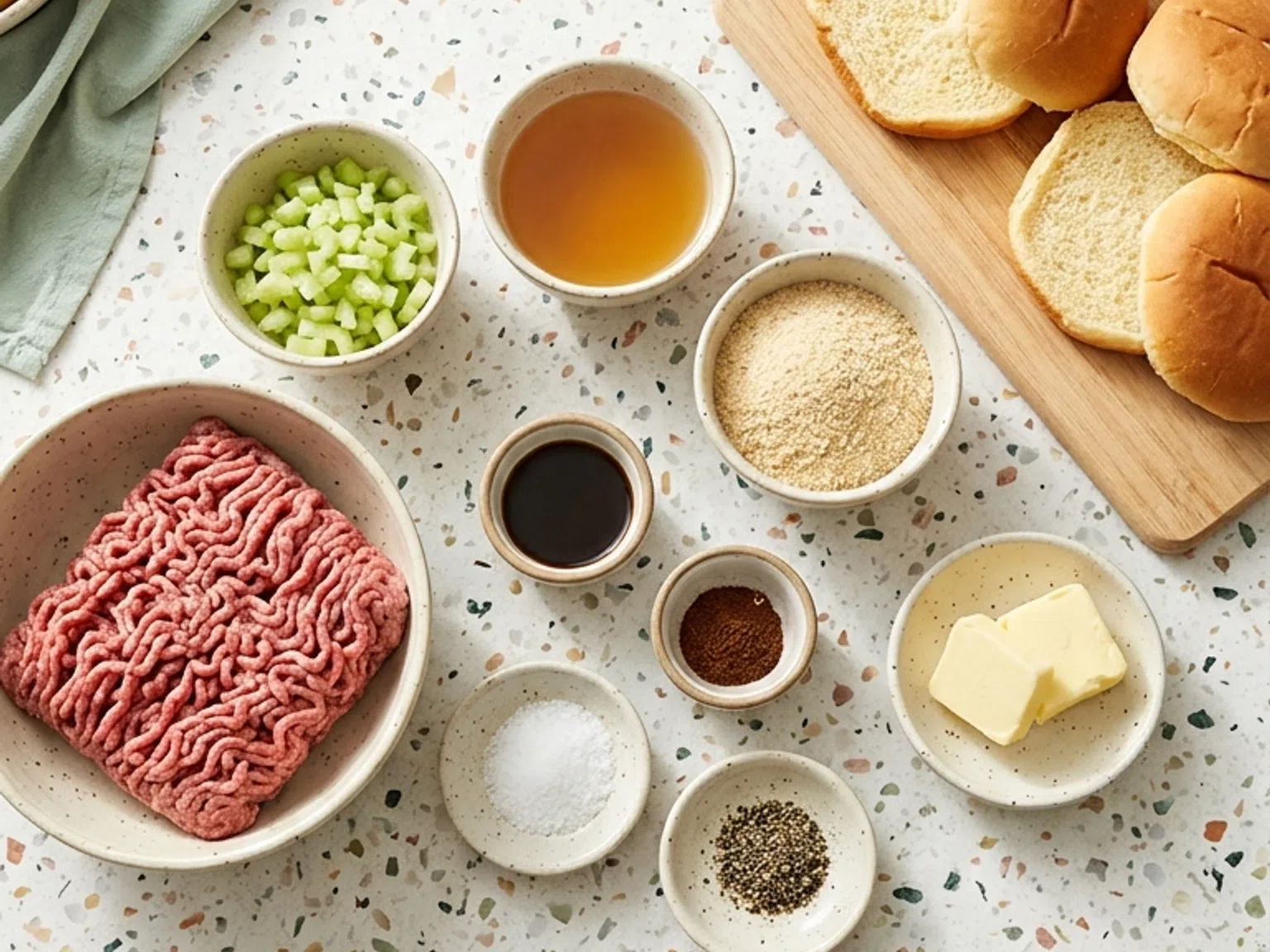
Ground sirloin, chopped celery, breadcrumbs, butter, and seasonings arranged before cooking.
Ground top sirloin is the base of this recipe. Divide the full 2 pounds into four portions rather than making smaller burgers with the same cooking schedule.
Celery and chicken broth provide the recipe’s distinctive preparation step. Finely chopped celery cooks until soft, so there are no raw, crunchy pieces inside the burger. Drain it thoroughly before mixing.
Plain dry breadcrumbs absorb moisture in the mixture and give the patties a softer texture. Seasoned crumbs can compete with the small amounts of nutmeg and Worcestershire sauce.
Nutmeg and Worcestershire sauce should remain background flavors. Measure them rather than pouring or shaking directly into the bowl.
Butter adds flavor during browning. Its milk solids, the small particles that separate from the fat as butter heats, can turn from golden to scorched during a long sear. Add the meat while the butter is pale gold.
Practical substitutions
| Change | Amount to use | Adjustment |
|---|---|---|
| Ground chuck | 2 pounds in place of sirloin | Spoon off excess rendered grease before the oven finish |
| Gluten-free | 1/4 cup gluten-free dry breadcrumbs and 4 gluten-free buns | Check that the Worcestershire sauce is also gluten-free |
| Dairy-free | 2 tablespoons neutral oil instead of butter | Expect less buttery flavor; retain the same temperature checks |
A vegetarian burger needs a different balance of moisture and binders. Use a dedicated black bean burger recipe for that meal.
Estimated calories
Approximately 650 kcal per serving, including one patty and one bun. Calculated from the listed ingredient amounts using USDA FoodData Central reference values, assuming 90% lean ground beef, standard hamburger buns, and all three tablespoons of butter divided among four servings. Actual calories vary with the beef blend, bun size, and fat left in the skillet.
Equipment
You need a small saucepan with a lid, a mixing bowl, a broad spatula, and an instant-read thermometer.
Choose a 12-inch oven-safe skillet with a broad cooking surface. Heavy stainless steel or cast iron is suitable. Confirm that the handle can withstand the oven temperature.
Arrange the uncooked patties with space between them before heating the pan. If they touch, use two skillets and divide the butter between them. Crowding makes turning difficult and traps steam around the meat.
Step-by-step cooking guide
1. Poach and cool the celery
Combine 1/4 cup finely chopped celery and 1/4 cup chicken broth in the saucepan. Cover and cook over very low heat for about 20 minutes.
Poaching means cooking gently in liquid. Here, look for an occasional bubble rather than a rolling boil. The celery should crush easily under a fork.
Check occasionally so the small amount of broth does not boil away. Lower the heat if it evaporates rapidly. Drain thoroughly, spread the celery on a plate, and let it cool before mixing.
2. Shape four equal patties
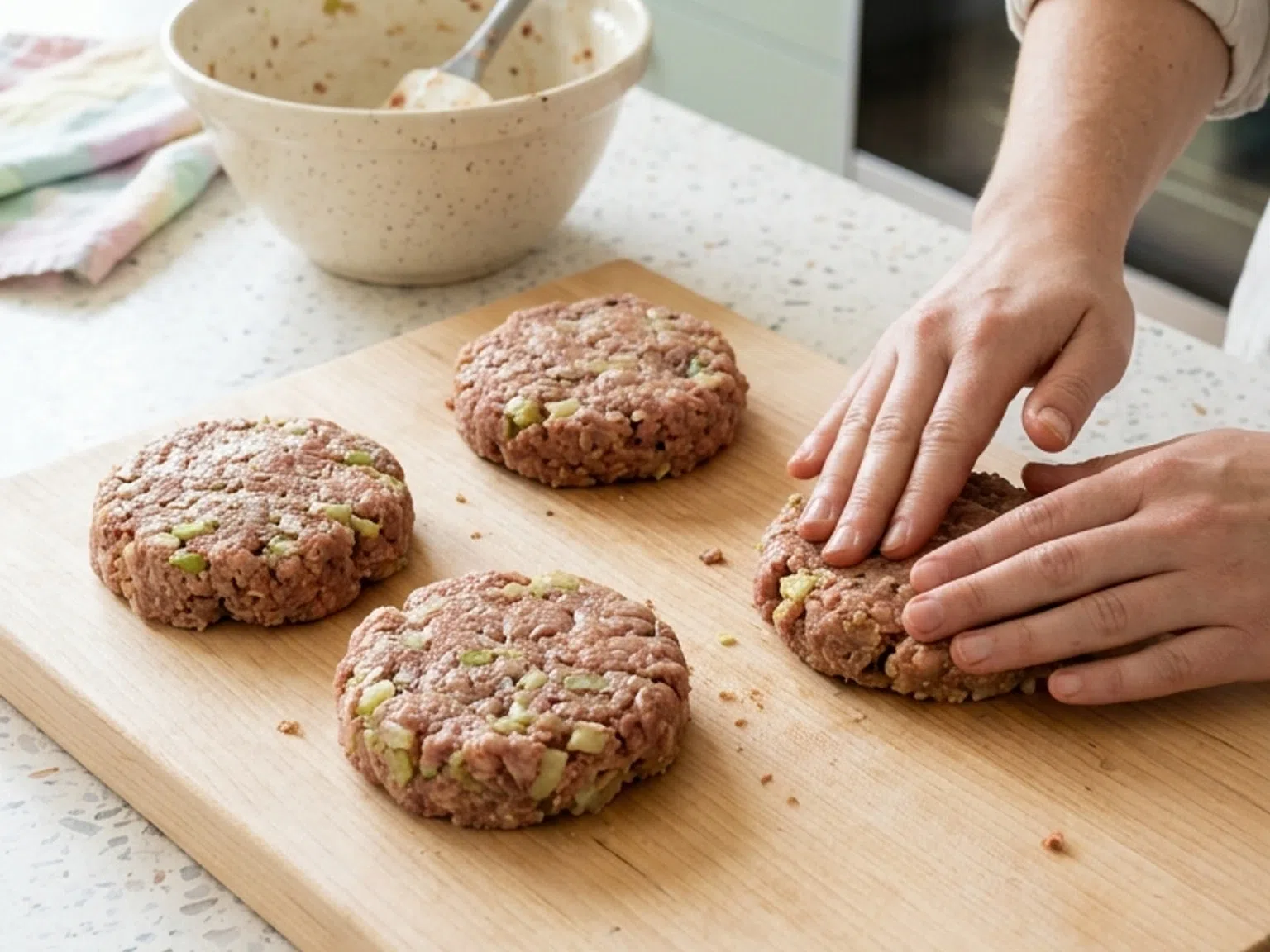
Heat the oven to 350°F.
Combine the cooled celery, sirloin, breadcrumbs, Worcestershire sauce, nutmeg, salt, and pepper. Fold gently with your hands until the celery and seasonings are distributed throughout.
Divide into four equal portions. Shape each into a patty about 4 inches wide and 1 inch thick, without squeezing it into a tight disk.
Keep the thickness consistent. For example, a tall mound of meat takes longer to cook at its center than a flatter patty of the same weight.
3. Brown gently in butter
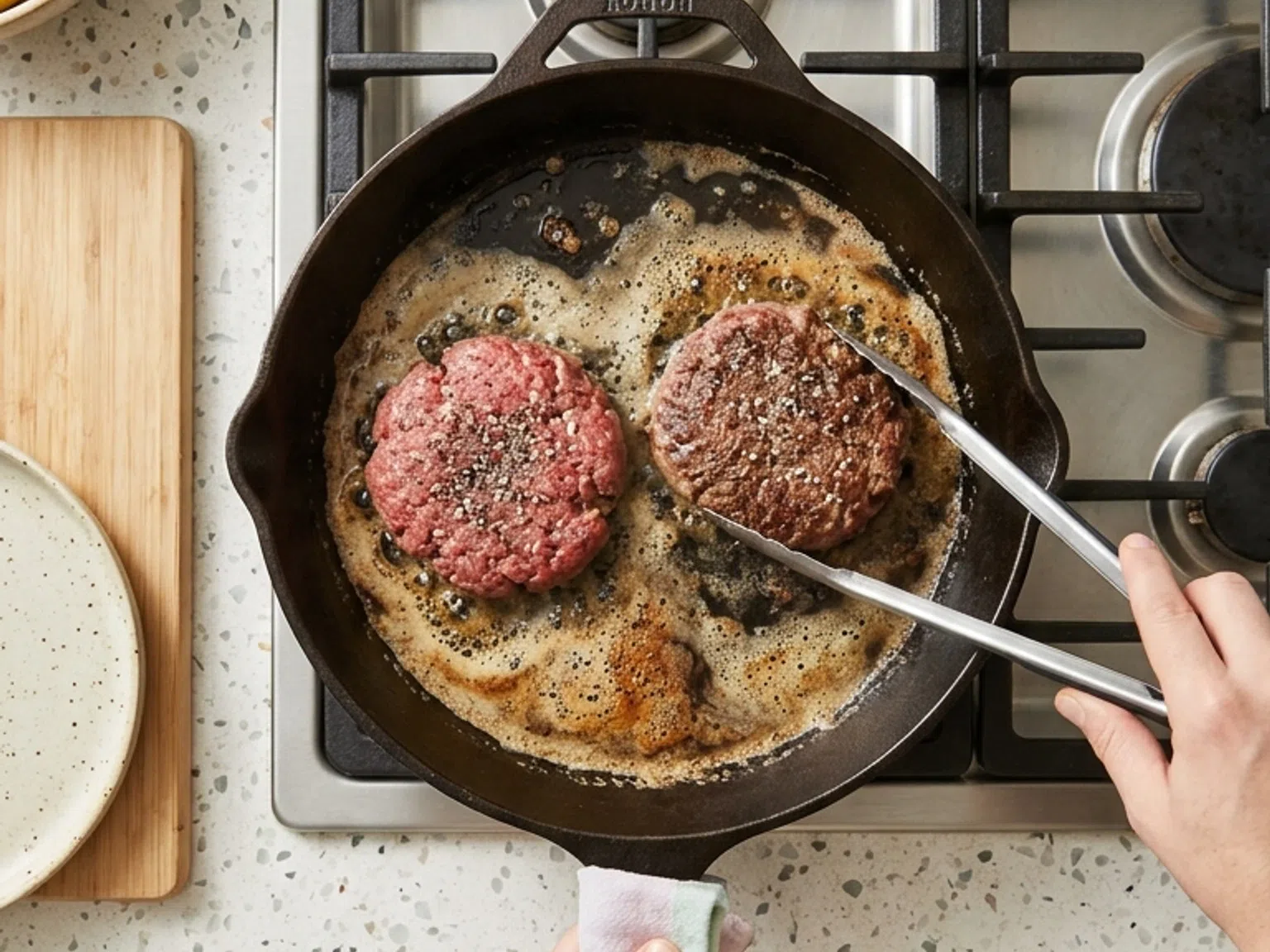
The patties develop a golden-brown surface before their oven finish.
Melt 3 tablespoons butter in the skillet over medium-low heat. Add the patties when the foam begins to settle and the butter is pale gold, before its milk solids turn dark amber.
Keep the heat at medium-low. Allow about 6 minutes per side, turning when a golden-brown crust forms and the spatula slides underneath easily. Do not press the burgers.
Lower the heat if the butter darkens rapidly. Briefly lift the skillet off the burner if needed. If the butter turns black or smells acrid, transfer the patties to a clean oven-safe pan for the finish.
4. Finish by temperature
Transfer the skillet to the 350°F oven. Begin checking after 6 minutes, then continue until every patty reaches 160°F at its center.
Insert the thermometer horizontally through the side, aiming for the middle. Check each burger separately.
This follows USDA cooking-temperature guidance reproduced in Illinois Extension’s “Food Safety”: ground beef should reach 160°F, or about 71°C. A browned crust is a cooking cue, not proof that the center is safe.
Move the burgers to a clean plate and rest for 3 minutes before serving on the buns. The serving rest does not replace reaching 160°F during cooking.
Kitchen notes
The recipe uses equal volumes of celery and broth, but they serve different purposes. The celery goes into the meat; the drained cooking liquid does not. Adding that liquid back can make the mixture harder to shape.
Treat the hour-long total as a planning estimate. The celery has a fairly predictable cooking time, while the oven finish depends on the patties. Start heating the oven while the cooked celery cools.
Two separate cues guide the butter step: pale-gold butter tells you when to add the meat, and golden-brown meat tells you when to turn it. Waiting for dark butter before adding the patties leaves less room before scorching.
If one burger reaches 160°F first, remove it while the others finish. Keeping all four in the oven until the thickest one is ready can dry out the smaller patties.
Chef’s tips for success
- Stop mixing once combined. Continued kneading compacts the mixture and creates a firmer texture.
- Support the whole patty when turning. Slide a broad spatula underneath rather than lifting one edge with tongs.
- Keep raw and cooked equipment separate. Use a clean serving plate and wash utensils that touched raw beef before reusing them.
Serving suggestions
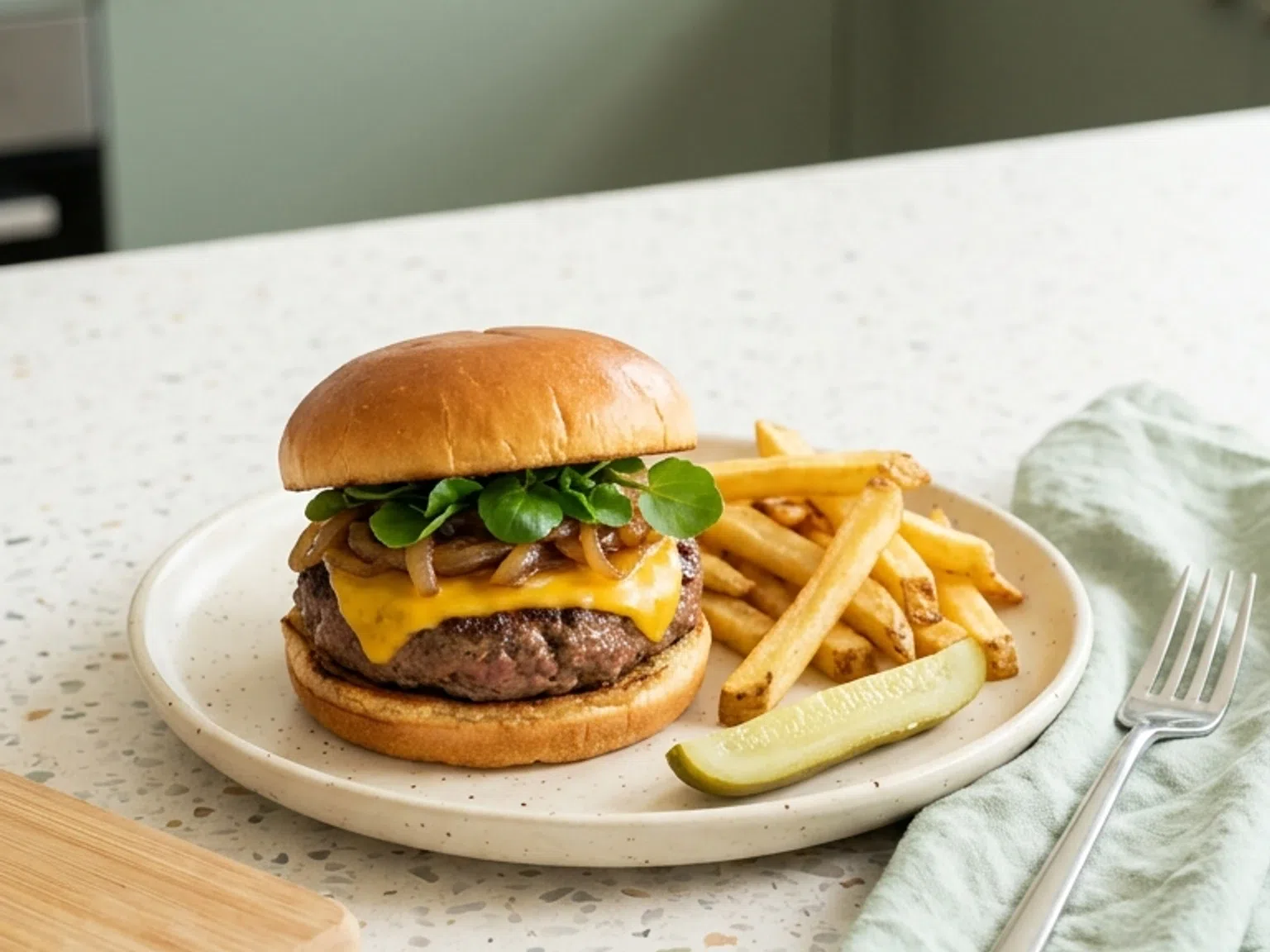
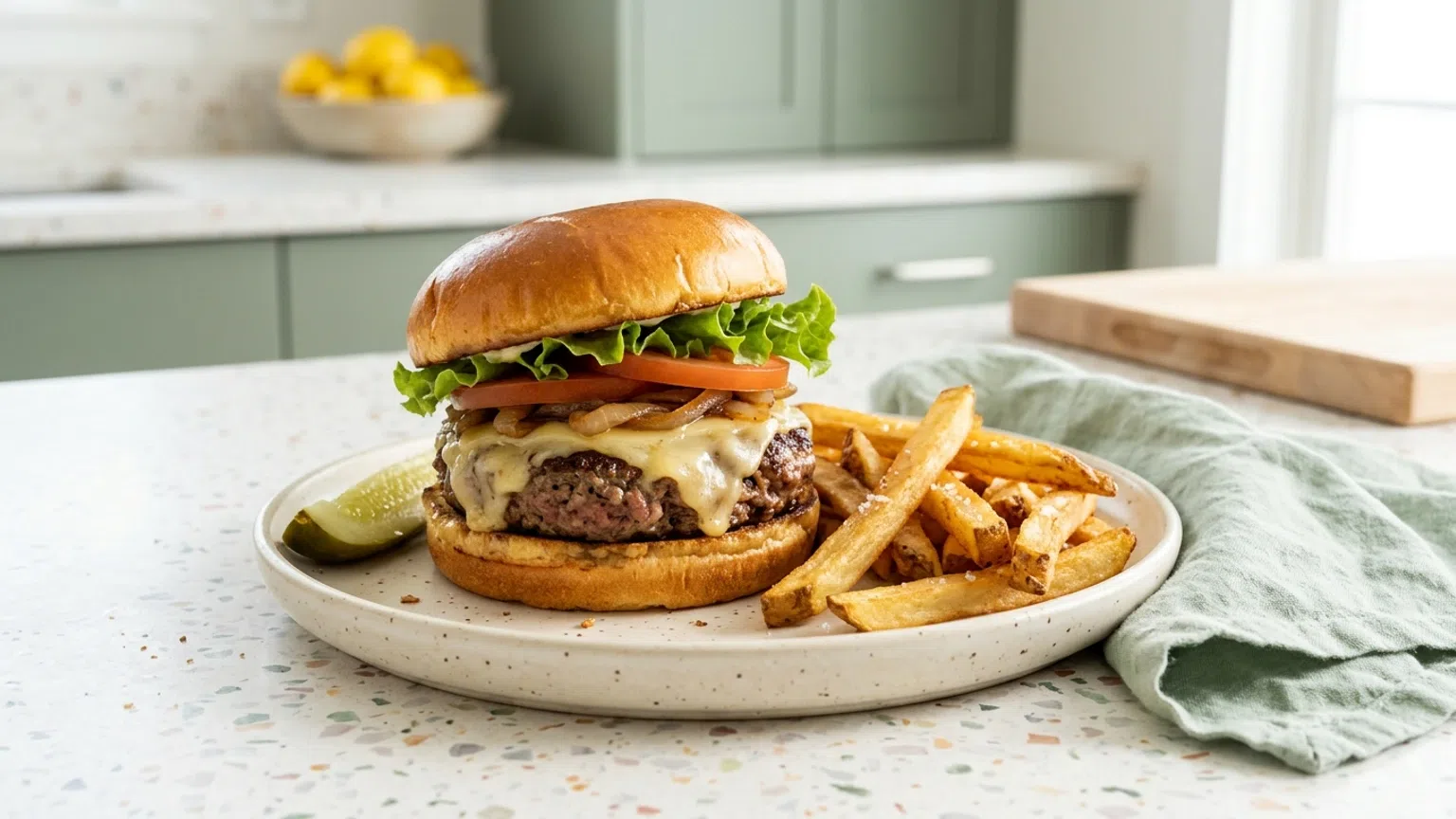
The finished burger served on a bun, ready for toppings and sides.
Keep toppings simple so the beef, nutmeg, and butter remain noticeable. Serve fresh toppings separately if the burgers will wait briefly before eating; wet toppings can soften the buns.
For example, pair the burgers with air-fryer potato wedges and a cool serving of Brookville Hotel coleslaw. For a vegetable side, try air-fryer asparagus alongside the plate.
Make-ahead, storage, and reheating
Cook the celery ahead, refrigerate it promptly in a covered container, and use it cold when mixing the patties. Keep the beef refrigerated until you are ready to shape and cook.
Refrigerate cooked patties within 2 hours, or 1 hour if the surrounding temperature exceeds 90°F. Do not wait for them to reach room temperature. Store them separately from buns in shallow airtight containers.
Keep the refrigerator at 40°F or below and use cooked burgers within 3 to 4 days. Purdue Extension’s “Storing Leftovers” recommends shallow containers, these refrigerator limits, and reheating to 165°F.
For longer storage, freeze cooled cooked patties individually, then seal them together in a freezer bag. Label with the cooking date and use within 2 to 3 months, following Purdue’s guidance for cooked meat. Thaw in the refrigerator.
To reheat one patty, place it in a small skillet with 1 tablespoon water. Cover and warm over medium-low heat. Begin checking after 5 minutes and continue until the center reaches 165°F. Add another tablespoon of water if the pan dries out. Warm the bun separately.
Frequently asked questions
Can I use ground chuck instead of sirloin?
Yes. Substitute 2 pounds ground chuck. A fattier blend releases more grease, so spoon off excess before the oven finish. Keep the same 160°F internal temperature.
Can I leave out the nutmeg?
Yes. Omit the 1/4 teaspoon without replacing it. The patties will keep their structure, but the seasoning will lose its subtle warm note.
Why are my patties falling apart?
The celery may be too wet, or the patties may need more time to form a crust before turning. Drain thoroughly and support each burger with a broad spatula.
Can these burgers be served medium rare?
For this ground-beef recipe, follow USDA guidance and cook every patty to 160°F. Use a thermometer at the center rather than judging safety by the color of the meat or juices.
Food images in this article are digital illustrations supplied for this recipe.
Recipe card
21 Club Burger (Copycat Recipe)
Make thick 21 Club copycat burgers with sirloin, tender celery, breadcrumbs, and butter, with consistent skillet directions and safe doneness checks.
Ingredients
Directions
- Combine the celery and chicken broth in a small covered saucepan. Cook over very low heat for about 20 minutes, until the celery crushes easily under a fork. Check occasionally; lower the heat if the liquid evaporates rapidly. Drain thoroughly and spread on a plate to cool.
- Heat the oven to 350°F. Gently combine the cooled celery, sirloin, breadcrumbs, Worcestershire sauce, nutmeg, salt, and pepper. Divide into four equal portions and shape into patties about 4 inches wide and 1 inch thick.
- Melt the butter in a 12-inch oven-safe skillet over medium-low heat. Add the patties when the foam begins to settle and the butter is pale gold, before the milk solids turn dark amber. Keep the heat at medium-low. Allow about 6 minutes per side, turning when a golden-brown crust forms and the spatula slides underneath easily. Lower the heat if the butter darkens rapidly.
- Transfer the skillet to the 350°F oven. Begin checking the burgers after 6 minutes and continue cooking until every patty reaches 160°F at its center. Insert an instant-read thermometer horizontally through the side. The oven time varies with patty thickness and starting temperature.
- Transfer the cooked patties to a clean plate and rest for 3 minutes before serving on the four hamburger buns. This rest is for serving; each burger must reach 160°F before leaving the heat.
Tap a step number to check it off as you cook.
Nutrition Facts per serving · estimated
Amount per serving
% Daily Values are based on a 2,000-calorie diet (FDA).
Good to know
Questions, answered
Can I use ground chuck instead of sirloin?
Yes. Substitute 2 pounds of ground chuck for the sirloin. A fattier blend releases more grease during cooking, so spoon off excess before the oven finish. Keep the same 160°F internal temperature.
Can I leave out the nutmeg?
Yes. Omit the 1/4 teaspoon without replacing it. The patties will keep their structure, but the seasoning will lose its subtle warm note.
Why are my patties falling apart?
The celery may be too wet, or the patties may need more time to form a crust before turning. Drain the celery thoroughly and support each burger with a broad spatula.
Can these burgers be served medium rare?
For this ground-beef recipe, follow USDA guidance and cook every patty to 160°F. Use a thermometer at the center rather than judging safety by the color of the meat or juices.