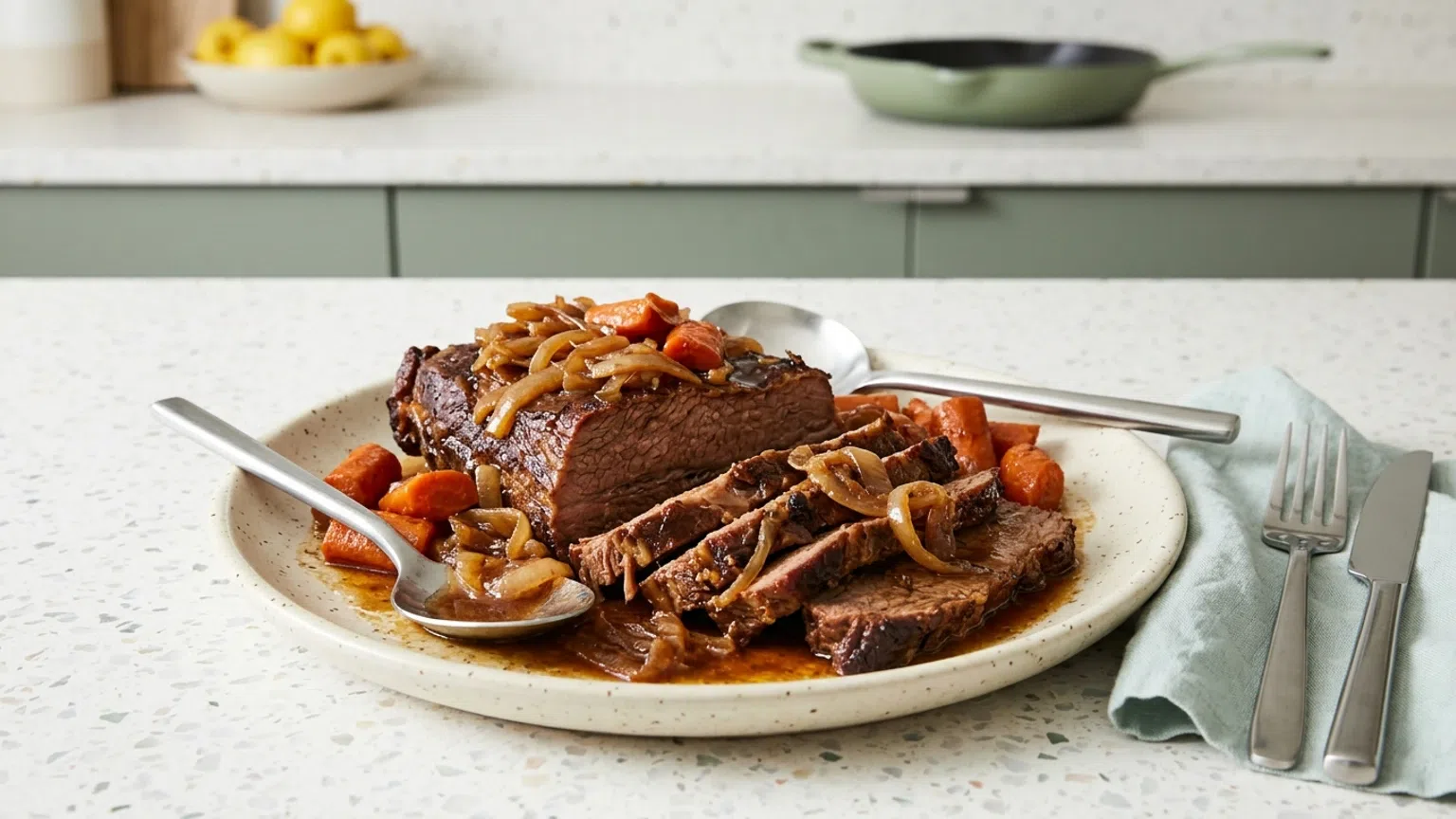
This 5-Ingredient Brisket combines beef with a sweet, peppery rub for a generous Hanukkah or Christmas main dish. Indirect grill heat browns the coating; a tightly wrapped oven finish gives the tough cut time to become tender. The brisket counts as one of the five ingredients, so no broth, bottled sauce, or smoker is required.
Allow roughly 7 to 10½ hours, including preparation and resting. The recipe card uses a nine-hour planning estimate, but thickness and tenderness determine the actual finish. Beef makes this a protein-rich centerpiece; the calorie estimate below explains how trimming affects the numbers.
Key takeaways
- An 8-pound purchased brisket provides a planning allowance for 16 moderate servings with filling sides.
- Keep the sugary rub over indirect heat and watch its color.
- Finish when a probe enters the meat easily in several places.
- For a fixed holiday dinner time, cook the day before and reheat with the saved juices.
Key ingredients and substitutions
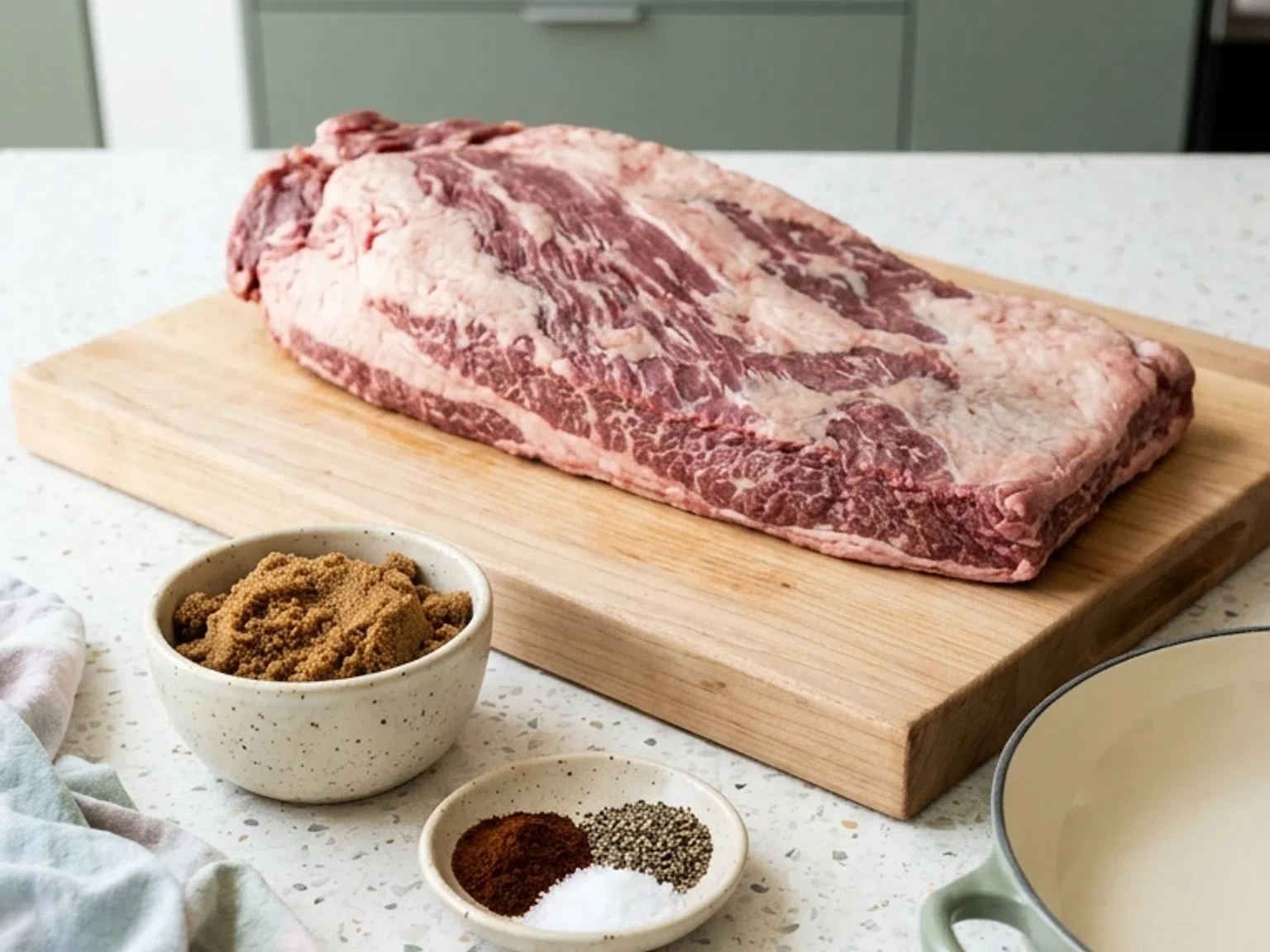
The brisket and four measured rub ingredients.
Use fresh beef brisket, rather than corned beef, which has already been cured in seasoned brine. A whole packer contains the leaner flat and fattier point. University of Wyoming Extension’s brisket guide explains these cut differences and why brisket benefits from prolonged cooking.
- 8 pounds packer-cut brisket: This is the purchase weight before trimming. Choose a piece that fits your grill’s indirect zone and roasting pan.
- 1/2 cup packed brown sugar: Light or dark works. Dark brown sugar gives the coating a stronger molasses flavor.
- 2 tablespoons seasoned salt: Use a blend whose saltiness you know. Plain table salt is not an equal-volume replacement.
- 1 tablespoon mild chili powder: Choose a seasoning blend, not pure cayenne pepper.
- 2 teaspoons ground black pepper: Its sharpness balances the sweet coating.
The formula is dairy-free. For gluten-free needs, use verified gluten-free seasoned salt and chili powder; check any separately served condiments too. These seasoning changes do not require different cooking temperatures.
A vegetarian main needs its own method. Mushrooms or plant-based roasts cannot use this brisket’s lengthy cooking schedule.
Equipment and pan fit
Gather a covered grill, heavy-duty foil, a deep roasting pan, a thermometer, sturdy lifting utensils, and a carving board.
A pan approximately 16 by 12 by 3 inches is a starting point. Check the actual meat before heating anything: the entire foil packet must sit inside the pan without hanging over its edges. Use a larger pan if necessary.
An oven-safe probe thermometer can track progress without repeatedly opening the foil. Use an instant-read thermometer or slender probe to check texture in several places near the finish.
Step-by-step cooking guide
1. Trim and season the cold brisket
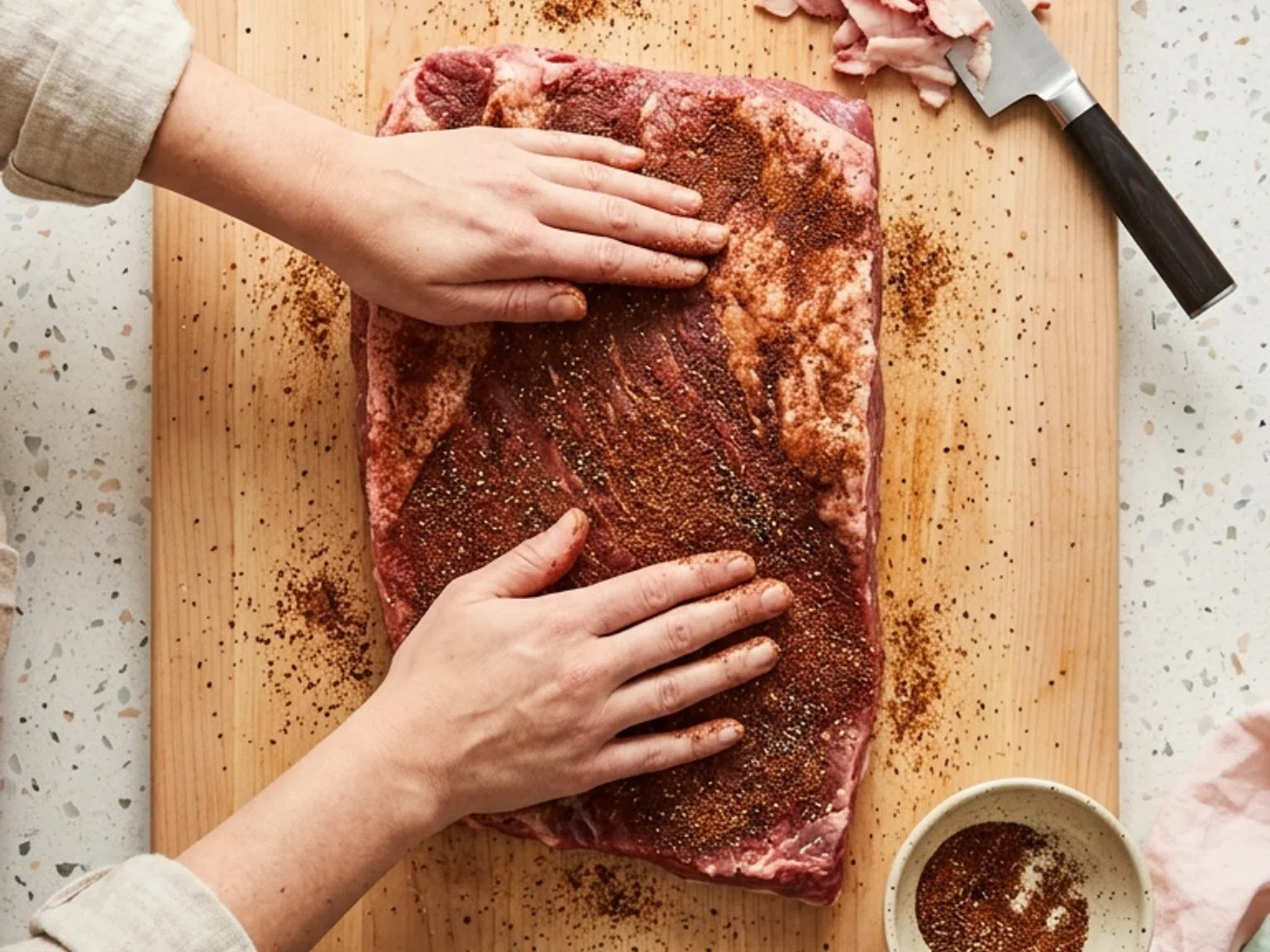
Cold brisket trimmed before the rub is applied.
Keep the brisket refrigerated until preparation. Trim away hard, waxy exterior fat, leaving about 1/4 inch of soft fat over the meat. Avoid digging deeply into the lean flat.
Before covering the meat with seasoning, find the parallel muscle fibers in the flat. Remember their direction so you can slice across them later.
Mix the four rub ingredients, breaking up sugar lumps. Press the mixture over every side. The coating should cling evenly without thick piles of seasoning. Return the brisket to the refrigerator while the grill heats.
2. Brown over indirect heat
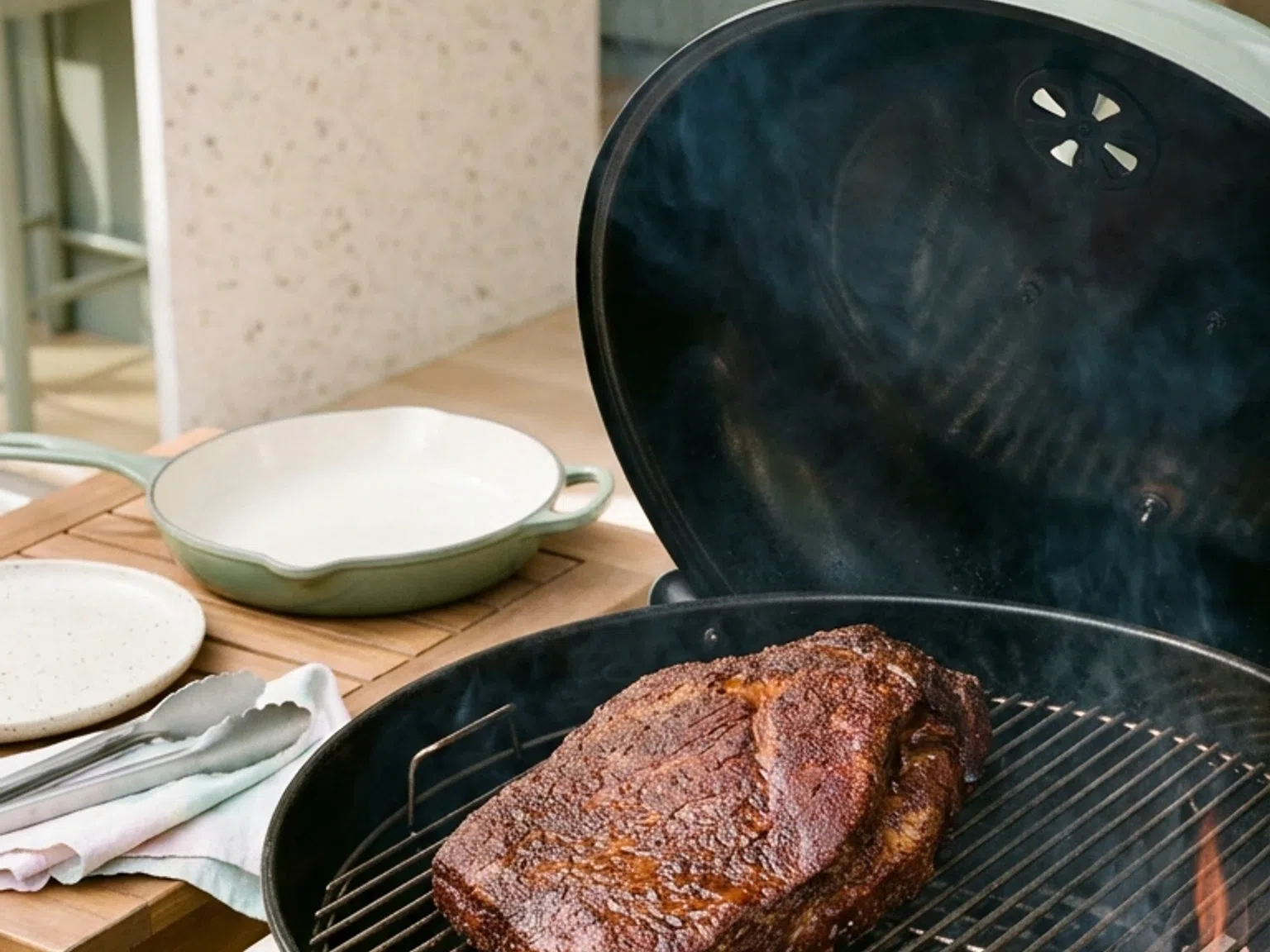
An indirect cooking area keeps the sweet coating away from flames.
Heat the covered grill to 325°F. On a gas grill, leave the burners directly beneath the brisket off. On charcoal, bank the coals away from the meat.
Position the thicker point toward the heat source. Close the lid and cook for 45 to 60 minutes, turning once, until the rub looks set and deep brown and smells toasted.
Move the brisket farther from the heat if black patches appear. Browning develops the seasoned surface; it does not seal juices inside. Wrapping will soften this coating, so expect a tender roast with a browned exterior rather than a crisp barbecue crust.
3. Wrap and cook at 275°F
Heat the oven to 275°F. Wrap the brisket snugly in two layers of heavy-duty foil, placing seams upward to retain the juices. Set the packet in the roasting pan.
Cook for approximately 5 to 8 hours, beginning checks after four hours. Open the packet carefully because hot steam can escape.
Measure in the thickest part of the flat, avoiding large fat seams. Around 195°F, begin checking how easily the probe enters the meat. Continue until it slides into several places with very little resistance, often around 200 to 205°F.
Wyoming Extension describes 195 to 205°F as a brisket tenderness range and explains that extended cooking breaks down its connective tissue. Use that range to guide checks rather than treating one reading as an automatic finish.
For safety context, Illinois Extension’s USDA temperature guidance lists 145°F with a three-minute rest for whole beef roasts. Brisket needs considerably more cooking for the texture sought here.
If the flat remains firm, reseal the foil and check again after 30 minutes.
4. Finish, rest, and carve
For a less wet coating, open the foil when the meat is nearly tender. Cook uncovered at 275°F for 15 to 30 minutes, until the surface dries slightly and the meat passes the tenderness check. Skip this optional step if the flat’s edges already look dry.
Remove the pan and rest the brisket loosely covered for 30 minutes. Pour the collected juices into a heatproof container and skim excess surface fat.
Separate the point and flat if their fibers run in different directions. Slice each across the grain, beginning with slices about 1/4 inch thick. If the slices crumble, cut them slightly thicker.
Portion planning and a measured half batch
The serving allowance is 8 pounds ÷ 16 guests = 1/2 pound of purchased raw brisket per person. This calculation includes meat and fat that may be trimmed away; it is not a promise of cooked yield.
| Ingredient | Full recipe: 16 moderate servings | Half recipe: 8 moderate servings |
|---|---|---|
| Purchased brisket | 8 pounds | 4 pounds |
| Packed brown sugar | 1/2 cup | 1/4 cup |
| Seasoned salt | 2 tablespoons | 1 tablespoon |
| Mild chili powder | 1 tablespoon | 1 1/2 teaspoons |
| Black pepper | 2 teaspoons | 1 teaspoon |
For example, a 4-pound flat for eight people uses the right-hand column. Begin tenderness checks after three hours in the wrapped oven stage. The cooking time does not halve with the ingredient amounts because thickness also affects how quickly the center heats.
Choose the full recipe for 12 guests if leftovers are a priority. For large appetites or a meal with few sides, allow more beef rather than stretching the stated yield.
Estimated calories
Allow approximately 600 calories per serving as a rough calculation from the complete raw ingredient quantities, before subtracting discarded fat.
Using USDA FoodData Central reference values, the calculation is approximately 9,110 calories for 8 pounds of raw whole brisket with lean and fat + 418 for brown sugar + 34 for chili powder and pepper, divided by 16 servings. It assumes a seasoned salt labeled zero calories. The resulting 598 calories rounds to 600.
This calculation gives no credit for trimming or rendered fat left behind. The beef’s fat content and the amount actually eaten can change the result substantially.
Chef’s tips for success
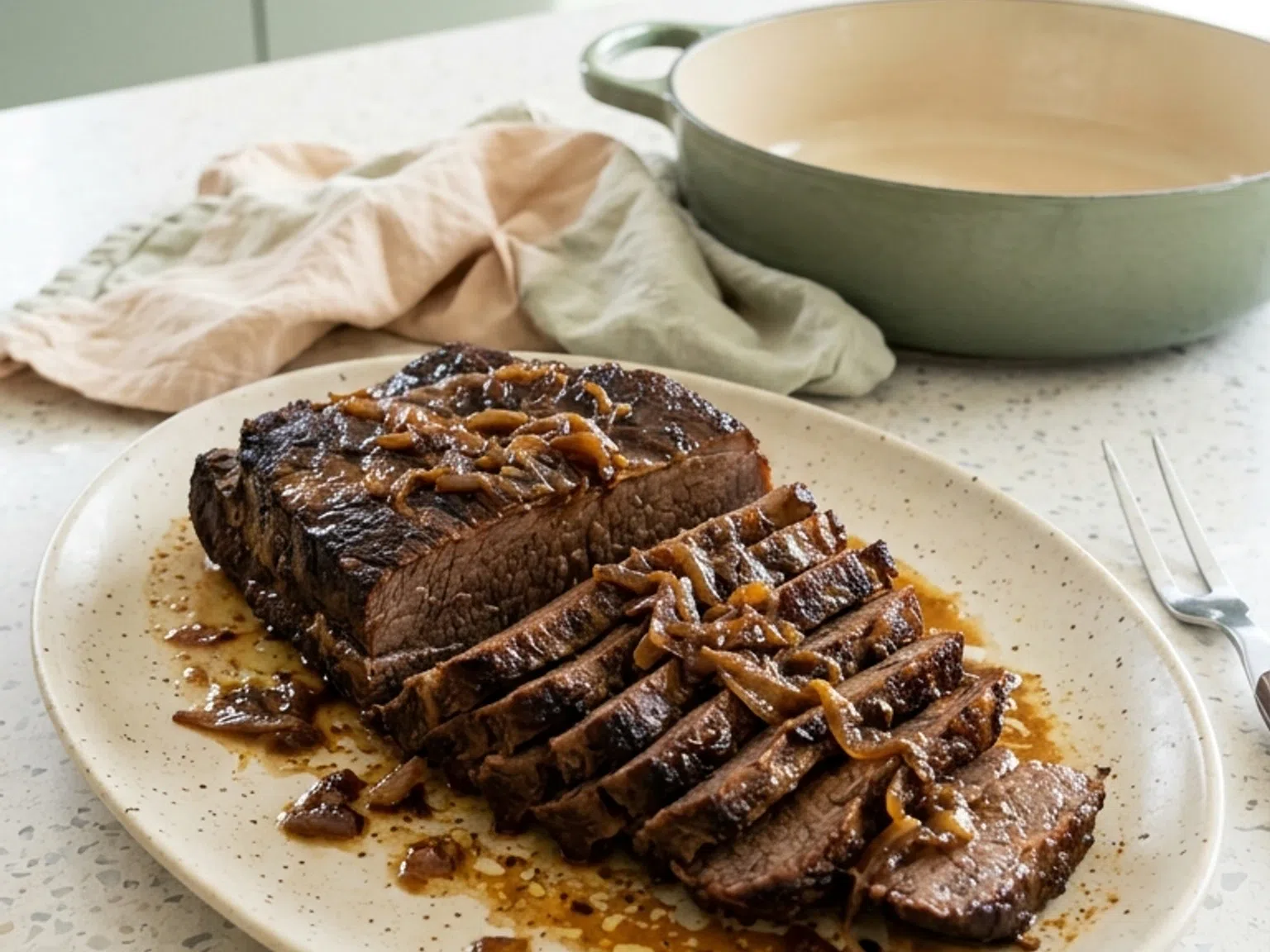
Carved brisket with the seasoned surface visible.
- Probe meat rather than soft fat. A probe passing through a fat pocket can feel effortless while the surrounding flat remains firm.
- Support the foil packet from underneath. Lifting a heavy brisket by the foil alone can tear it and spill the juices.
- Keep carving equipment clean. Wash the board and utensils used for raw preparation before bringing cooked brisket back to them.
Holiday serving suggestions
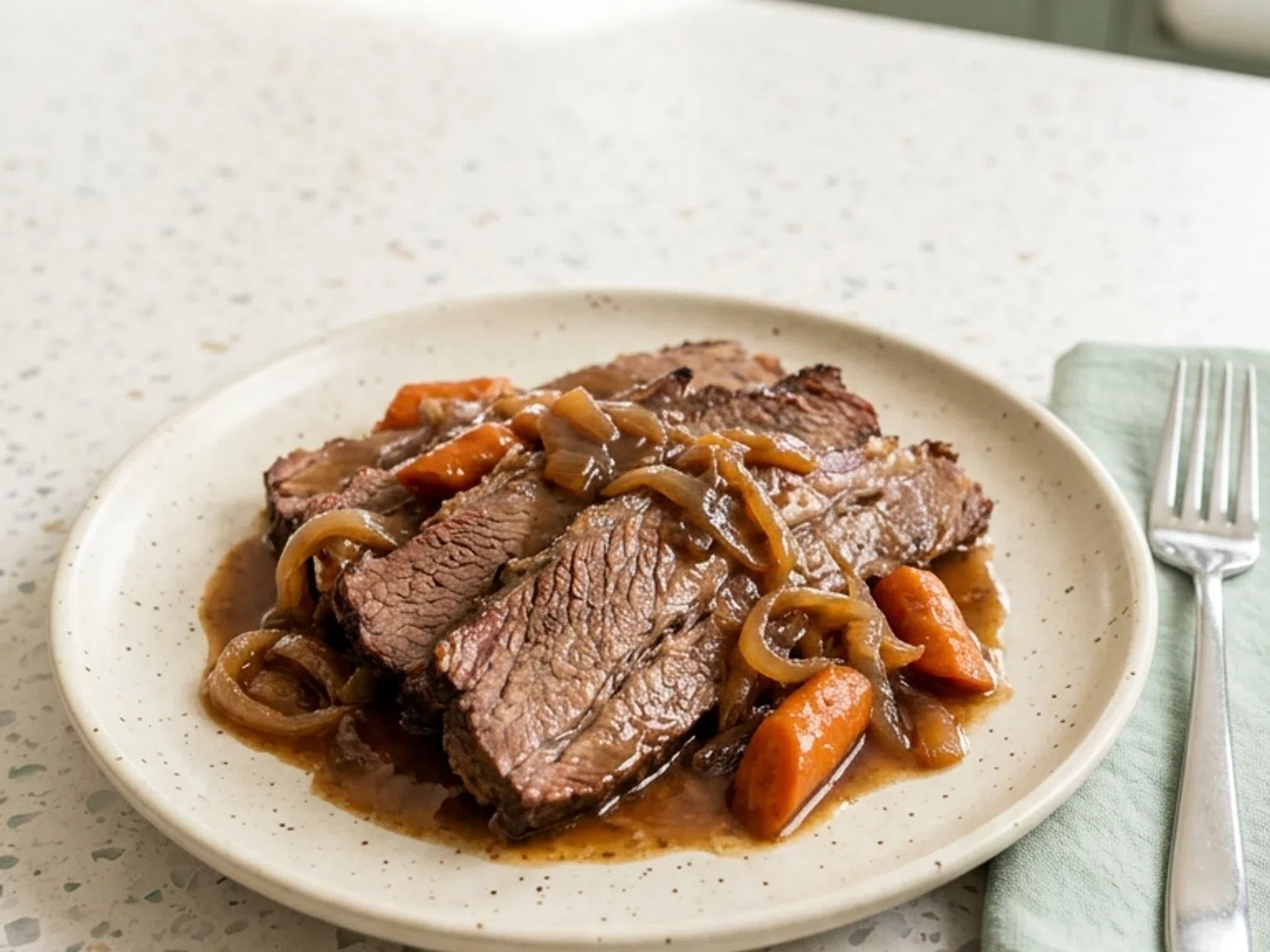
Overlapping slices make the brisket easy to serve family-style.
For Hanukkah, offer latkes, applesauce, and roasted vegetables. Keep crisp latkes on a separate platter so the brisket juices do not soften them. Choose suitable dairy-free accompaniments for a kosher meat meal.
For Christmas, pair the beef with air-fryer carrots and air-fryer asparagus. Their separate appliance is useful while the oven holds the roasting pan. For a heartier plate, serve air-fryer baked potatoes alongside.
Arrange the slices in overlapping rows, spoon a little juice over them, and offer the remainder separately. For a fresh finish, scatter 1 tablespoon chopped fresh parsley over the platter; this optional garnish is outside the five-ingredient formula.
Make-ahead, storage, and reheating
Choose your serving schedule
Cooking ahead removes the uncertainty of a long roast finishing just before dinner. The trade-off is a softer coating after covered reheating.
| Plan | Practical advantage | What to account for |
|---|---|---|
| Cook and serve the same day | No chilling or reheating stage | The roast may need longer than the estimated cooking window |
| Cook the day before | Easier to schedule dinner and carve chilled meat | Refrigerate promptly, then reheat the center to 165°F |
| Freeze meal-size portions | Convenient later dinners | Thaw in the refrigerator and reheat only the portions needed |
The cooling, storage, and reheating requirements follow Purdue Extension’s leftover guidance.
Chill promptly
After resting, divide the brisket into smaller portions. Refrigerate with its juices in shallow containers 3 inches tall or less. Do not leave the whole roast on the counter until cold.
The FDA’s storage guidance limits room-temperature time to two hours, or one hour above 90°F. Include resting, carving, and serving time in that limit. Keep the refrigerator at 40°F or below.
Store covered and use within 3 to 4 days. For longer storage, freeze airtight meal-size portions with their juices for 2 to 3 months for best quality. Thaw in the refrigerator.
Reheat covered with the juices
Slice the chilled brisket across the grain. Arrange in shallow baking dishes with the saved juices and cover tightly with foil.
Reheat at 325°F, allowing approximately 30 to 60 minutes for shallow dishes of slices. Begin checking after 30 minutes. The meat should be steaming, with hot juices around the slices; confirm 165°F in several central pieces before serving. Deeper or more crowded dishes can take longer.
For example, for a 7 p.m. dinner, begin reheating at 5:45 p.m. and check at 6:15 p.m. Continue until the center reaches 165°F rather than serving by the clock alone.
Frequently asked questions
Can I make this brisket entirely in the oven?
Yes. Put the seasoned meat in its roasting pan and cook uncovered at 325°F for 45 to 60 minutes, watching for a deep brown coating without blackened sugar. Wrap tightly, reduce the oven to 275°F, and follow the wrapped cooking stage above. This gives a browned exterior without wood-smoke flavor.
Why is my brisket still tough at 200°F?
The temperature is a guide to when tenderness checks matter. If several spots in the flat still resist the probe, the brisket needs more time. Reseal the packet and check again after 30 minutes at 275°F.
Can I use a brisket flat instead of a whole packer?
Yes. For a 4-pound flat, use the measured half batch in the portion table and begin checking after three hours in the wrapped stage. Keep it wrapped through the finish if the lean edges look dry.
Is this suitable for a kosher holiday meal?
The formula contains no dairy, but that alone does not establish kosher suitability. Choose appropriately certified beef and seasonings, suitable equipment, and side dishes that meet your household’s requirements.
Source record: SnapChef ID 718a4a57-2b1d-4d81-8217-3d9600775780.
Food photos in this article are digital illustrations, designed and styled by our studio for this recipe.
Recipe card
5-Ingredient Brisket for Hanukkah and Christmas
Make 5-Ingredient Brisket with a grill-and-oven method, tender slicing cues, holiday serving amounts, and clear make-ahead instructions.
Ingredients
Directions
- Trim the refrigerated brisket, removing hard exterior fat and leaving about 1/4 inch of soft fat. Note the direction of the muscle fibers in the flat. Mix the brown sugar, seasoned salt, chili powder, and pepper, then press over every side. Refrigerate while heating the grill.
- Heat a covered grill to 325°F with an indirect cooking area. Place the brisket over the unlit side, with the thicker point toward the heat. Close the lid and cook for 45 to 60 minutes, turning once, until the seasoning looks set and deep brown. Move farther from the heat if black patches develop.
- Heat the oven to 275°F. Wrap the brisket tightly in two layers of heavy-duty foil, with seams facing up. Place in a deep roasting pan that holds the entire packet without overhang.
- Cook wrapped for about 5 to 8 hours, beginning checks after 4 hours. Insert a thermometer into the thickest part of the flat, avoiding fat seams. Begin checking tenderness around 195°F. Continue until a probe enters several places with very little resistance, often around 200 to 205°F. If firm, reseal and check again after 30 minutes.
- For a less wet surface, open the foil when the brisket is nearly tender and cook uncovered at 275°F for 15 to 30 minutes. Skip this optional finish if the flat looks dry. Remove when the meat is probe-tender.
- Rest loosely covered for 30 minutes, reserving the cooking juices. Separate the point and flat if their grain directions differ. Slice each across the grain, starting with 1/4-inch slices, and serve with the juices.
Tap a step number to check it off as you cook.
Nutrition Facts per serving · estimated
Amount per serving
% Daily Values are based on a 2,000-calorie diet (FDA).
Good to know
Questions, answered
Can I make this brisket entirely in the oven?
Yes. Place the seasoned brisket in its roasting pan and cook uncovered at 325°F for 45 to 60 minutes, until the coating darkens without burning. Wrap tightly, lower the oven to 275°F, and follow the same tenderness checks. The exterior will brown, but it will not develop wood-smoke flavor.
Why is my brisket still tough at 200°F?
A temperature reading alone does not establish tenderness. Check several places in the thickest part of the flat, avoiding fat seams. If the probe meets firm resistance, reseal the foil and continue cooking at 275°F, checking again after 30 minutes.
Can I use a 4-pound brisket flat?
Yes. Use 1/4 cup packed brown sugar, 1 tablespoon seasoned salt, 1 1/2 teaspoons mild chili powder, and 1 teaspoon black pepper. Begin checking after three hours in the wrapped oven stage. A flat is leaner than a whole packer, so skip the uncovered finish if its edges look dry.
Is this brisket suitable for a kosher holiday meal?
The five-ingredient formula contains no dairy. Use appropriately certified beef and seasonings, suitable equipment, and accompaniments that meet your household's kosher requirements.