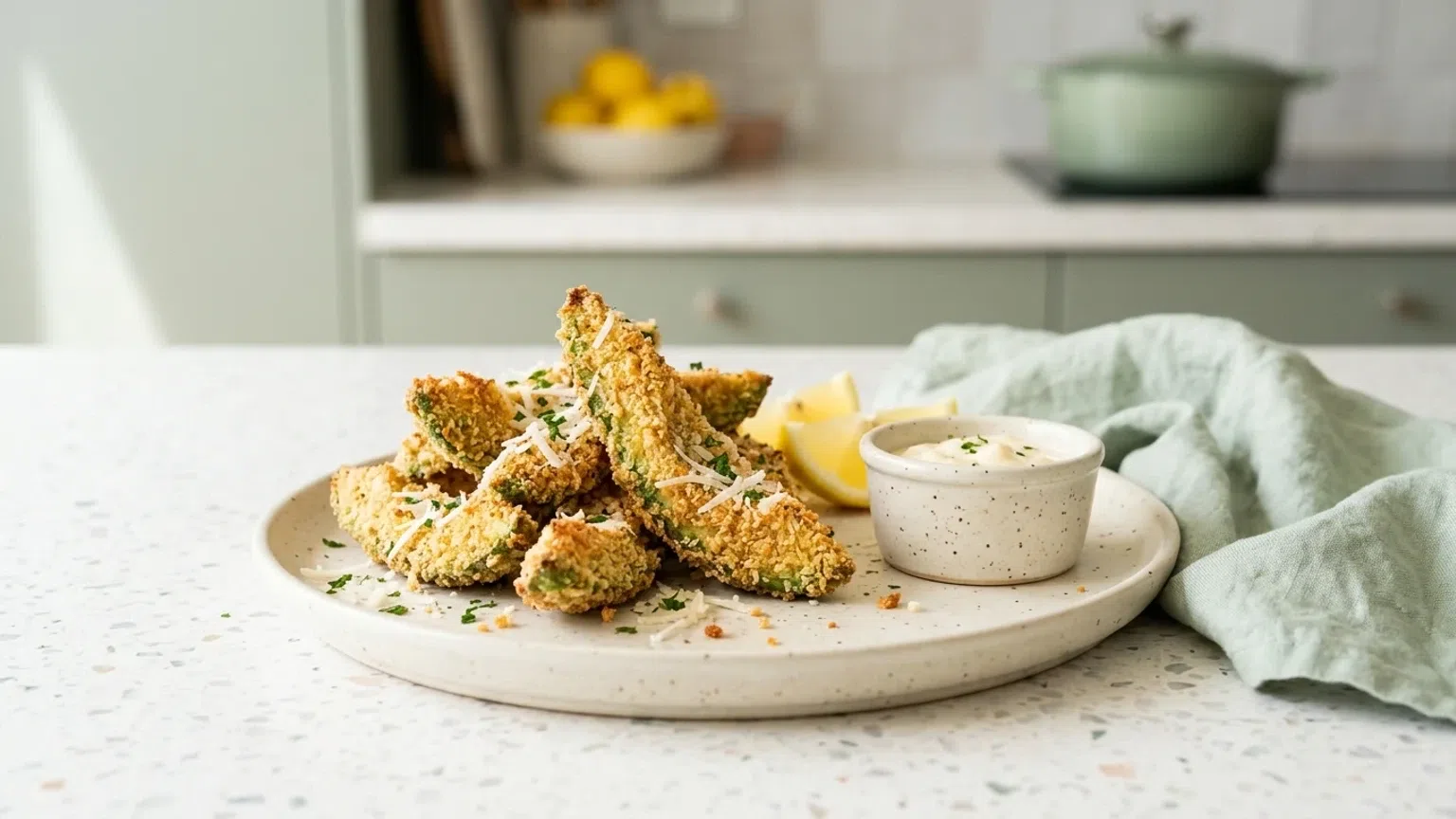
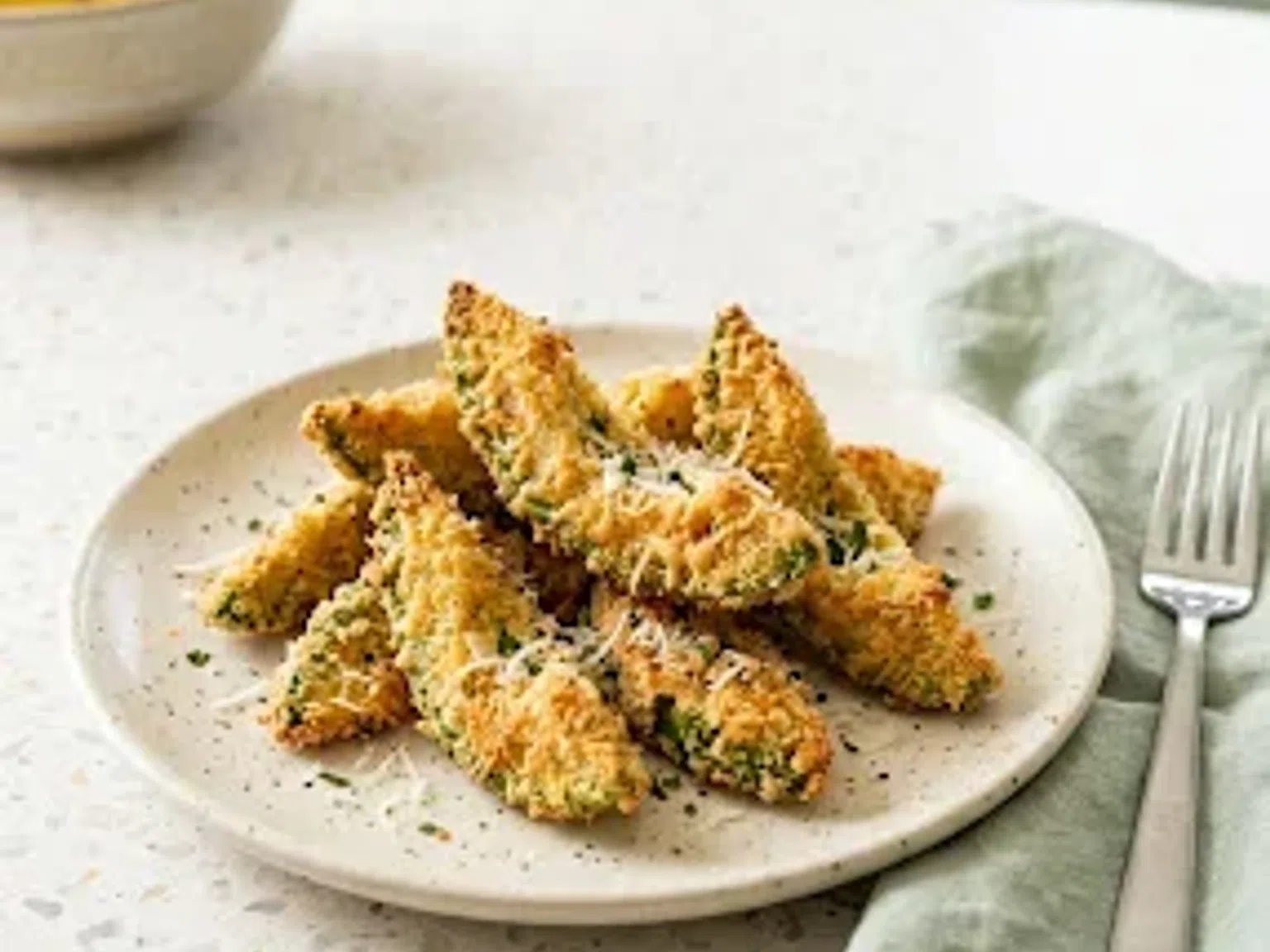
Cook Air Fryer Avocado Fries at 350°F for 8 to 10 minutes per batch for a crisp Parmesan-panko coating and a warm, creamy center. A cornstarch-and-water coating replaces egg wash. This recipe makes 4 servings, with approximately 175 calories and 6 grams of fiber per serving.
Key takeaways
- Choose firm-ripe avocados that hold their shape when sliced.
- Cook until the coating feels dry and has lightly golden edges.
- Leave gaps between wedges and allow extra time for a second batch.
- Serve promptly, with dipping sauce alongside to protect the crust.
Key ingredients and substitutions
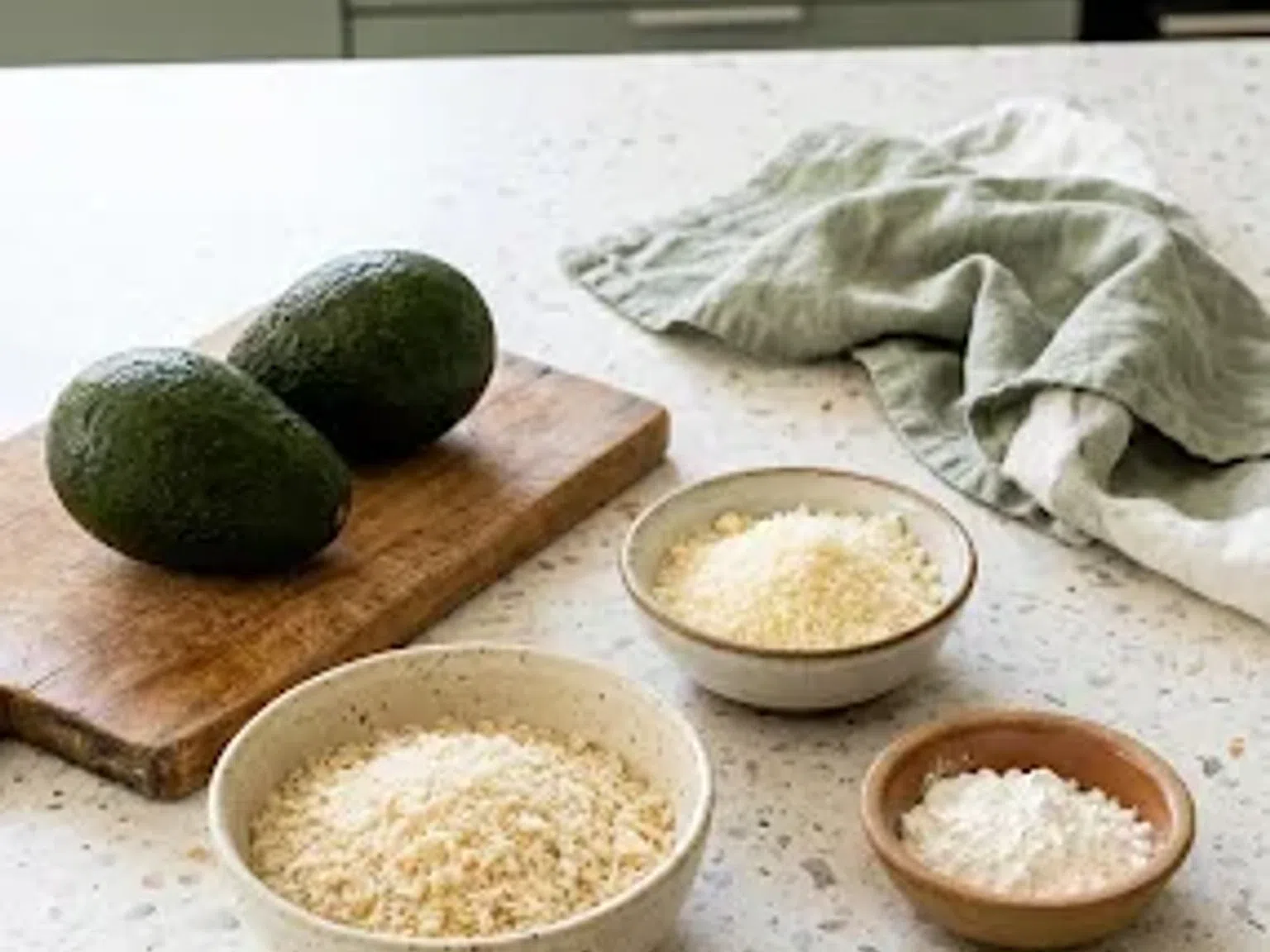
Avocados: Use 2 medium avocados that give slightly under gentle pressure. The flesh should separate from the peel without collapsing. Cut each avocado into 8 wedges for 16 pieces, or about 4 per serving.
Panko: Panko is a coarse, flaky breadcrumb that creates a textured crust. Measure 1/2 cup before mixing it with the seasonings. Fine breadcrumbs work, but produce a more compact coating.
Cornstarch and water: A slurry is starch mixed with a cool liquid. Here, 2 tablespoons cornstarch and 1/4 cup water form the wet coating. Whisk until no powdery lumps remain.
Parmesan: Use 2 tablespoons finely grated cheese so it distributes through the crumbs. For vegetarian diners, choose Parmesan-style cheese made without animal rennet.
Italian herbs: Use 1 teaspoon of an unsalted dried blend, such as oregano, basil, and thyme, alongside the measured salt and pepper.
For dietary changes, replace panko with 1/2 cup certified gluten-free panko. Replace Parmesan with 2 tablespoons nutritional yeast for a dairy-free coating. Keep the temperature unchanged, but judge the crust by dryness and texture because browning may differ.
Equipment
Use a basket-style air fryer, two shallow bowls, a fork or small whisk, and a plate for the coated wedges. A thin silicone spatula helps turn them without crushing the centers.
Basket capacity matters more than the appliance’s stated volume. The wedges need to fit flat with visible gaps. Have a second plate ready if the full recipe requires two batches.
Step-by-step cooking guide
Allow about 5 minutes for preparation, plus cooking time for each basketful. If coating the wedges takes longer, finish that step carefully rather than rushing to meet the clock.
1. Prepare sturdy avocado wedges
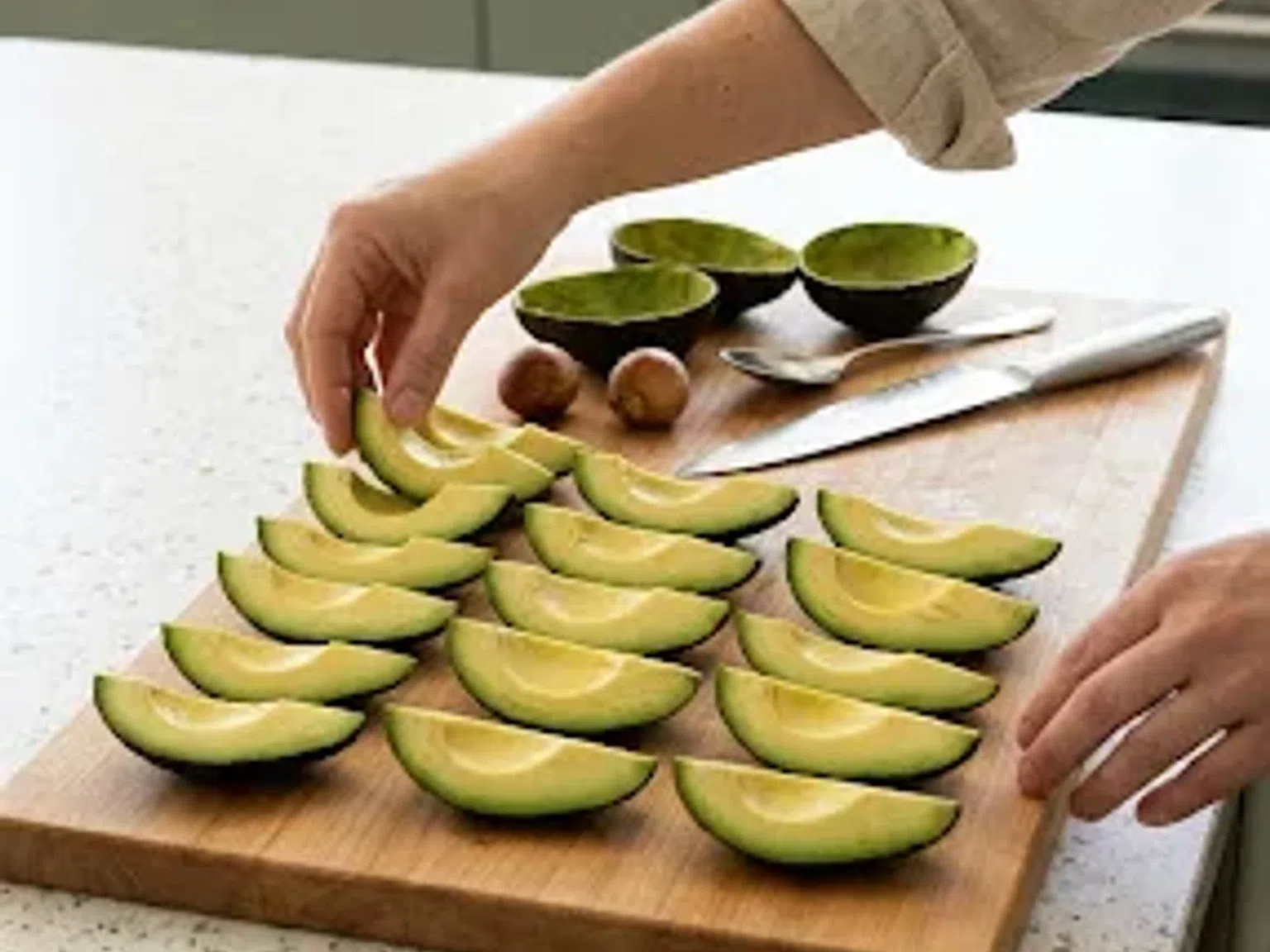
Rinse the whole avocados under running water and dry them before cutting. The FDA’s Selecting and Serving Produce Safely recommends washing produce even when the peel will not be eaten.
Halve the avocados and remove the pits. Slide a spoon between the flesh and peel to lift out each half. Cut each half lengthwise into 4 wedges. Keep the pieces thick enough to lift without bending.
2. Make the two coatings
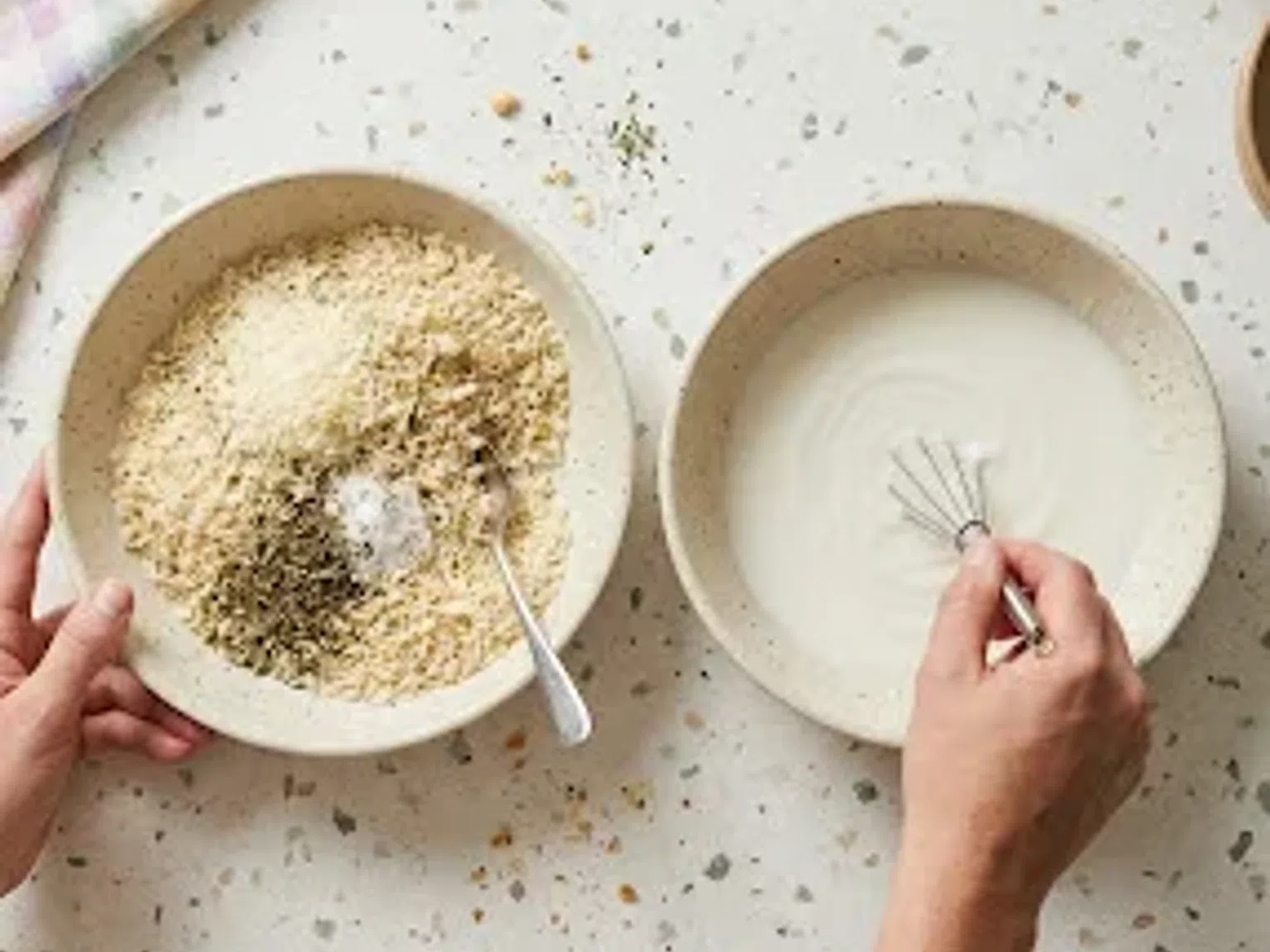
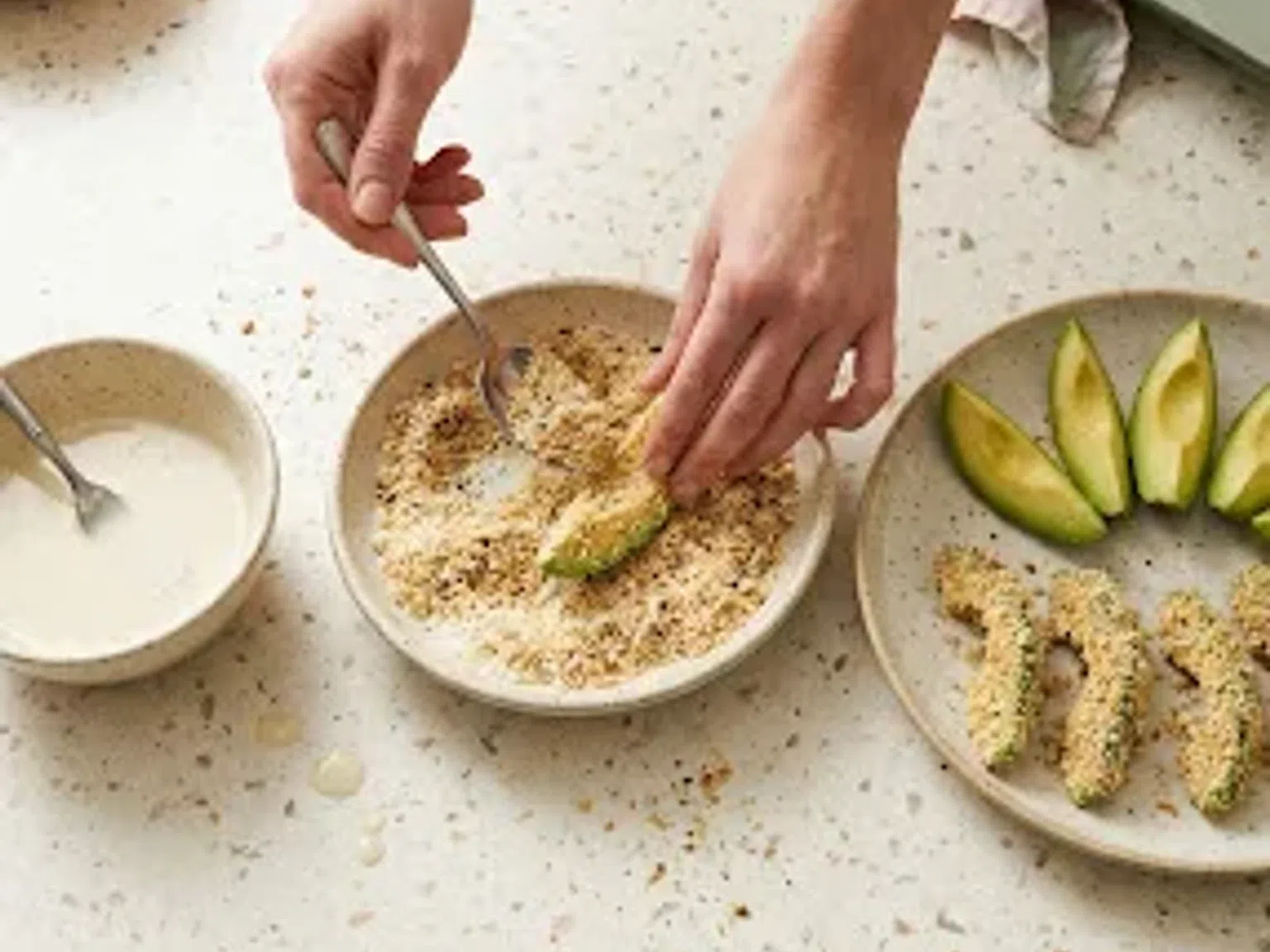
Mix the panko, Parmesan, Italian herbs, salt, and pepper in one shallow bowl.
Whisk the cornstarch and water in the second bowl until smooth and milky. Stir again as you work because the starch settles.
3. Coat without squeezing
Dip one wedge into the slurry and let the excess drip off. Lay it in the crumb mixture, spoon crumbs over the top, and press gently along the sides.
Transfer it to the waiting plate. Repeat with the remaining wedges, keeping one hand for the wet coating and the other for breadcrumbs. This helps prevent damp clumps from forming in the crumb bowl.
4. Air fry until the crust is dry
Arrange the wedges in one layer with visible gaps in the basket. If needed, cook in two batches.
Set the air fryer to 350°F (175°C) and cook for 8 to 10 minutes per batch. At about 5 minutes, slide a thin spatula beneath each wedge and turn it carefully.
Start checking at 8 minutes for a dry crumb surface and a crust that stays attached when lifted. This coating contains no added oil, so expect lightly golden edges with some pale crumbs.
The avocado inside should remain creamy. Avoid extending cooking simply to make every crumb deeply brown.
5. Serve while crisp
Move the fries to a plate in a loose layer. Serve immediately, with sauce in a separate bowl. Pouring sauce over the wedges softens the coating before everyone has a chance to eat.
Kitchen notes: coating ratio and batch timing
The slurry uses 1 part cornstarch to 2 parts water by volume. After draining, it should leave a thin film rather than thick patches. As a culinary inference, removing pooled liquid helps prevent wet pockets beneath the crumbs.
Use basket space to choose your serving plan:
| Basket arrangement | Cooking allowance | What to expect |
|---|---|---|
| All 16 wedges fit with gaps | 8–10 minutes | All four servings finish together |
| Only 8 wedges fit with gaps | 16–20 minutes across two batches | First batch softens while the second cooks |
| Wedges overlap | Divide into batches | Covered surfaces cannot dry as readily |
For example, if preparation takes 5 minutes and the basket holds 8 wedges, allow 21 to 25 minutes, plus basket transfers. For the crispest serving, offer the first batch while the second cooks.
The calorie estimate uses approximate ingredient weights and generic values from FoodData Central: 300 grams edible avocado, 28 grams panko, 16 grams cornstarch, and 10 grams Parmesan. These contribute roughly 480 + 110 + 60 + 42 calories. Dividing about 692 calories by four gives 173, rounded to 175 calories per serving. Avocado size and breadcrumb brands change the result.
Chef’s tips for success
- Keep crumbs loose. Sprinkle them over the wet avocado instead of repeatedly rolling the wedge through damp crumbs.
- Support the whole wedge when turning. Slide a spatula underneath rather than pinching the soft center with tongs.
- Remove loose crumbs between batches. Let the basket cool enough to handle safely, then clear crumbs that could scorch during the next round.
Serving suggestions
Choose blackened ranch dressing for a seasoned dip to contrast with the creamy avocado. Serve it separately so each wedge gets dipped just before eating.
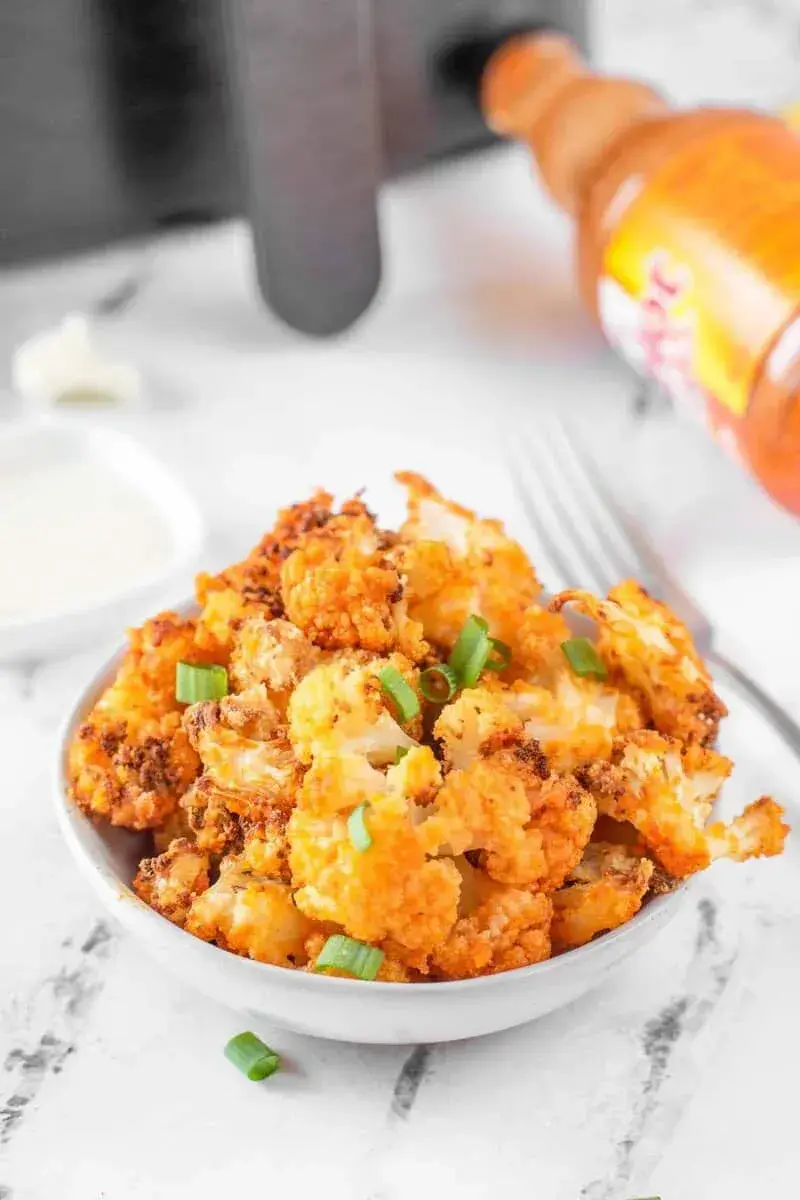
For a meal, use the fries as a side to air fryer hamburgers, with asparagus alongside. For a shared appetizer platter, pair them with buffalo cauliflower and offer the ranch with both.
Make-ahead, storage, and reheating
Mix the dry coating ahead and keep it covered. Leave the avocados whole until you are ready to cut, coat, and cook them.
These fries are best eaten fresh. The coating softens during storage, and reheating can dry the avocado. Refrigerate leftovers in a shallow airtight container and use within 2 days for better quality.
Follow USDA’s Leftovers and Food Safety: refrigerate within 2 hours, or 1 hour when temperatures exceed 90°F, and keep the refrigerator at 40°F or below.
To reheat, arrange the fries in one layer at 350°F. Check after 3 to 4 minutes, then continue as needed until the centers reach 165°F, USDA’s reheating target for leftovers. The crust should feel drier, though it may not regain its original texture.
Freezing is a poor fit when a creamy center and crisp coating are the priority. Make a smaller batch instead. For example, halve every ingredient for two servings: use 1 avocado, 1/4 cup panko, 1 tablespoon cornstarch, and 2 tablespoons water.
Frequently asked questions
Can I use regular breadcrumbs instead of panko?
Yes. Substitute 1/2 cup fine breadcrumbs. They produce a more compact coating, so use dryness and crispness as your cues rather than expecting the same appearance.
Do I need an egg wash for the coating?
No. The cornstarch slurry provides the wet surface for the crumbs. Drain each wedge before breading so the coating does not become pasty.
How do I make these gluten-free, dairy-free, or vegan?
Use certified gluten-free panko for gluten-free fries. Replace Parmesan with 2 tablespoons nutritional yeast for dairy-free fries. For vegan fries, also check the breadcrumb ingredients.
Why is the coating falling off?
Very soft avocado, excess slurry, or rough handling can loosen it. Use firm-ripe wedges, let liquid drain before breading, and turn each piece with support underneath.
Source recipe record: Air Fryer Avocado Fries, SnapChef ID 030e49c4-6428-49a6-b243-2545f79ba7af. Nutrition is estimated per serving.
Food photos in this article are digital illustrations, designed and styled by our studio for this recipe.
Recipe card
Air Fryer Avocado Fries with Parmesan
Make egg-free air fryer avocado fries with a Parmesan-panko crust, creamy centers, and clear batch timing, coating tips, and reheating advice.
Ingredients
Directions
- Rinse the whole avocados under running water and dry them. Halve and remove the pits. Scoop out each half with a spoon, then cut it lengthwise into 4 wedges, making 16 pieces.
- Combine the panko, Parmesan, Italian herbs, salt, and pepper in a shallow bowl. In a second bowl, whisk the cornstarch and cool water until smooth and milky.
- Stir the slurry before each dip. Dip a wedge, let excess liquid drain, then spoon crumbs over it and press gently along the sides. Transfer to a plate and repeat.
- Arrange the wedges flat in the air fryer basket with visible gaps. Cook at 350°F (175°C) for 8 to 10 minutes per batch. Turn gently with a thin spatula at about 5 minutes. The coating should feel dry and crisp, with lightly golden edges; some crumbs may remain pale.
- Transfer gently to a serving plate and serve promptly. Repeat with remaining wedges if the basket requires a second batch.
Tap a step number to check it off as you cook.
Nutrition Facts per serving · estimated
Amount per serving
% Daily Values are based on a 2,000-calorie diet (FDA).
Good to know
Questions, answered
Can I use regular breadcrumbs instead of panko?
Yes. Replace the 1/2 cup panko with 1/2 cup fine breadcrumbs. The coating will be more compact, so check for a dry, crisp surface rather than identical browning.
Do I need an egg wash for the coating?
No. Whisk 2 tablespoons cornstarch with 1/4 cup water, dip each wedge, drain the excess, and gently apply the seasoned crumbs. Stir the slurry before each dip.
How do I make these gluten-free, dairy-free, or vegan?
Use 1/2 cup certified gluten-free panko for gluten-free fries. Replace Parmesan with 2 tablespoons nutritional yeast for dairy-free fries. For vegan fries, also check the breadcrumbs for animal ingredients.
Why is the coating falling off?
Very soft avocado, pooled slurry, and rough handling can loosen the crust. Use firm-ripe wedges, drain excess slurry, press crumbs on gently, and support each wedge with a spatula when turning.