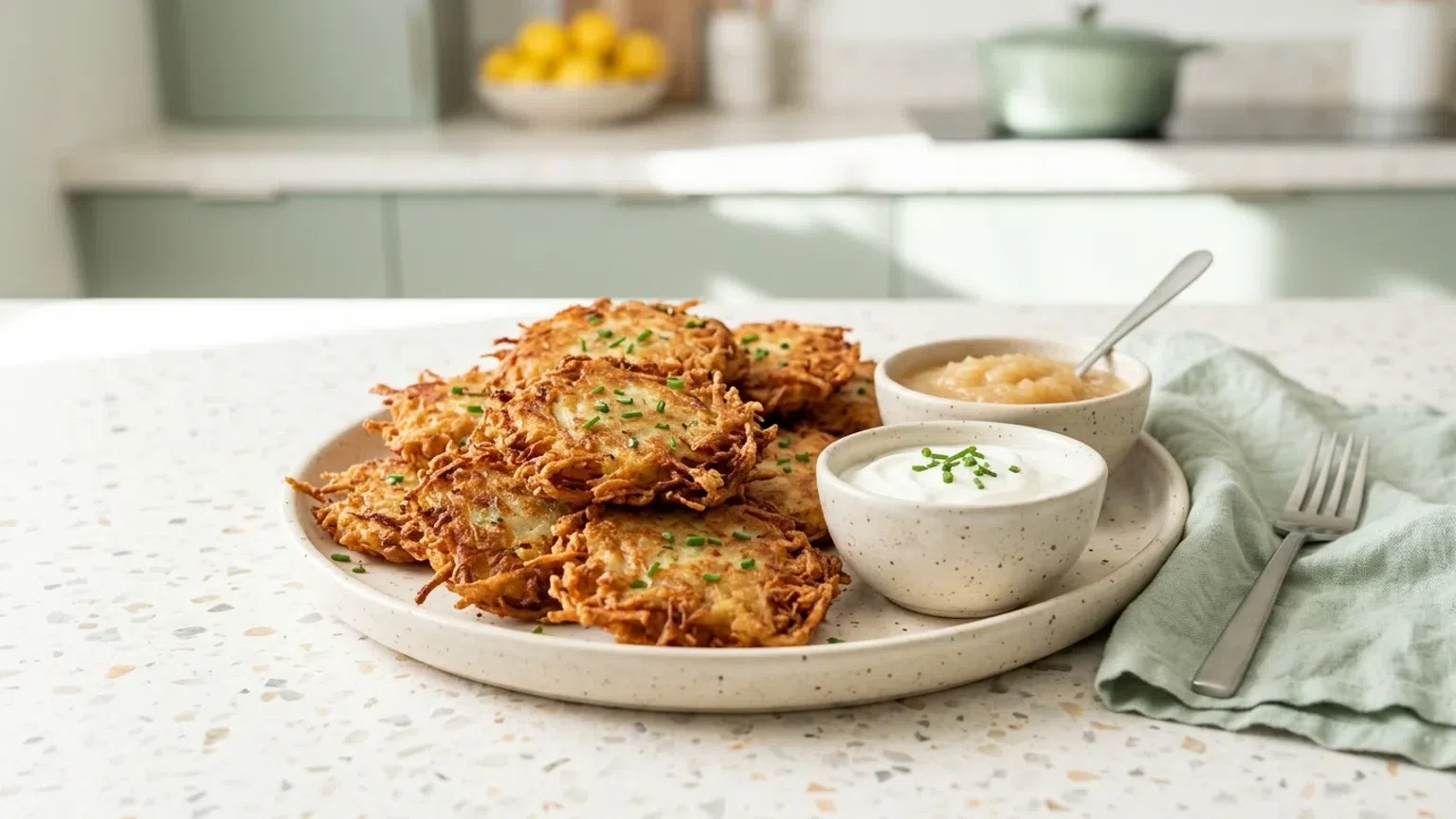
This potato latkes recipe gives you crisp, lacy-edged potato pancakes for Hanukkah. Grate russet potatoes, squeeze the shreds almost completely dry, shape thin rounds, and fry in oil near 350°F until deep golden. Drain on a wire rack, not paper towels. Make them ahead by holding in a 200°F oven or freezing and reheating at 375°F.
Crispy Potato Latkes Recipe at a Glance
The recipe makes 16 thin latkes (4 servings of 4) in about 55 minutes: 25 minutes of prep and about 30 minutes of frying. Jump to the recipe steps or straight to the freezer plan.
Per serving (4 latkes): about 340 calories, 9 g protein, 48 g carbohydrate, 13 g fat. The estimate sums the whole batch (about 1,360 calories from potatoes, onion, eggs, matzo meal and roughly 3 tablespoons of oil that the latkes absorb) and divides by 4. Values are based on USDA FoodData Central entries and will shift with how much oil your batch soaks up.
Ingredients for the Best Potato Latkes

- 2 lb (900 g) russet potatoes
- 1 medium yellow onion (about 5 oz / 140 g)
- 2 large eggs
- 1/4 cup (30 g) matzo meal, or a swap from the binder table below
- 1 tsp fine sea salt and 1/4 tsp black pepper
- 3/4 cup (180 ml) vegetable oil for shallow frying
The potatoes supply starch and structure, the onion adds sweetness and savory depth, the egg glues the shreds together, and the binder soaks up leftover moisture. Vegetable, canola or peanut oil gives a neutral flavor and handles 350°F easily. Extra-virgin olive oil also works: OliveOil.com author Stephanie Eckelkamp cites a smoke point range of 350 to 410°F, so 350°F sits at the low end. Keep the heat steady, and expect a fruitier flavor.
Peeling is optional. Peeled latkes look uniform and have a cleaner flavor, while unpeeled ones bring flecks of skin, a little more fiber and a more rustic edge. Scrub well if you leave the skins on.
For an egg-free version, omit both eggs and the entire 1/4 cup of matzo meal. Replace that binder combination with 3 tablespoons total potato starch: measure the starch reclaimed from the squeezed liquid, then add packaged potato starch to reach 3 tablespoons. Do not add flour or another binder. Keep the remaining ingredients unchanged. The mixture is more fragile, so shape the latkes a bit thicker, let them set for a full 3 minutes before the first flip, and expect a slightly more delicate crust.
Which potatoes work best
Russets are the default choice: starchy, low in moisture, and they fry up fluffy inside with crisp, lacy edges. Yukon Golds are acceptable, but they are waxier, so the latkes turn out denser and less crisp. Avoid red or new potatoes, which are too waxy and watery.
Binder options: flour, matzo meal, potato starch
All three work. This comparison is a culinary inference from how each ingredient behaves, not a lab result. For the egg-free version, follow the complete substitution above.
| Binder | Amount for this batch | Texture | Best when |
|---|---|---|---|
| Matzo meal | 1/4 cup (30 g) | Slightly toasty, sturdy, classic | You want traditional flavor and an extra-crisp crust |
| Potato starch | 3 tbsp | Light, shatter-crisp, very potato-forward | You need gluten-free latkes (check for Passover or allergy labels) or the egg-free variation above |
| All-purpose flour | 3 tbsp | Softer, a little more pancake-like | It is what the pantry has |
How to Make Potato Latkes Step by Step
Set a wire rack over a rimmed baking sheet and heat the oven to 200°F (95°C) before you grate. Keep a bowl, a clean towel and a thermometer within reach. Hot oil spatters, so use a deep-sided skillet and slide each latke in from just above the surface, pointing away from you, with a thin spatula. Dry your hands and the spatula first, since water makes oil pop, and keep the pan handle turned inward and loose sleeves clear of the burner.
Grate and squeeze out the moisture
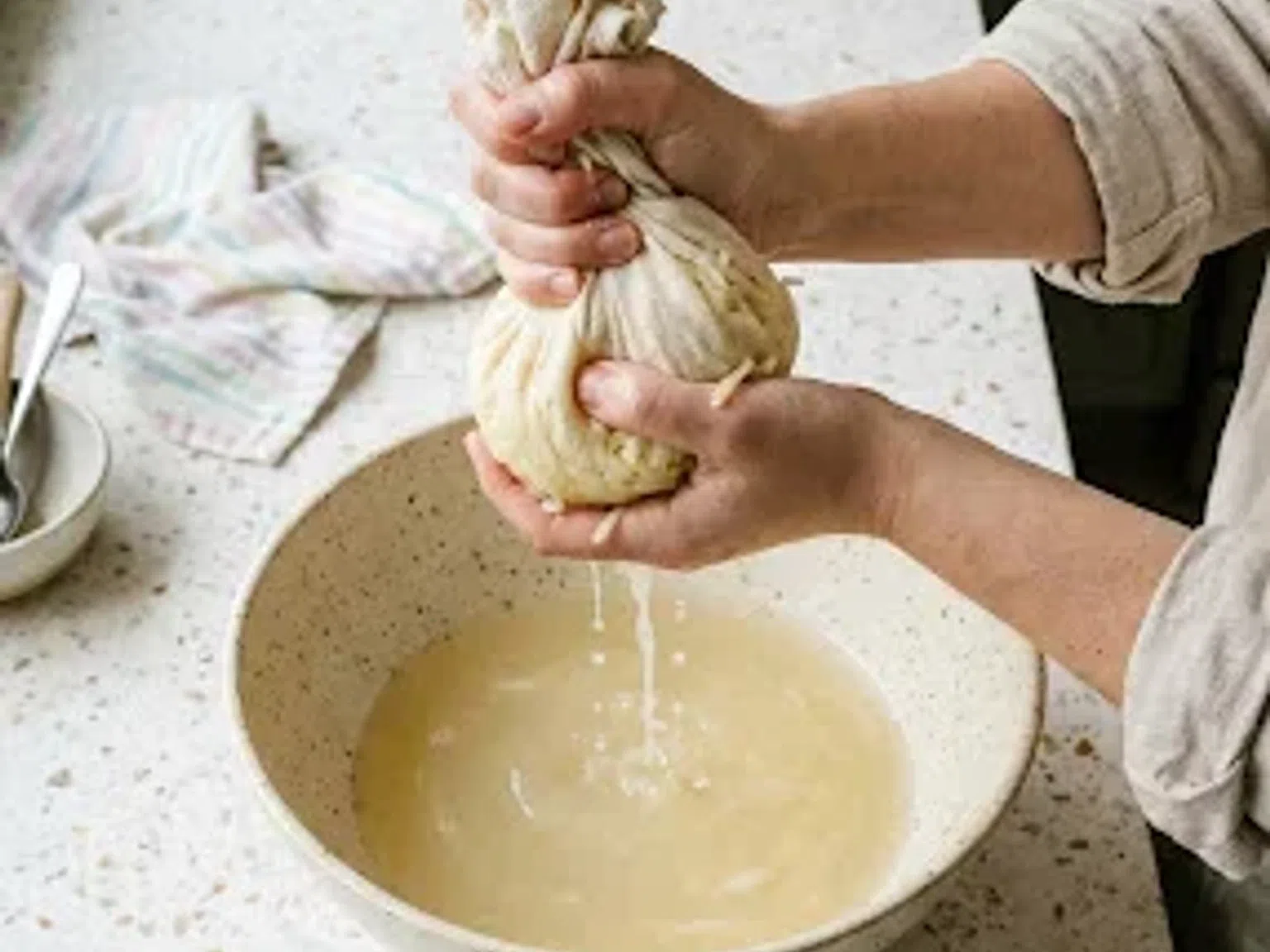
Grate the onion first, then the potatoes, on the large holes of a box grater or the shredding disc of a food processor. Pile the shreds into a clean kitchen towel, twist the towel tight, and wring over a bowl until almost nothing drips. Water is what turns frying into steaming, so this step decides crispness more than any other. Pour off the liquid but keep the pale starch paste at the bottom of the bowl, then scrape it back into the shreds, where it works as extra binder.
Mix quickly to avoid graying
Cut potato turns gray as it is exposed to air. Squeezing and mixing right before frying limits that exposure. Stir the shreds with the eggs, binder, salt and pepper until just combined, then fry without a long rest.
Fry to golden and crisp
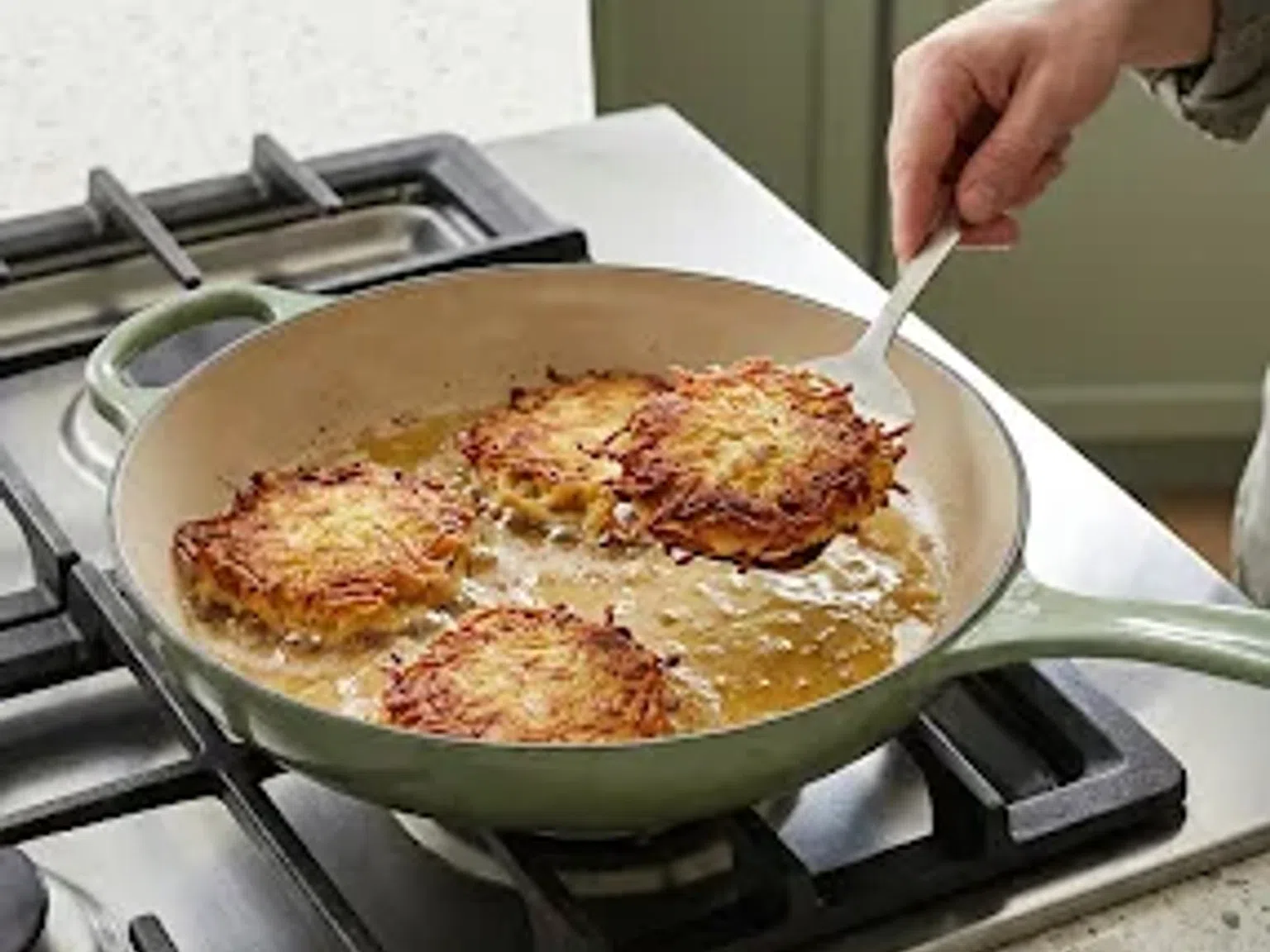
Pour oil about 1/4 inch deep into a 12-inch skillet over medium to medium-high heat. Cast iron or heavy stainless steel holds temperature best. Test with a pinch of shreds: it should sizzle steadily right away and brown in about a minute. If it smokes, lower the heat; if it barely bubbles, wait. A thermometer reading near 350°F (175°C) is the target.
Scoop about 3 tablespoons per latke and press into a thin round about 3 inches across and 1/4 inch thick. Fit 4 or 5 in the pan, since crowding drops the oil temperature and makes greasy latkes. Fry 3 to 4 minutes on the first side, until the edges are deep golden and lacy and the latke releases easily. Flip once and fry 2 to 3 minutes more. Drain on the wire rack, never on paper towels, and add a pinch of flaky salt while still hot. Between batches, skim out loose shreds and top the oil up so it stays about 1/4 inch deep.
Oven-bake option for a bigger batch
To fry less, heat the oven to 425°F (220°C) and preheat a rimmed baking sheet with 2 tablespoons of oil for 5 minutes. Drop the shaped latkes on the hot sheet, brush the tops with oil, and bake 12 to 15 minutes per side, until deep golden and crisp at the edges. The result is lighter and less rich than pan-fried, with a crust more like roasted potato than a true latke, but you can cook all 16 at once.
Keep Latkes Crisp: Holding, Freezing and Reheating for a Party
Latkes are best moments out of the pan, so a party plan should keep them crisp without leaving you at the stove all evening.
Oven-holding while you fry
Move each batch to a wire rack on a baking sheet in a 200°F (95°C) oven in a single layer. Air circulates around the whole latke, so steam escapes instead of settling on the bottom. They hold their crunch for about 30 to 45 minutes. Do not stack or cover them. Follow USDA guidance to keep hot food at 140°F or above while holding.
Freezing and reheating
After frying, spread the latkes on racks to release steam. Cooling time counts toward the USDA’s limit of 2 hours out of temperature control, or 1 hour above 90°F. Refrigerate promptly in shallow containers within that limit, without waiting for complete cooling. Once chilled, freeze in a single layer on a baking sheet until solid, then transfer to a freezer bag. Frozen cooked latkes are best within about 2 months for quality, though USDA guidance notes that food kept frozen at 0°F stays safe indefinitely.
To reheat, spread latkes in a spaced single layer on an oven-safe wire rack over a baking sheet and bake at 375°F (190°C). For a small batch, allow about 5 to 8 minutes from the refrigerator or 10 to 14 minutes from frozen, flipping once. These are estimates, not endpoints. With two loaded sheets, allow extra time, rotate the sheets between oven positions, and check latkes on both sheets. Reheat to 165°F (74°C) in the center, as the USDA recommends, even if the edges already look crisp.
Party timeline
For 48 three-inch latkes, plan on two 18-by-13-inch rimmed baking sheets with oven-safe racks. Arrange 12 latkes per rack in a single layer, in 3 rows of 4 with space between them. Confirm that the usable rack area accommodates that layout and both sheets fit in your oven with room for air circulation. This gives 24 latkes per reheating round and requires two rounds. Use fewer per sheet and additional rounds if your racks are smaller.
For dinner starting at 6:00 pm, serve the 48 latkes in two rounds rather than promising all 48 at once:
- Up to 1 week before: triple the recipe and fry all 48 latkes. Refrigerate each batch promptly within the limit above, including its cooling time, then freeze once chilled.
- 5:15 pm: preheat the oven to 375°F. Leave the latkes frozen until ready to load.
- 5:30 pm: begin reheating the first 24 latkes on the two prepared sheets. Flip the latkes and rotate the sheets during reheating. Allow extra time for the two-sheet load; check centers on both sheets for 165°F rather than relying on the small-batch estimate.
- When the first round reaches 165°F: if it is ready before service, lower the oven to 200°F and hold in a single layer, keeping the latkes at 140°F or above.
- 6:00 pm: serve the first round once it has reached 165°F. Return the oven to 375°F, then load the remaining 24 frozen latkes on the two racks. Reheat, flip and rotate as before; serve this second round when centers on both sheets reach 165°F. If the first round needs longer, delay service until it reaches the endpoint.
Serve in small batches. Include cooling and time on the serving table when observing the USDA’s limit of 2 hours out of temperature control, or 1 hour above 90°F.
Latke Troubleshooting
- Soggy: the shreds were still wet, the oil was too cool, or the pan was crowded. Squeeze again, wait until oil sizzles on the shred test, and cook fewer at a time.
- Greasy: oil that is too cool soaks into the batter. Let it recover to about 350°F between batches, and drain on a rack.
- Gray: the mixture sat too long. Mix right before frying, or hold shreds in cold water and squeeze again.
- Falling apart: too much liquid, too little binder, or flipping too early. Add 1 more tablespoon of matzo meal or starch, and wait until the edges are set and golden before turning.
- Raw in the center: the latkes are too thick or the oil is too hot, browning the outside first. Press thinner and lower the heat slightly.
Latke Toppings and Serving Ideas
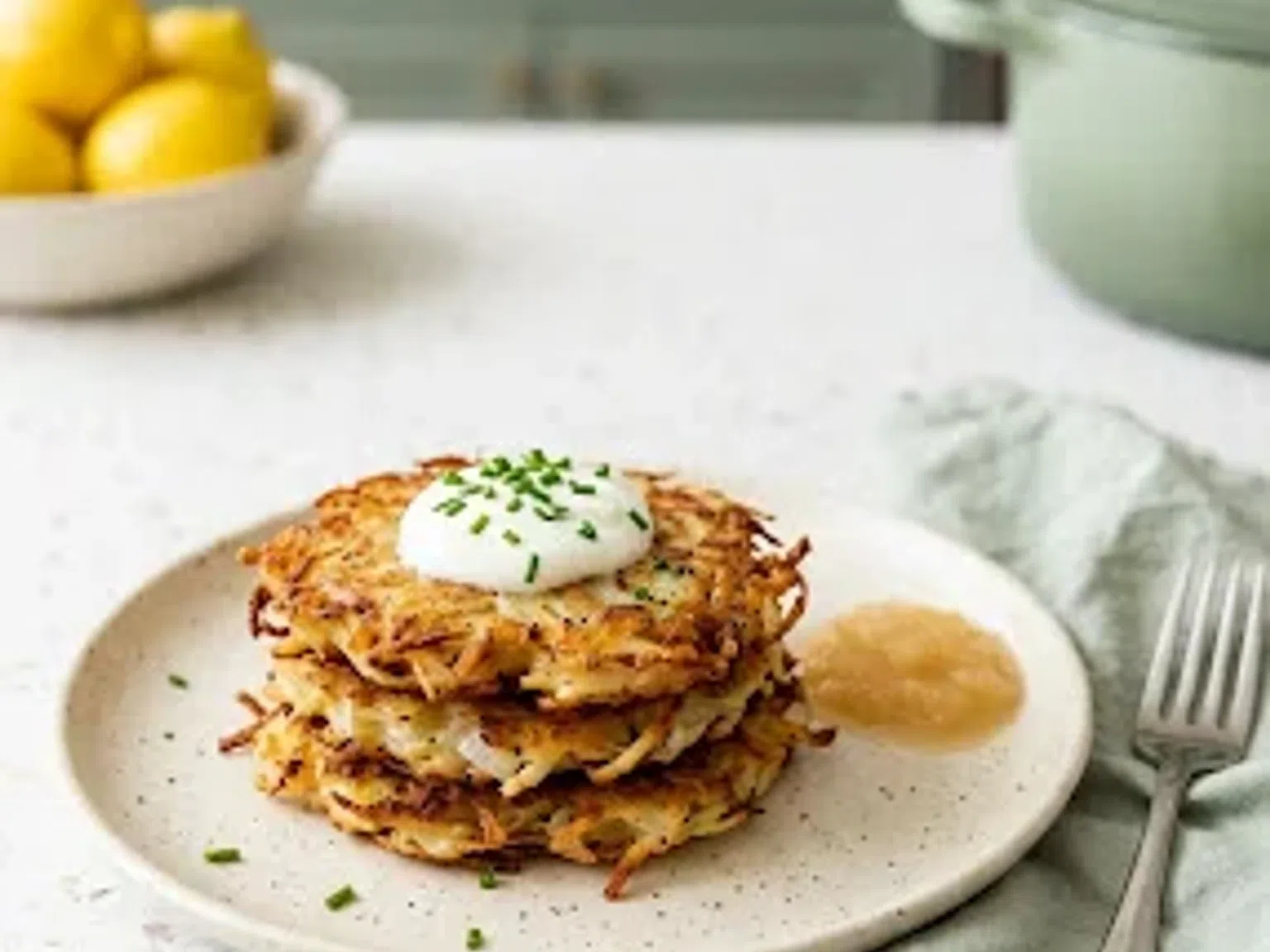
Classic: applesauce and sour cream
Chunky applesauce adds a sweet, tart contrast to the salty, fried crust, and cold sour cream gives a cooling tang. Offer both and let guests build their own. A sprinkle of chives lifts the sour cream.
Savory and dressed-up toppings
For a more elegant platter, top small latkes with crème fraîche, smoked salmon, fresh dill and a squeeze of lemon. Chives, a dab of horseradish and a splash of hot sauce all work too. Keep the menu in mind: smoked salmon and sour cream suit a dairy or fish meal, while a meat meal calls for applesauce, chopped herbs or a savory onion jam without dairy.
What to Serve with Latkes
Latkes make a good appetizer, but a Hanukkah dinner needs a centerpiece. This 5-ingredient brisket for Hanukkah cooks unattended, leaving the stove free for frying. Add a bright vegetable to cut the richness: air fryer broccoli with crisp browned edges or air fryer carrots cook in a separate appliance, so they do not compete for oven space with your reheating latkes. For more starter ideas, browse the appetizers section.
Storage and Leftovers
Refrigerate latkes promptly in shallow containers within 2 hours of cooking or removal from hot holding, or within 1 hour above 90°F. Do not wait for complete cooling; USDA guidance allows hot food to go directly into the refrigerator. Keep refrigerated latkes in airtight containers and use within 3 to 4 days, in line with Michigan State University Extension leftover guidance. Freeze for up to 2 months as described above. To re-crisp from the fridge, bake at 375°F on a rack, allowing an estimated 5 to 8 minutes, and check that the center reaches 165°F (74°C). Continue heating as needed to reach that temperature.
For the frying oil, let it cool completely, then strain through a fine sieve or coffee filter. It can be reused once or twice for more latkes if it is still light in color and smells clean. Discard it if it is dark, smells acrid or burnt, or looks foamy. Pour used oil into a sealed container and put it in the trash, never down the drain.
Recipe card
Crispy Potato Latkes Recipe for Hanukkah with Make-Ahead Tips
A crispy potato latkes recipe for Hanukkah: squeeze the shreds dry, fry at 350°F, hold in a 200°F oven, or freeze and reheat for a party.
Ingredients
Directions
- Heat the oven to 200°F (95°C) and set a wire rack on a rimmed baking sheet. Grate the onion and potatoes on the large holes of a box grater or food processor.
- Pile the shreds in a clean kitchen towel and twist hard over a bowl until almost no liquid drips out. Pour off the liquid, keeping the pale starch that settles at the bottom, and return that starch to the shreds.
- In a large bowl, mix the shreds with eggs, matzo meal, salt and pepper until just combined.
- Heat 1/4 inch of oil in a 12-inch skillet over medium to medium-high heat to about 350°F (175°C). A pinch of shreds should sizzle steadily without smoking.
- Scoop about 3 tablespoons of mixture per latke, press into thin 3-inch rounds, and slide into the oil from just above the surface, away from you, without crowding, 4 to 5 per batch.
- Fry 3 to 4 minutes per side, flipping once, until deep golden with lacy brown edges.
- Drain on the wire rack, sprinkle with flaky salt, and hold in the 200°F oven. Skim stray shreds from the oil and add a splash of fresh oil between batches.
Tap a step number to check it off as you cook.
Nutrition Facts per serving · estimated
Amount per serving
% Daily Values are based on a 2,000-calorie diet (FDA).
Good to know
Questions, answered
What is the best potato for latkes?
Russet potatoes. Their high starch and low moisture make shreds that bind lightly and fry crisp. Yukon Golds work and hold their color well, but the latkes come out denser and a little less crisp.
How do I keep latkes from turning gray?
Cut air exposure. Grate the onion first or alternate it with the potato, squeeze the shreds dry, then mix and fry right away. Do not let the batter sit. If you must wait, keep the shreds submerged in cold water and squeeze them dry again before mixing.
How do I get latkes extra crispy?
Squeeze the shreds until almost no liquid drips out, shape the latkes thin (about 1/4 inch), fry in oil held near 350°F, and give each one room. Flip once, then drain on a wire rack, not paper towels, so steam does not soften the bottom.
Can I make latkes ahead and freeze them?
Yes. Fry them until golden, cool completely on a rack, freeze in a single layer on a baking sheet until solid, then bag them. They keep well for about 2 months and can be reheated straight from the freezer.
How do I reheat frozen latkes so they stay crisp?
Spread them in one layer on a wire rack set over a baking sheet and bake at 375°F for roughly 10 to 14 minutes, flipping once, until sizzling and deep golden. Skip the microwave, which steams them soft.
Can I keep latkes warm in the oven for a party?
Yes. Move each fried batch to a wire rack on a baking sheet in a 200°F oven. They stay crisp for about 30 to 45 minutes. Longer than that and they begin to dry out, so reheat at 375°F for a few minutes to finish.