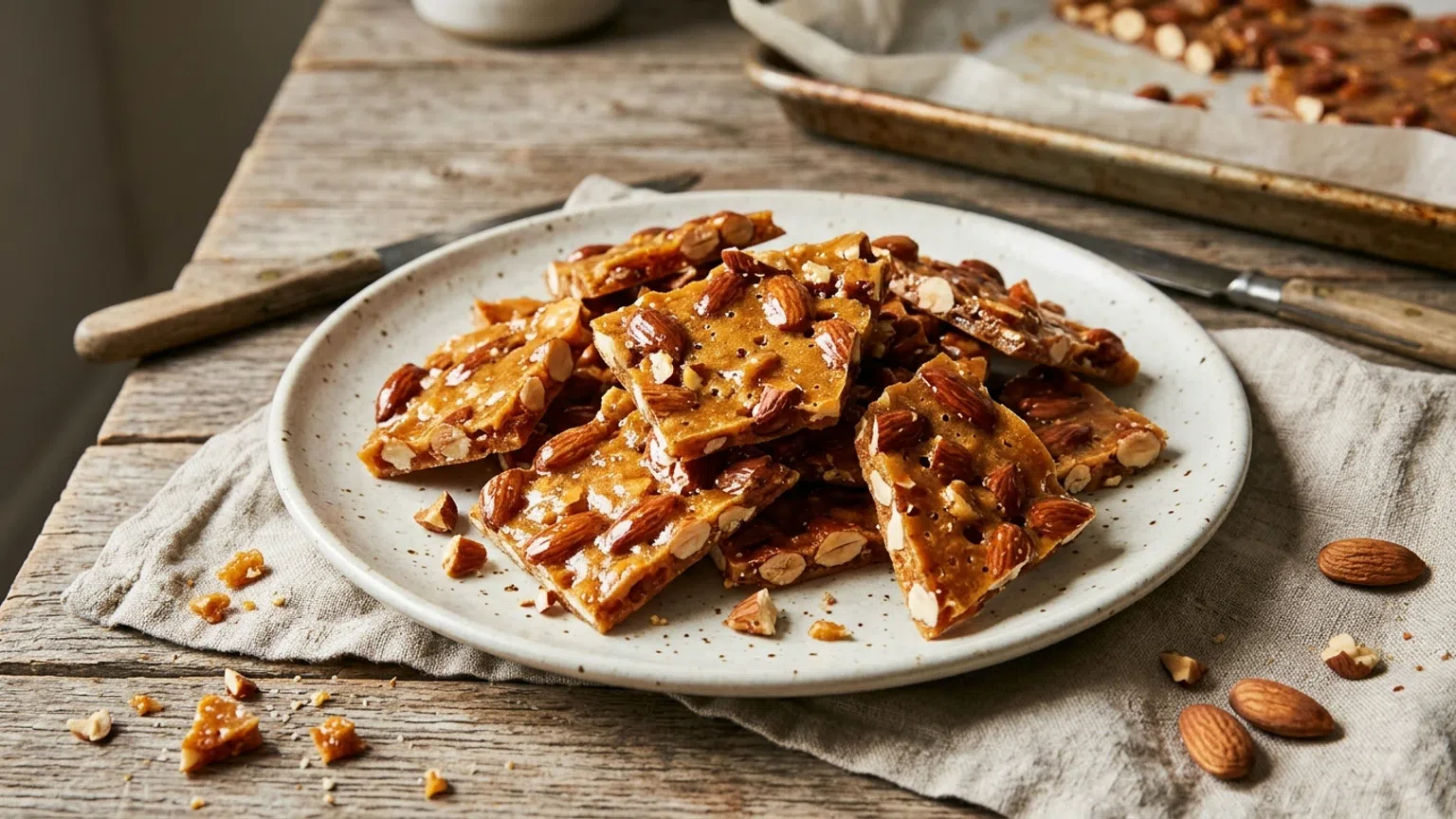
Almond brittle combines whole almonds with golden sugar syrup that cools into crisp, breakable sheets. Corn syrup helps keep the candy smooth, while baking soda adds tiny air pockets. Prepare the pan first, cook by temperature, then let the brittle cool fully before packing. This is a sugar-rich treat; the source estimate is 136 calories per serving.
Key takeaways
- Add the almonds at 270°F, then cook the mixture to 300°F before adding baking soda.
- Keep the thermometer’s sensing area in the syrup without touching the saucepan bottom.
- Prepare the buttered baking sheet before cooking because the finished candy sets quickly.
- Pack cooled brittle airtight and keep it separate from moist holiday treats.
Key ingredients and substitutions
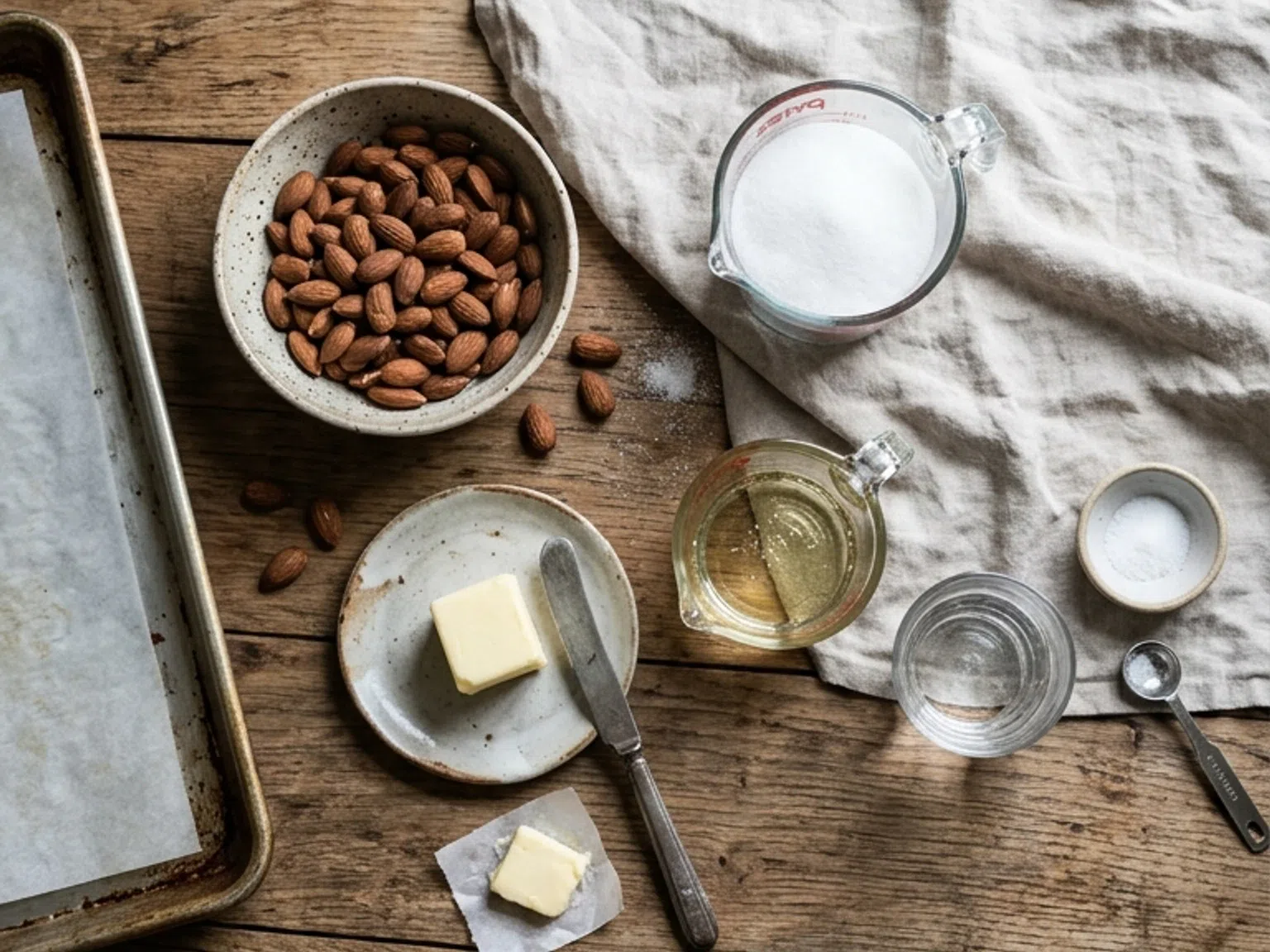
The full batch uses:
- 1 cup granulated sugar
- 1/2 cup light corn syrup
- 1/2 cup water
- 1/4 teaspoon salt
- 1 tablespoon butter, plus extra for greasing
- 1 cup whole unblanched almonds
- 1 teaspoon baking soda
Granulated sugar and light corn syrup: Sugar forms the candy’s structure. Corn syrup helps inhibit crystallization, which can turn smooth brittle grainy. Iowa State University Extension’s candy-making guidance explains why precise measurements and crystallization control matter. Keep the syrup in this formula rather than replacing it with honey or maple syrup.
Whole unblanched almonds: These are almonds with their skins intact. Use plain nuts rather than coated varieties, such as honey-roasted almonds, which introduce extra ingredients. The original recipe also permits an equal volume of whole peanuts.
Butter: A small amount adds flavor. Unsalted butter gives you control over the measured salt. Salted butter also works, though the finished candy will taste saltier.
Baking soda: Measure it before starting and break up any lumps. It makes the hot syrup foam, creating the brittle’s porous texture. Baking powder is not a direct substitute.
The ingredient list contains no wheat, but check packaged ingredients and cross-contact information when serving someone who needs gluten-free food. Butter contains milk, and almonds are tree nuts. No dairy-free replacement has been verified for this particular formula.
Equipment and setup
Use a heavy 3- to 4-quart saucepan with enough headroom for the baking soda foam. A light-colored interior makes the syrup’s color easier to judge.

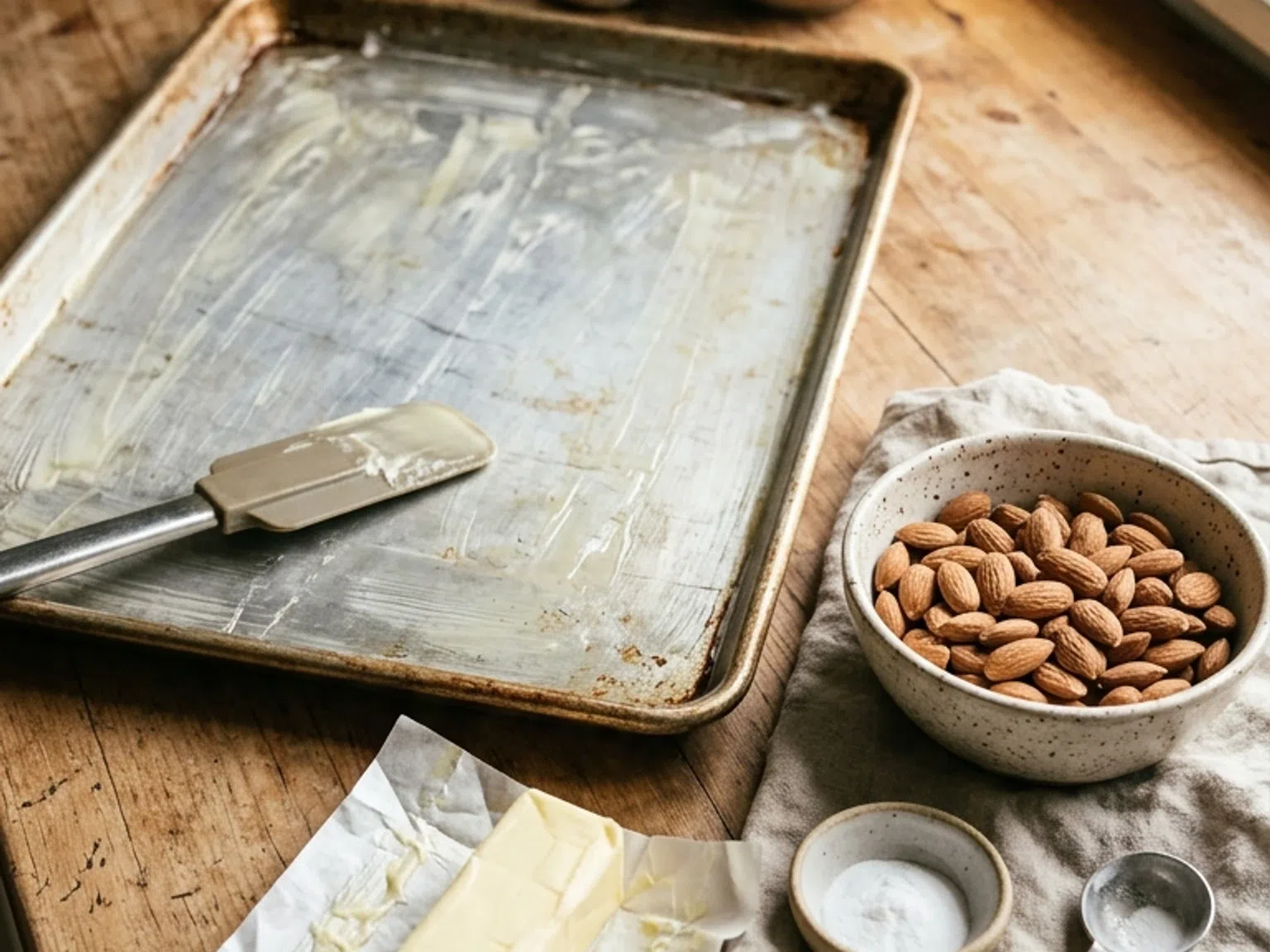
Have a candy thermometer, a long-handled heatproof spoon, and a 13-by-18-inch rimmed metal baking sheet ready. Butter the sheet and a heatproof spatula before turning on the burner.
Set the sheet on a heatproof surface close to the stove. Clear the pouring route and keep children and pets away. Hot syrup sticks to skin, so use dry oven mitts and never taste it from the spoon.
Allow about 10 minutes for setup, roughly 20 minutes for cooking, and at least 30 minutes for cooling. These are planning estimates. Your pan, burner, and room conditions will affect the timing.
Step-by-step cooking guide
1. Dissolve the sugar
Put the sugar, corn syrup, water, salt, and tablespoon of butter in the saucepan. Heat over medium heat, stirring until no visible sugar granules remain and the mixture comes to a boil.
Keep the heat moderate during this stage. Dissolving the sugar fully helps avoid a sandy texture later.
2. Steam the saucepan walls
Cover the boiling mixture for 1 minute. Steam condenses on the lid and saucepan walls, helping wash down stray sugar crystals.
Lift the lid away from your face. Attach the thermometer with its sensing area submerged in syrup, following the thermometer’s immersion guidance. It must not rest on the metal bottom.
3. Cook to the almond-adding stage
Let the syrup boil without stirring until it reaches 270°F. The bubbles will become thicker as water boils away.
Remove the pan briefly from the heat and carefully stir in the almonds. The mixture may stiffen slightly when the nuts enter; return it to the burner.
4. Finish at hard crack
Cook over medium heat, stirring gently to keep the almonds moving. Avoid scraping sugar deposits from the upper saucepan walls into the candy.
Remove the pan from the heat at 300°F. Look for golden syrup and a toasted nut aroma, but use the thermometer as the main guide. If the almonds darken rapidly, lower the heat.
The broader hard-crack range is 300–310°F. For comparison, Epicurious’s chocolate-covered almond brittle cooks its syrup to 310°F before adding toasted almonds. That recipe uses a different sequence; follow this version’s 300°F endpoint.
5. Add baking soda and pour
Remove the thermometer carefully and set it somewhere heatproof. Add the baking soda off the heat, then stir promptly until it is evenly mixed.
The candy will puff up and become lighter in color. As the initial foam begins to settle, pour it onto the prepared sheet. Don’t wait for the foam to disappear.
Spread gently with the buttered spatula. Avoid pressing repeatedly, which compresses the aerated candy. Leave any dried sugar crust on the saucepan walls.
6. Cool until it snaps
Leave the sheet undisturbed until the brittle is completely cool and rigid. Allow about 30 minutes, then check; thicker areas may need longer.
Break the cooled candy into pieces. A finished piece should snap cleanly rather than bend. Transfer it promptly to an airtight container.
Kitchen notes
The two temperature targets serve different jobs. 270°F starts the nut-cooking stage; 300°F finishes the candy. Stopping at the first target leaves too much moisture for a crisp brittle.
The original recipe gives a soft-crack range of 270–290°F and a hard-crack range of 300–310°F. Using the beginning of each range gives the cook clear checkpoints without changing the ingredient ratios.
Check thermometer accuracy before starting. Iowa State recommends testing a candy thermometer in boiling water and accounting for any difference. Water boils at 212°F at sea level; elevation changes that reference point.
Placement matters as much as calibration. For example, a probe touching the saucepan bottom can report the metal’s temperature rather than the syrup’s. Recheck the probe after stirring in the almonds.
Chef’s tips for success
- Measure everything first. Once the syrup reaches its endpoint, there is little time to find the baking soda or grease the sheet.
- Keep the batch size as written. Iowa State advises against doubling candy recipes. Make separate batches when preparing several gifts.
- Choose a dry day when possible. Humidity raises the chance of sticky candy. A sealed container helps protect brittle after cooling.
Troubleshooting the texture
| What you notice | Likely cause | What to change |
|---|---|---|
| Brittle bends after cooling | Syrup did not reach hard crack | Check thermometer accuracy and reach 300°F |
| Crisp pieces turn sticky later | Moisture exposure | Seal promptly and avoid damp storage |
| Candy feels sandy or grainy | Sugar crystallization | Dissolve sugar fully and keep wall crystals out |
| Nuts taste bitter or scorched | Excessive heat during the final stage | Lower the burner and keep nuts moving gently |
Chewy candy and moisture-damaged candy need different prevention. Note whether the batch ever snapped cleanly before changing the cooking temperature.
Serving suggestions
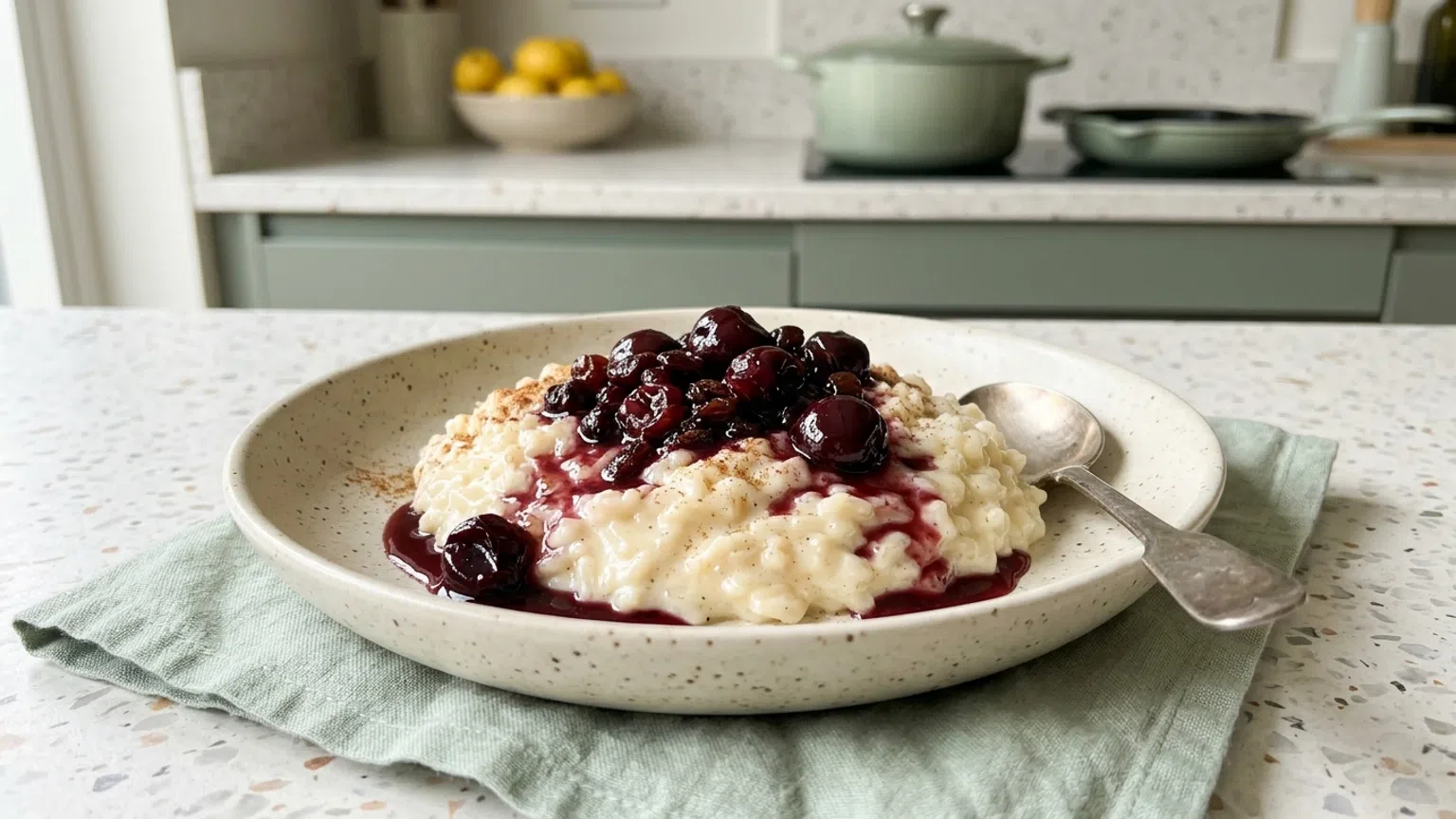
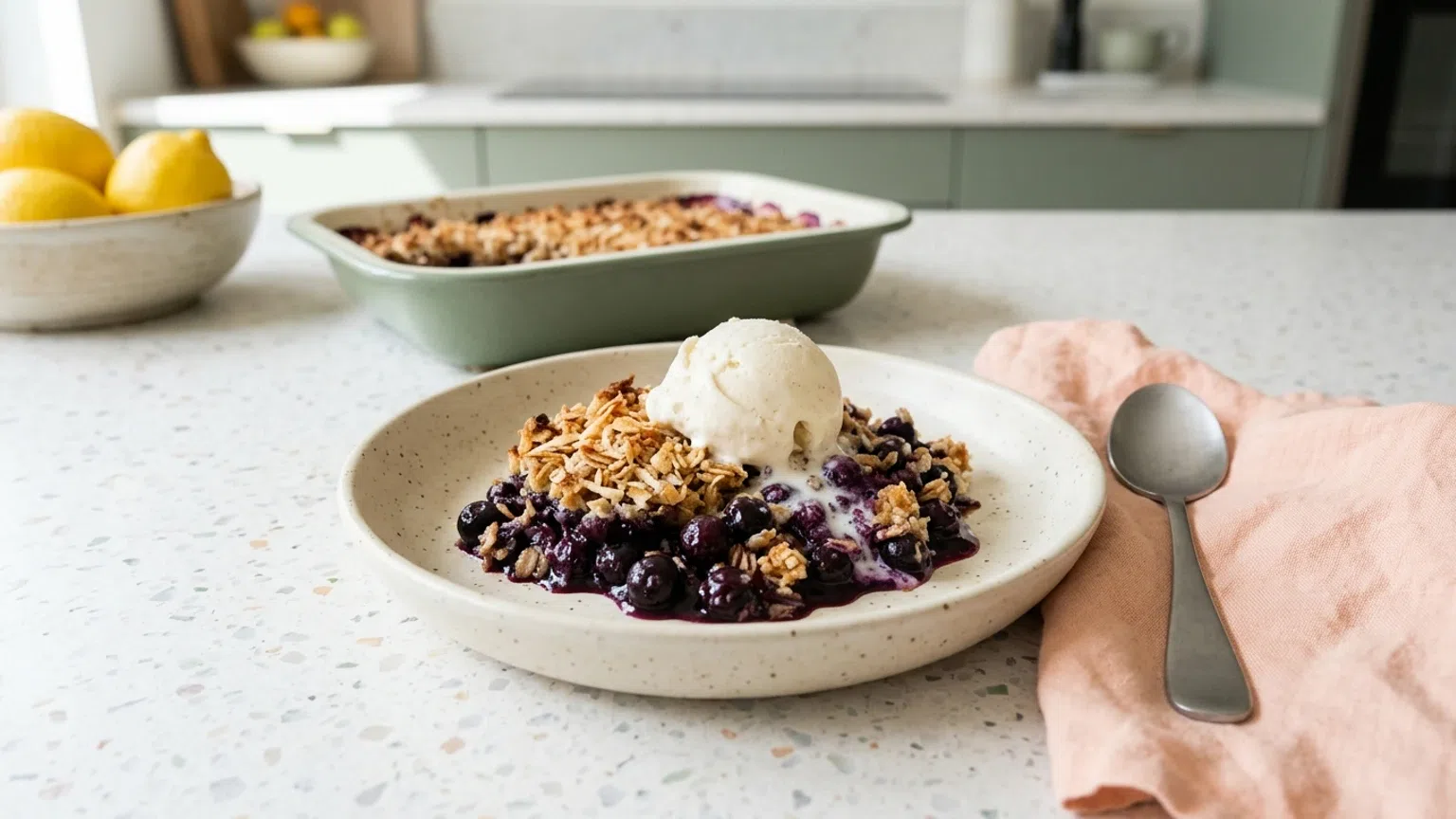
Serve small shards beside coffee or tea, or scatter crushed brittle over vanilla ice cream just before eating. It also adds crunch to soft desserts, such as 21 Club rice pudding or apple spice bundt cake.
For a holiday dessert platter, arrange brittle in its own small bowl. Keep it apart from moist cakes and dips. You can find other treats for the table in the dessert collection.
Make-ahead, storage, and holiday packing
Store fully cooled brittle in an airtight container at room temperature, away from heat and moisture. The original recipe gives a storage window of about two weeks, but humidity and the container’s seal affect crispness.

For gifting, use this practical schedule:
- One or two days before giving: Make the brittle, cool completely, and seal in a rigid container.
- On packing day: Check that a piece still snaps. Separate layers with parchment and close the container promptly.
- At handoff: Label the gift with its packing date and note that it contains almonds and milk.
For example, prepare a Saturday gift on Thursday or Friday. This keeps the schedule comfortably inside the original storage window without promising a fixed shelf life in every kitchen.
Keep brittle separate from soft cookies, fruit, and other moist foods. Decorative paper bags alone provide little protection from humid air; use a sealed food-safe inner container.
Freezing and reheating
The original recipe permits freezing for up to three months. Cool completely, separate layers with parchment, and seal in a freezer-safe airtight container.
Let the closed container reach room temperature before opening to reduce condensation on the candy. Brittle needs no reheating. Microwaving softens the sugar and is not a reliable way to restore its original snap.
Source recipe: Almond Brittle, SnapChef ID a02f858d-26d4-42ac-b477-fb045857dba4. Nutrition values are the original estimates per serving.
All food photography in this article is original AI-generated imagery.
Recipe card
Almond Brittle
Make crisp almond brittle with clear candy temperatures, safe pouring steps, troubleshooting, and a practical holiday gift-packing plan.
Ingredients
Directions
- Butter a 13-by-18-inch rimmed metal baking sheet and a heatproof spatula. Set the sheet on a heatproof surface. Measure the almonds and baking soda into separate dry bowls.
- Combine the sugar, corn syrup, water, salt, and 1 tablespoon butter in a heavy 3- to 4-quart saucepan. Heat over medium heat, stirring until the sugar dissolves and the mixture boils.
- Cover for 1 minute so steam washes sugar crystals from the sides. Uncover carefully and attach a candy thermometer with its sensing area immersed in syrup without touching the bottom.
- Cook without stirring until the syrup reaches 270°F, the beginning of the soft-crack range. Remove briefly from the heat and carefully stir in the almonds.
- Return to medium heat. Stir gently to keep the almonds moving, avoiding the sides of the pan. Cook to 300°F, the beginning of the hard-crack range. The syrup should be golden and the nuts smell toasty. Temperature determines doneness; reduce the heat if the nuts darken too quickly.
- Remove from the heat. Carefully remove the thermometer, add the baking soda, and stir promptly until evenly incorporated. The mixture will foam and lighten.
- As soon as the foam starts to subside, pour onto the prepared sheet using dry oven mitts. Spread gently with the buttered spatula. Do not touch the hot candy or scrape dried sugar from the saucepan sides onto the sheet.
- Leave undisturbed until completely cool and rigid, allowing about 30 minutes or longer as needed. Break into pieces only when the candy is cool and snaps cleanly. Store immediately in an airtight container.
Tap a step number to check it off as you cook.
Nutrition Facts per serving · estimated
Amount per serving
% Daily Values are based on a 2,000-calorie diet (FDA).
Good to know
Questions, answered
Why is my almond brittle chewy or sticky?
Brittle that is chewy once completely cool may not have reached hard crack. Check thermometer accuracy and placement. Brittle that starts crisp and later turns sticky has likely absorbed moisture; store it promptly in an airtight container.
Why do I cover the saucepan for one minute?
The lid traps steam, which helps dissolve sugar crystals on the saucepan walls. Keeping those crystals out of the syrup reduces the chance of grainy brittle.
Can I use peanuts instead of almonds?
Yes. The source recipe allows 1 cup whole peanuts instead of almonds. Keep the same temperature targets, stir gently after adding them, and watch for scorching.
Can I leave out the corn syrup or baking soda?
Keep both for this version. Corn syrup helps discourage sugar crystallization. Baking soda aerates the hot syrup, giving the brittle a more porous texture.
Can I freeze almond brittle?
The source recipe allows freezing for up to three months. Cool completely, separate layers with parchment, and seal in a freezer-safe airtight container. Let the closed container reach room temperature before opening to limit condensation.