Dinners · 4 min read
Cheesy Mustard Baked Chicken Breasts
Extra sharp cheddar, parmesan and whole grain mustard lend a savory bite to these creamy baked chicken breasts, topped with crispy Panko, for an easy weeknight dinner.
★ 5.0 (2)
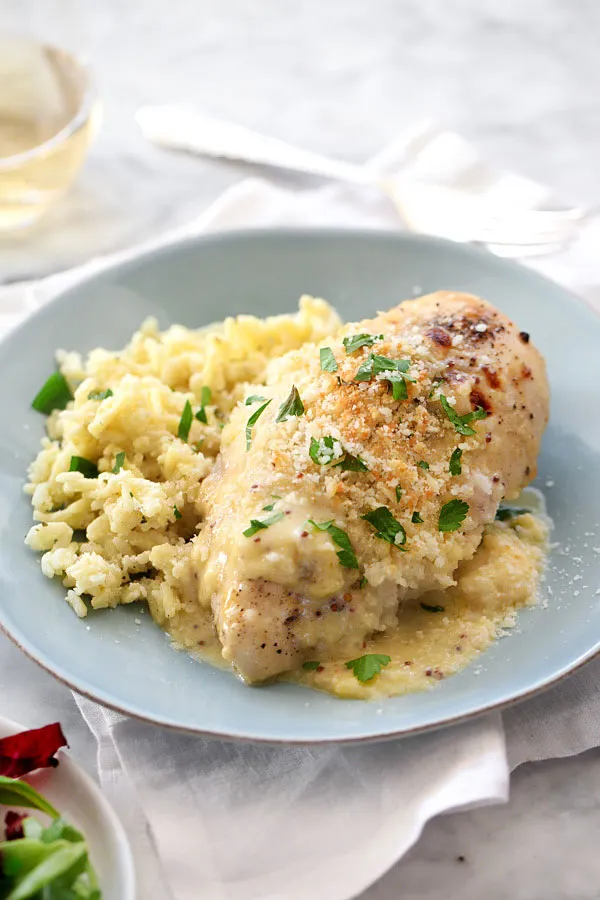
I love spending weekends on slow braises and complicated bakes. But these cheesy mustard baked chicken breasts are the opposite. They're what I turn to on a Tuesday when I need dinner on the table fast and I want it to taste like I actually tried. The creamy sauce with sharp cheddar and whole grain mustard turns plain chicken into something special, and the panko topping stays crispy because it goes on at the last minute. It's one of those easy weeknight dinners that feels like a cheat code.
3 Reasons to Make This Chicken Breast Recipe Tonight
- The sauce comes together in one small saucepan while the chicken bakes, so you're not juggling a dozen pots.
- The panko topping goes on right before the final blast of heat, so it stays crunchy instead of getting soggy.
- Sharp white cheddar and whole grain mustard give it a grown-up flavor that even picky eaters tend to like.
Key Ingredients for This Chicken Breast Recipe
- Extra sharp white cheddar: Its sharpness stands up to the mustard and doesn't get lost in the sauce. Shred it yourself for the smoothest melt. A good substitute is sharp yellow cheddar, but it will change the color slightly.
- Whole grain mustard: Look for one with visible seeds for texture. Grey Poupon or Maille are reliable brands. If you only have smooth Dijon, the sauce will be thinner and less rustic.
- Panko bread crumbs: These stay crunchier than regular breadcrumbs because they're larger and flakier. For extra crunch, toast them in a dry skillet for a minute before sprinkling on top.
Kitchen Tools for Cheesy Mustard Baked Chicken
- Baking dish (8x8 or 9x13 works)
- Small saucepan for the sauce
- Whisk
- Instant-read thermometer (essential for hitting 155°F then 165°F)
- Chef's knife and cutting board for shallots and garlic
Tips for Juicy Baked Chicken Breasts Every Time
Use an instant-read thermometer to check the chicken's internal temperature at each stage. Pull it from the oven at 155°F after the first bake, then let the final 475°F blast bring it to 165°F. That two-step method keeps the meat from drying out. When you whisk the milk into the flour mixture, add it slowly while whisking constantly to prevent lumps. If the sauce seems too thick after adding the cheese, stir in a splash more milk. Taste the sauce before pouring it over the chicken and adjust the salt and cayenne to your liking.
Ingredient Secrets for the Best Mustard Chicken
Extra sharp white cheddar gives you more flavor per ounce than mild cheddar, so you can use less cheese and still get a strong tang. Shred it yourself from a block; pre-shredded cheese has anti-caking powders that can make the sauce grainy. Whole grain mustard adds texture and a milder heat than yellow mustard. If you only have Dijon, the sauce will be smoother but still tasty. Let the finished chicken rest for 3 to 5 minutes after baking so the sauce sets up a bit and doesn't run all over the plate.
Why the Two-Temperature Oven Method Works
Starting the chicken at 400°F lets the heat penetrate gently, cooking the meat through without shocking it. Then cranking the oven to 475°F for the final 5 to 10 minutes gives the panko a chance to brown and the sauce to bubble without drying out the chicken. This technique is especially useful for boneless breasts, which can go from juicy to dry in a minute. The high heat also helps the cheese sauce set up into a creamy coating rather than a thin puddle.
Easy Swaps and Twists for This Panko Chicken Recipe
Swap the chicken breasts for boneless thighs, but increase the initial bake time by about 5 minutes since thighs are a little thicker. For a lower carb version, skip the panko and sprinkle extra Parmesan on top instead. If you want more heat, add a pinch of cayenne or a dash of hot sauce to the cheese sauce. You can also use Gruyère or smoked gouda in place of the cheddar for a different flavor profile.
What to Serve with Cheesy Chicken
Serve these chicken breasts over rice or egg noodles to catch every drop of the creamy sauce. A simple green salad with a lemon vinaigrette cuts through the richness nicely. For a vegetable side, roasted broccoli or green beans work well. I also like it with crusty bread to sop up the extra sauce.
How to Store Leftover Cheddar Chicken
Store leftovers in an airtight container in the fridge for up to 3 days. The panko will soften, but the flavor stays great. To keep the topping as crisp as possible, store the chicken and sauce separately from the panko if you can, then reheat and add fresh panko.
Can You Freeze Cheesy Mustard Baked Chicken Breasts?
Yes, you can freeze the assembled dish before the final bake. Assemble through step 2 (chicken with sauce, but without the panko and extra Parmesan), then cover tightly and freeze for up to 3 months. Thaw overnight in the fridge, then sprinkle on the panko and Parmesan and bake at 475°F for 10 to 15 minutes until hot and bubbly. You can also freeze fully baked chicken after it has cooled, then reheat in the oven.
Best Way to Reheat Parmesan Chicken Without Drying It Out
Reheat individual portions in a 350°F oven for about 10 minutes, or in the microwave on 50% power to avoid drying out the chicken. The panko won't be as crispy as fresh, but the sauce will still be creamy. For best results, reheat in a covered dish with a splash of milk to restore the sauce's consistency.
Source recipe: Cheesy Mustard Baked Chicken Breasts (SnapChef ID 29e4d173-e452-4f51-91b8-d29c747b9cc3). Nutrition is estimated per serving.
Ingredients
Directions
- Preheat oven to 400 degrees F. Prepare a baking dish with cooking spray and place chicken in the dish. Spread 1 tablespoon of the butter onto the chicken breasts and season with kosher salt and freshly ground black pepper. Bake the chicken breasts for about 20 minutes or until the internal temperature is about 155 degrees F.
- Meanwhile, melt the remaining butter in a small saucepan and add the shallots and garlic clove and cook for 2 minutes, stirring until the garlic is fragrant and the shallots begin to soften. Add the flour and cook for another 2 minutes so the flour smells lightly nutty. Whisk the milk into the flour mixture and raise the heat to medium high. Continue whisking until the sauce thickens and slightly bubbles. Stir in the mustard and white cheddar cheese and ¼ of the Parmesan cheese, whisking until the cheese is smooth. Season with a pinch of cayenne pepper and kosher salt to taste.
- Remove the chicken breasts from the oven and raise the oven temperature to 475 degrees F. Pour the sauce over the chicken breasts and sprinkle each of them with the panko bread crumbs and remaining parmesan cheese. Bake for 5-10 more minutes or until chicken has an internal temperature of 165 degrees and the tops of the chicken and sauce is golden brown. Garnish with parsley.
Tap a step number to check it off as you cook.
Nutrition Facts per serving · estimated
Amount per serving
% Daily Values are based on a 2,000-calorie diet (FDA).
Good to know
Questions, answered
Can I use pre-shredded cheese for the sauce?
You can, but the sauce may turn out slightly grainy because pre-shredded cheese contains anti-caking agents. For the smoothest sauce, shred extra sharp white cheddar from a block yourself.
Why do I need to bake the chicken at 400°F first, then at 475°F?
The first bake at 400°F cooks the chicken through gently without drying it out. The second blast at 475°F browns the panko and bubbles the sauce quickly, so the chicken doesn't overcook. It's a common restaurant trick for juicy meat with a crispy topping.
Can I make this dairy-free?
It's tricky because the sauce relies on cheese and milk for its creamy texture. You could try a plant-based milk and dairy-free cheddar, but the flavor and texture will be different. I'd recommend looking for a dedicated dairy-free creamy chicken recipe instead.
How do I know when the chicken is fully cooked?
Use an instant-read thermometer. The chicken should reach 155°F after the first bake, then 165°F after the final bake. If you don't have a thermometer, cut into the thickest part and check that the juices run clear and the meat is no longer pink.