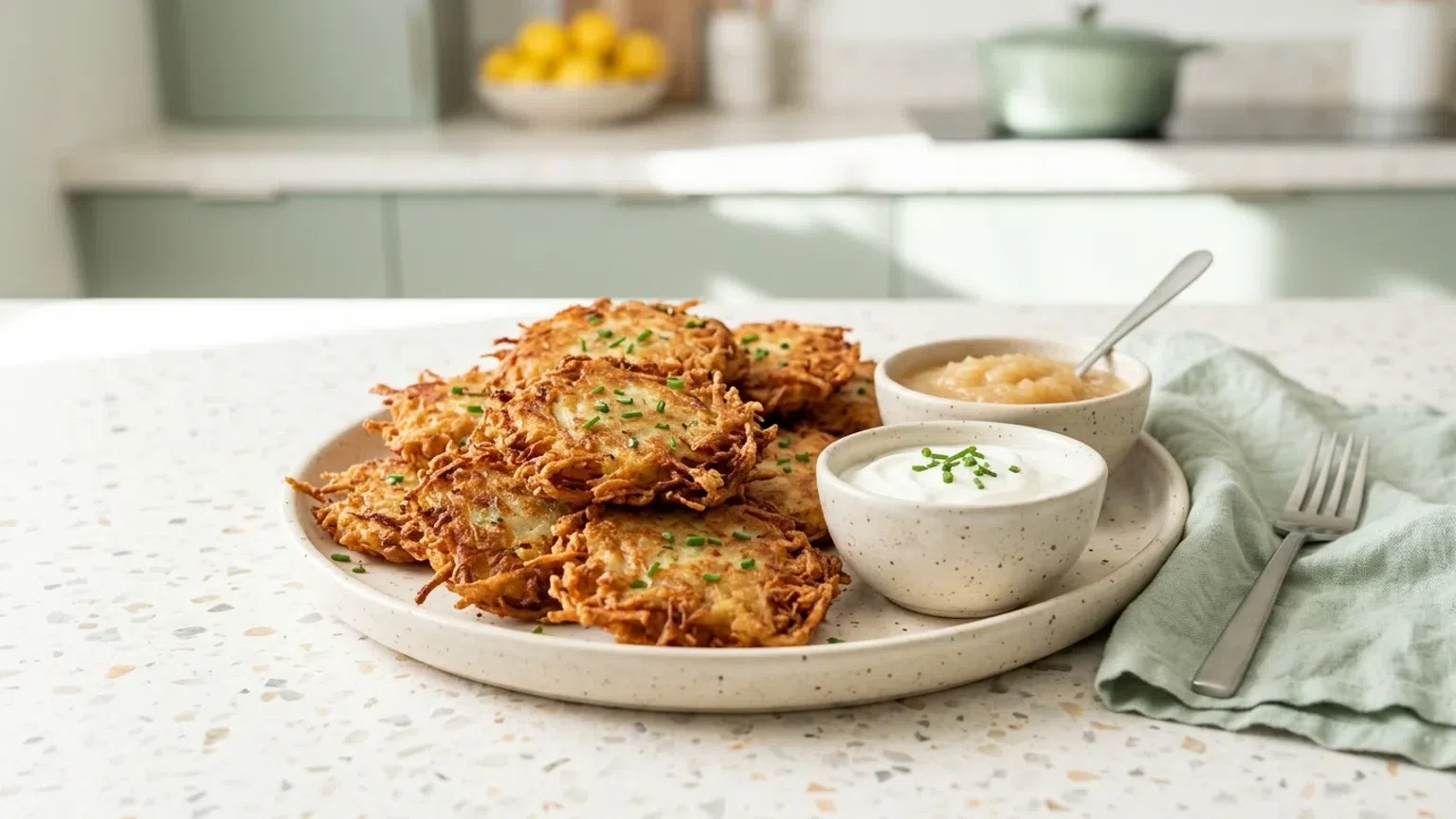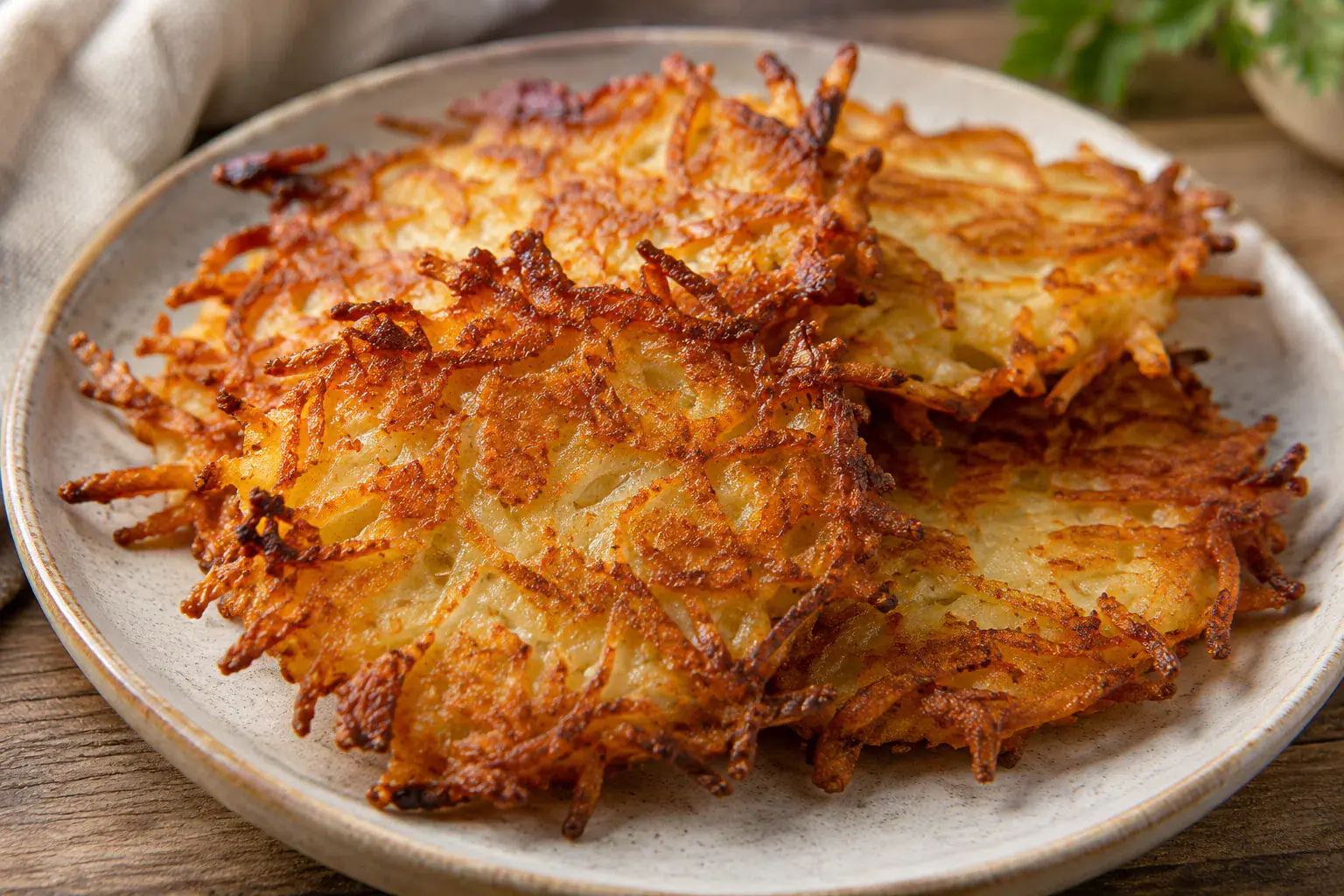
Potato latkes are shredded potato pancakes, usually mixed with onion and a binder, then fried until their edges turn crisp and golden. They are closely associated with Ashkenazi Jewish cooking and Hanukkah meals, but they also make a satisfying appetizer or side dish.
This potato latkes recipe uses a simple combination of potatoes, onion, eggs, and flour. The key preparation step is to squeeze the shreds thoroughly, collect their liquid, and return the settled potato starch to the bowl. That gives the mixture another source of binding without adding more flour.
Allow approximately 55 minutes, including frying in batches. The recipe makes about 18 small latkes, or six side-dish servings. Timing and yield will vary with your skillet and portion size. This is a source-informed recipe formulation; it is not presented as a personally tested recipe.
Jump to ingredients, step-by-step instructions, or make-ahead guidance. Browse more appetizer recipes for other meal starters.
Reference photograph by Mark Mitchell, licensed under CC BY 2.0. It does not depict this specific recipe.
Ingredients
For approximately 18 small latkes:
- 2 pounds russet potatoes, peeled
- 1 medium yellow onion, approximately 6 ounces, peeled
- 2 large eggs, beaten
- ¼ cup all-purpose flour
- 1 teaspoon fine salt
- ½ teaspoon ground black pepper
- Approximately 1 cup neutral frying oil, such as canola; use enough to maintain a ¼-inch depth
- ½ cup applesauce, optional, for serving
- ½ cup sour cream, optional, for serving
Keep one additional tablespoon of flour available in case the test latke needs more binding. You may not need all the frying oil, and most of the oil left in the skillet is not part of the finished serving.
Russets are a useful starting point because they supply starch and produce distinct shreds. Grate the onion alongside the potatoes so it distributes throughout the mixture instead of leaving large pieces that may brown before the potatoes cook.
For a gluten-free variation, replace the flour with 2 tablespoons of certified gluten-free potato starch. This changes the binder, so fry a small test portion before committing the whole batch.
Why save the potato starch?
Potato starch is the starch released from potato cells during grating. In the collected potato liquid, it settles into a pale layer at the bottom of the bowl.
Bon Appétit’s explanation of saving potato starch for latkes describes returning that sediment to the shredded potatoes to help bind the pancakes and support a crisp exterior.
The practical distinction is between removing excess water and discarding everything that comes out of the potatoes. Squeezing removes liquid; letting that liquid settle gives you a chance to recover its starch.
Think of the method as three separate controls:
| Control | What to do | What it addresses |
|---|---|---|
| Moisture | Squeeze the shreds in small batches | A wet mixture that spreads or steams |
| Binding | Return settled starch and add egg and flour | Pancakes that break when turned |
| Frying | Maintain hot oil and leave space between portions | Pale surfaces and uneven browning |
This is a synthesis of the technique, not a measured comparison of different recipes. Start by correcting moisture and frying conditions before repeatedly adding flour.
How to make potato latkes
1. Prepare the draining rack
Set a wire rack over a rimmed baking sheet. If you need to hold the first batches while finishing the rest, heat the oven to 200°F.
Have your utensils and serving platter ready before heating the oil. A thin spatula helps lift each pancake without tearing its underside.
2. Grate and squeeze
Coarsely grate the potatoes and onion using a box grater or food processor shredding disc.
Transfer the shreds to a clean kitchen towel in several small batches. Twist and squeeze firmly over a bowl to collect the liquid. Small bundles are easier to wring thoroughly than one large bundle.
Work promptly after grating. Raw potatoes can darken as they stand, and a prepared mixture continues releasing liquid. Avoid soaking the shreds for this method because you want to retain their released starch.
3. Recover the starch and mix
Let the collected liquid stand for about 5 minutes. Carefully pour off the watery portion, leaving the pale sediment behind.
Add the squeezed potato and onion to that bowl. Stir in the eggs, flour, salt, and pepper until evenly combined. The mixture should consist mostly of coated shreds; it should not resemble a pourable pancake batter.
4. Fry one test latke
Pour oil into a heavy skillet to a depth of approximately ¼ inch. Heat over medium-high heat to about 350°F, checking with a suitable thermometer when available.
Carefully lower about 2 tablespoons of mixture into the oil and flatten it to roughly ¼ inch thick. Fry for approximately 3–4 minutes per side, until deeply golden and cooked through.
Let the underside form a crust before turning. If the outside darkens while the center remains raw, reduce the heat and make the next latke thinner.
5. Finish in batches
Taste the cooked test latke and adjust the seasoning if necessary. If it breaks despite proper browning, drain any pooled liquid from the mixture and add the reserved tablespoon of flour.
Continue frying, leaving room between pancakes. Allow the oil to return to temperature between batches and replenish it carefully as needed.
Transfer finished latkes to the rack. Keep them in a single layer and avoid covering them, which traps steam against their crust.
Troubleshooting texture and browning
Latkes fall apart: Check whether the mixture is wet and whether you turned them too early. Correct those problems before increasing the binder. Extra flour cannot fully compensate for saturated shreds.
Latkes brown too quickly: Lower the heat slightly and flatten the portions more evenly. A thick center needs longer to cook than the thin, exposed edges.
Latkes look pale and feel greasy: Let the oil recover its heat and reduce the number of pancakes in the skillet. Adding many portions at once makes temperature control harder.
The first batch softens: Place it on the rack in the warm oven without stacking. For a large gathering, frying ahead and reheating in a single layer may be easier than holding the earliest batch throughout a long frying session.
Make-ahead, storage, and reheating
For advance preparation, cook the latkes completely before storing them. Preparing the raw mixture hours ahead creates avoidable problems with discoloration and accumulating liquid.
Refrigerate cooked latkes promptly in shallow containers. Do not leave them at room temperature for more than 2 hours, or 1 hour above 90°F. Use refrigerated leftovers within 3–4 days, following USDA guidance on handling leftovers.
To freeze, arrange cooled latkes in a single layer until firm, then transfer them to a freezer container with parchment between layers. Label the container so you can identify the batch later.
Reheat refrigerated or frozen latkes uncovered in a 400°F oven, arranged in one layer on a rack over a baking sheet. Begin checking refrigerated latkes after approximately 10 minutes; frozen ones will take longer. Thickness and oven performance affect the timing.
Use 165°F in the center as the safety endpoint for reheated leftovers, consistent with USDA reheating guidance. Crispness alone does not establish the internal temperature.
Serving and planning a meal
Serve latkes immediately when possible, with applesauce and sour cream offered separately. Keeping toppings off the platter helps preserve the crust until each person serves themselves.
For a meat meal where kosher separation is observed, omit dairy sour cream and offer applesauce or a suitable nondairy topping. A brisket main course and a simply prepared green vegetable, such as air fryer broccoli, make useful companions.
Plan on approximately three small latkes per person as a side dish. If latkes are the main attraction, increase the quantity and allow additional frying time. A second skillet can increase capacity, but use it only if you can monitor both pans comfortably.
The calorie estimate is approximately 260 calories per three-latke serving, excluding toppings. It assumes ¼ cup of oil is absorbed across the batch; actual absorption is uncertain, so the figure is an estimate rather than laboratory nutrition data.
Frequently asked questions
Which potatoes work best?
Russets are a practical choice for this recipe. Their starch is useful for binding, but the squeezing and frying steps still matter. Changing the potato variety can change the moisture level and texture.
Why do latkes break when flipped?
They may be too wet or insufficiently browned underneath. Let a crust form before turning, use a thin spatula, and make small portions. If the test latke still breaks, add one tablespoon of flour.
Can I make latkes ahead?
Yes. Fry them first, refrigerate promptly, and reheat uncovered in a hot oven. This avoids leaving a raw potato mixture to darken and release water.
Can I freeze them?
Yes. Freeze cooked latkes individually before packing them together. Reheat from frozen until the exterior is crisp and the center reaches 165°F.
Can I make this recipe gluten-free?
Use two tablespoons of certified gluten-free potato starch in place of the flour. Fry a test latke to check the mixture’s cohesion, and verify other ingredients and preparation surfaces as needed for gluten cross-contact.
Recipe card
Crispy Potato Latkes Recipe with Make-Ahead Tips
Make potato latkes with shredded potatoes, onion, and reserved potato starch. Includes frying guidance, troubleshooting, freezing, and reheating tips.

Ingredients
Directions
- Set a wire rack over a rimmed baking sheet. If holding batches before serving, heat the oven to 200°F.
- Coarsely grate the potatoes and onion. Transfer to a clean kitchen towel and squeeze firmly over a bowl in several small batches, collecting the liquid.
- Let the collected liquid stand for 5 minutes. Carefully pour off the watery liquid, leaving the pale starch sediment in the bowl.
- Add the squeezed potatoes and onion to the recovered starch. Mix in the eggs, flour, salt, and pepper.
- Heat 1/4 inch of oil in a heavy skillet over medium-high heat to approximately 350°F. Keep the oil below its smoking point.
- Fry a test latke using about 2 tablespoons of mixture, flattened to approximately 1/4 inch thick. Cook for 3 to 4 minutes per side, until deeply golden and cooked through. Adjust the heat or binder as needed.
- Fry the remaining mixture in uncrowded batches, restoring the oil temperature between batches. Drain on the rack and hold briefly in the warm oven if necessary. Serve with applesauce or sour cream.
Tap a step number to check it off as you cook.
Nutrition Facts per serving · estimated
Amount per serving
% Daily Values are based on a 2,000-calorie diet (FDA).
Good to know
Questions, answered
Which potatoes work best for latkes?
Russet potatoes are a practical choice for their starch content and shreddable texture. Squeeze the grated potatoes thoroughly and return the settled potato starch to the mixture.
Why are my latkes falling apart?
The mixture may be too wet, the first side may not have formed a crust, or the binder may be insufficient. Drain excess liquid, let the first side brown before flipping, and add one tablespoon of flour if a test latke still breaks.
Can I prepare latkes ahead of time?
Yes. Fry them first, refrigerate promptly, and reheat uncovered in a hot oven. Avoid preparing the raw potato mixture hours ahead because it can darken and release more liquid.
Can I freeze potato latkes?
Yes. Freeze cooked, cooled latkes in a single layer, then transfer them to a freezer container. Reheat from frozen in a 400°F oven until crisp and the center reaches 165°F.
Can I make these latkes gluten-free?
Replace the all-purpose flour with two tablespoons of certified gluten-free potato starch. Check all other ingredients for gluten cross-contact if needed.